How to catch Island grouper
Mycteroperca fusca (Lowe, 1838)
About Island grouper fishing
The island grouper is a robust demersal marine fish belonging to the family Epinephelidae, native to the rocky coastal waters of Macaronesia and the eastern Atlantic. It features an oblong, compressed body with a brownish or dark grey background, marked by irregular pale blotches, spots, and a prominent maxillary streak, though adults can rapidly reverse their coloration under stress. Growing up to a maximum length of eighty centimetres and weighing around three kilograms, this species inhabits rocky bottoms, crevices, caves, and seaweed beds from shallow tide pools down to two hundred metres. As an active carnivorous hunter, it preys on various fish, crustaceans, and cephalopods while exhibiting territorial site fidelity and seasonal homing behaviours.
-
Difficulty
Medium
-
Average size
50 cm
-
Market value
High
-
Habitat
Saltwater
-
Season
Spring, Summer, Autumn
-
Also known as
Comb grouper

Truncate caudal shape
More or less truncate caudal fin shape helps identify this grouper.
Superior mouth
Large superior mouth with lower jaw extending prominently forward.
Body spots
Numerous spots and irregular pale blotches covering the brownish body.
Island grouper fishing facts
Characteristics
-
Typical size
50 cm (max 80 cm TL ) -
Typical weight
0.8 kg (max 3 kg ) -
Preferred temperature
16.7–25.3 °C -
Depth
1–200 m -
Longevity
40 years -
Body shape
Fusiform / Normal -
Commercial?
-
Vulnerability score
57.8
Best hours
-
Peak
Dawn
First light
-
Active
Morning
After sunrise
-
Low
Midday
High sun
-
Active
Afternoon
Late day
-
Peak
Dusk
Last light
-
Low
Night
After dark
When to fish for Island grouper
How to catch Island grouper
Tips for catching Island grouper
Targeting this coastal predator requires presenting baits or lures tight to rocky structure, drop-offs, and caves where adults lurk in search of passing prey. Bottom fishing with live or cut marine baits proves highly effective, while active anglers find success casting weighted lures or vertical jigging around deep rocky ledges. Fishing intensity peaks during the warmer months from late spring through early autumn when these groupers increase their foraging activity across shallow and mid-depth rocky grounds. Dawn and dusk offer the most productive light windows for enticing strikes from patrolling fish.
Other names for Island grouper
Local and alternate names anglers use for Island grouper.
-
Island grouper
-
Comb grouper
Best equipment to catch Island grouper
Compare fishing methods for Island grouper — sized kit for each technique.
Note: Typical fish is 0.8 kg Our algorithm will suggest the best equipment for you based on this weight.
Bottom Fishing
Presenting bait or rigs on or near the lake or sea floor.
85% Effectiveness

Rod
Spinning rod
A spinning rod is a fishing rod built to carry a spinning reel under the blank. You cast lures and light baits with it from shore or a boat.
Sized for a typical fish
light · 2.1 m
- Reel seat
- Spinning
- Form factor
- Multi-piece
- Action
- Fast
- Grip
- EVA

Reel
Spinning reel
A spinning reel hangs under the fishing rod and is the default reel for casting lures and light baits. Line peels off an open spool with a bail.
Sized for a typical fish
1000 · 3 kg drag · 185 g
- Spool
- Fixed
- Mount
- Under
- Drag
- Front
- Retrieve
- Manual

Line
Monofilament line
Monofilament fishing line is the everyday main line: easy to knot, cheap to replace, and stretchy enough to forgive a hard strike.
Sized for a typical fish
2.5 kg · 0.16 mm
- Visibility
- Medium
- Abrasion
- Medium
- Stretch
- High
- Sink rate
- Slow

Leader
Fluorocarbon leader
A fluorocarbon leader is the clear, fast-sinking join between a visible main line and the lure or hook.
Sized for a typical fish
4 kg · 0.2 mm · 80 cm
- Visibility
- Very low
- Abrasion
- High
- Stretch
- Low
- Sink rate
- Fast

Hook
Circle hook
A circle hook turns in the mouth and usually finds the corner of the jaw. You do not strike hard — you come tight. It includes freshwater.
Sized for a typical fish
4
- Points
- 1
- Offset
- No
- Barbed
- Yes
- Gap
- Standard
Jigging
Working vertical lures with an active up-and-down motion.
80% Effectiveness
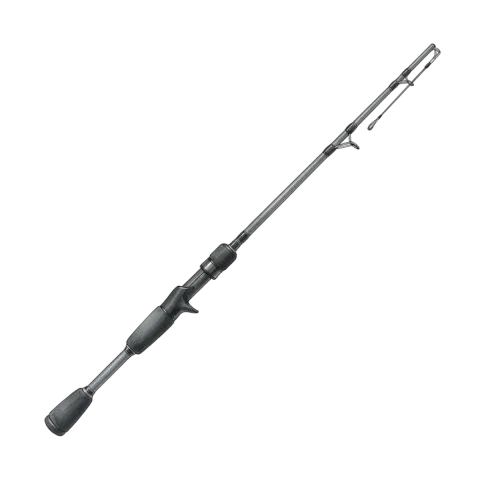
Rod
Jigging rod
A jigging rod is the short, powerful fishing rod for working a metal jig up through the column, including freshwater jigging.
Sized for a typical fish
heavy · 1.52 m
- Reel seat
- Casting
- Form factor
- One-piece
- Action
- Fast
- Grip
- EVA
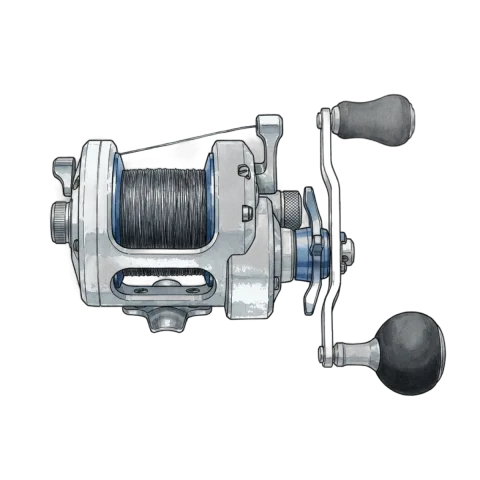
Reel
Jigging reel
A jigging reel is a compact, high-speed conventional for working metal jigs. A short retrieve picks up slack fast.
Sized for a typical fish
10 · 10 kg drag
- Spool
- Revolving
- Mount
- Over
- Drag
- Star
- Retrieve
- Manual

Line
Braided line
Braided fishing line is the thin, no-stretch main for long casts, jigging, and feeling every tick on the retrieve.
Sized for a typical fish
6 kg · 0.1 mm
- Visibility
- High
- Abrasion
- Low
- Stretch
- None
- Sink rate
- Floats
Leader
Fluorocarbon leader
A fluorocarbon leader is the clear, fast-sinking join between a visible main line and the lure or hook.
Sized for a typical fish
7 kg · 0.3 mm · 90 cm
- Visibility
- Very low
- Abrasion
- High
- Stretch
- Low
- Sink rate
- Fast
Spinning
Casting and retrieving lures with a spinning rod and reel.
70% Effectiveness
Rod
Spinning rod
A spinning rod is a fishing rod built to carry a spinning reel under the blank. You cast lures and light baits with it from shore or a boat.
Sized for a typical fish
light · 2.1 m
- Reel seat
- Spinning
- Form factor
- Multi-piece
- Action
- Fast
- Grip
- EVA
Reel
Spinning reel
A spinning reel hangs under the fishing rod and is the default reel for casting lures and light baits. Line peels off an open spool with a bail.
Sized for a typical fish
1000 · 3 kg drag · 185 g
- Spool
- Fixed
- Mount
- Under
- Drag
- Front
- Retrieve
- Manual
Line
Braided line
Braided fishing line is the thin, no-stretch main for long casts, jigging, and feeling every tick on the retrieve.
Sized for a typical fish
6 kg · 0.1 mm
- Visibility
- High
- Abrasion
- Low
- Stretch
- None
- Sink rate
- Floats
Leader
Fluorocarbon leader
A fluorocarbon leader is the clear, fast-sinking join between a visible main line and the lure or hook.
Sized for a typical fish
7 kg · 0.3 mm · 90 cm
- Visibility
- Very low
- Abrasion
- High
- Stretch
- Low
- Sink rate
- Fast
Best lures and baits for Island grouper
Ranked lures and natural baits from every method, best first.
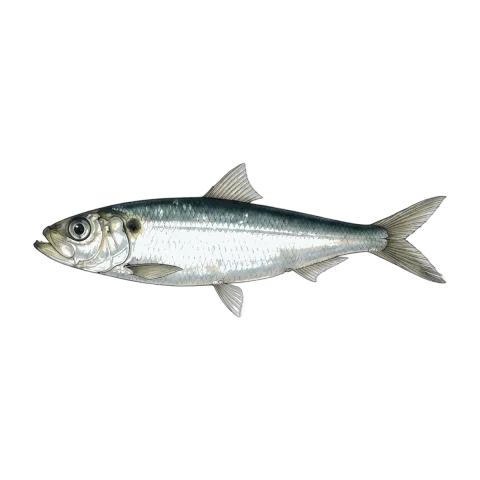
01
Sardine
- Bottom Fishing
- Jigging
Elongated silvery baitfish body releases strong scent trails.
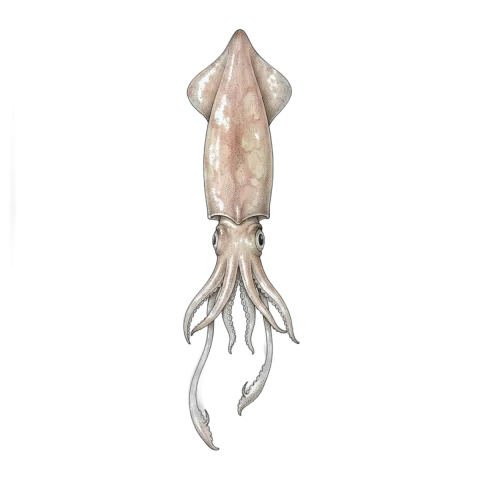
02
Squid
- Bottom Fishing
- Jigging
Elongated muscular body holds internal organs and secretes scent in the water.
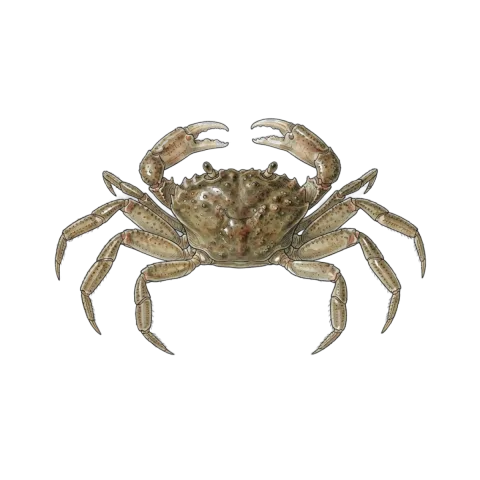
03
Crab
- Bottom Fishing
Hard upper shell protects the crab and anchors its vital organs.
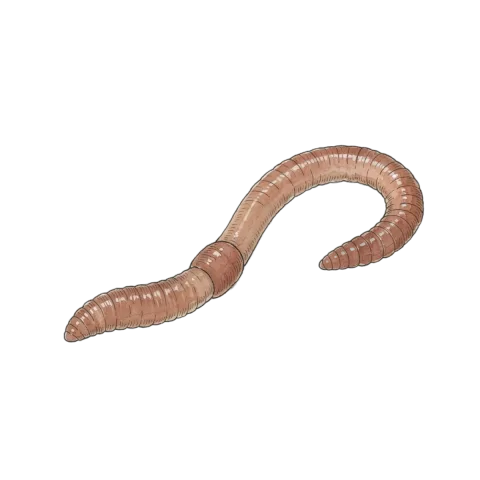
04
Live baitfish
- Bottom Fishing
Elongated segmented worm body provides natural movement to attract fish.
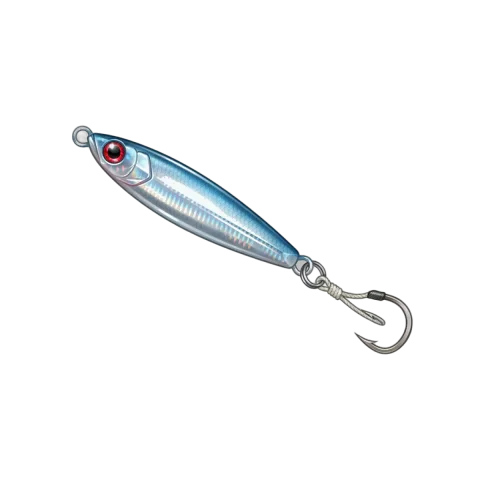
05
Metal jig
- Jigging
A long metal lure for speed-jigging the deep column.
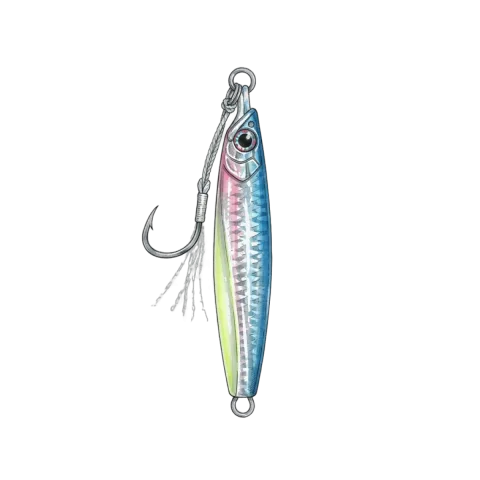
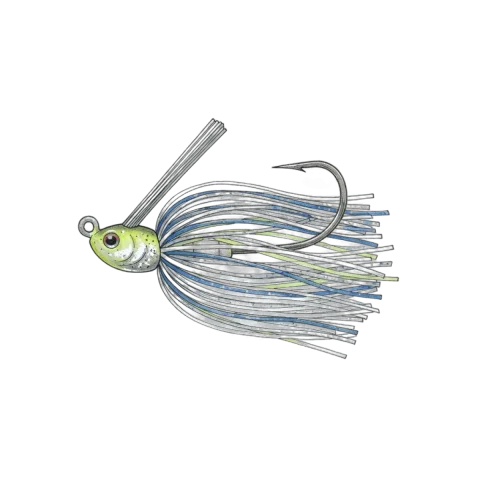
07
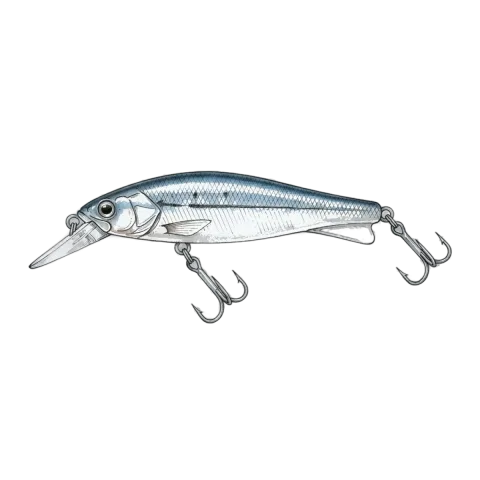
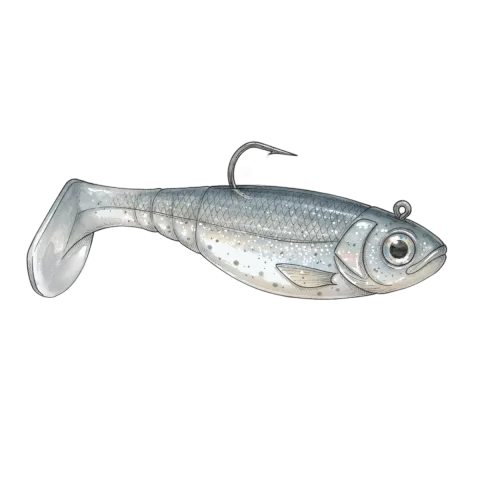
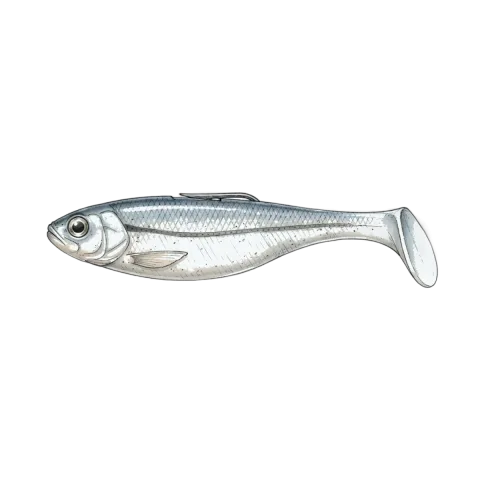
Casting jig
- Jigging
A casting jig you hop, drag, and swim on the bottom.
Where Island grouper spends the year — Non-migratory
Stays in the same waters year-round. Look for it on the same grounds rather than timing a run.
1 Eggs
Same water all year
Laid on the home grounds.
2 Juveniles
Same water all year
Grow up close by.
3 Adults
Same water all year
Keep to a small home range.
4 Spawners
Same water all year
Spawn on the same grounds, with only short moves.
Hover or tap a number to read each stage.
Diet and behavior of Island grouper
-
Diet
Top predator -
Hunts
Dawn · Dusk
Where Island grouper lives
Lives on or just above the bottom. Work jigs, bait, and lures along the seabed.
1–200 m · usually 20–30 m

Where this species lives
Island grouper photos for identification
Compare these photos with the catalog plate to identify the species.