How to catch Jolthead porgy
Calamus bajonado (Bloch & Schneider, 1801)
About Jolthead porgy fishing
The jolthead porgy belongs to the porgy and seabream family Sparidae and is recognised by its brassy silver body, a distinct blue line under each eye and an orange rim around the mouth. Growing up to 76 cm in maximum length, this reef-associated saltwater fish inhabits clear coastal waters across the western Atlantic from shallow seagrass beds down to 200 metres. Large adults are typically solitary and feed primarily on benthic invertebrates including sea urchins, mollusks and crabs. It is regarded as an excellent food fish and targeted by recreational anglers as a game fish.
-
Difficulty
Medium
-
Average size
54 cm TL
-
Market value
Medium
-
Habitat
Saltwater
-
Season
Spring, Summer, Autumn
-
Also known as
Blue bone porgy, Pogri grunt

Blue line under eye
Distinct blue lines running under the eye distinguish this species.
Orange mouth cast
Orange cast at the corner of the mouth.
Evenly convex head
Dorsal profile of head is evenly convex and not very steep.
Jolthead porgy fishing facts
Characteristics
-
Typical size
54 cm TL (max 76 cm FL ) -
Typical weight
3.2 kg (max 10.6 kg ) -
Preferred temperature
18.6–27.5 °C -
Depth
3–200 m -
Body shape
Short And / Or Deep -
Commercial?
-
Vulnerability score
58.6
Best hours
-
Low
Dawn
First light
-
Peak
Morning
After sunrise
-
Peak
Midday
High sun
-
Active
Afternoon
Late day
-
Low
Dusk
Last light
-
Low
Night
After dark
When to fish for Jolthead porgy
How to catch Jolthead porgy
Tips for catching Jolthead porgy
Target this strong bottom-dwelling species around rocky reef structures and vegetated sand bottoms in coastal waters using robust tackle equipped with a running ledger rig. Present hard-shelled natural baits such as whole or cut crabs, large shrimp, and squid strips directly on the seabed where these fish forage for hard-bodied invertebrates and sea urchins. Maintain direct contact with the line to detect subtle pickups before setting the hook firmly against their powerful jaws. Focus your efforts during daylight hours in clear shallow zones or deeper drop-offs where solitary large adults patrol for food.
Other names for Jolthead porgy
Local and alternate names anglers use for Jolthead porgy.
-
Pogri grunt
-
Jolthead porgy
-
Blue bone porgy
Best equipment to catch Jolthead porgy
Compare fishing methods for Jolthead porgy — sized kit for each technique.
Note: Typical fish is 3.2 kg Our algorithm will suggest the best equipment for you based on this weight.
Bottom Fishing
Presenting bait or rigs on or near the lake or sea floor.
90% Effectiveness

Rod
Spinning rod
A spinning rod is a fishing rod built to carry a spinning reel under the blank. You cast lures and light baits with it from shore or a boat.
Sized for a typical fish
medium · 2.13 m
- Reel seat
- Spinning
- Form factor
- Multi-piece
- Action
- Fast
- Grip
- EVA

Reel
Spinning reel
A spinning reel hangs under the fishing rod and is the default reel for casting lures and light baits. Line peels off an open spool with a bail.
Sized for a typical fish
2500 · 5 kg drag · 220 g
- Spool
- Fixed
- Mount
- Under
- Drag
- Front
- Retrieve
- Manual

Line
Monofilament line
Monofilament fishing line is the everyday main line: easy to knot, cheap to replace, and stretchy enough to forgive a hard strike.
Sized for a typical fish
10 kg · 0.35 mm
- Visibility
- Medium
- Abrasion
- Medium
- Stretch
- High
- Sink rate
- Slow

Leader
Fluorocarbon leader
A fluorocarbon leader is the clear, fast-sinking join between a visible main line and the lure or hook.
Sized for a typical fish
12 kg · 0.4 mm · 120 cm
- Visibility
- Very low
- Abrasion
- High
- Stretch
- Low
- Sink rate
- Fast

Hook
Circle hook
A circle hook turns in the mouth and usually finds the corner of the jaw. You do not strike hard — you come tight. It includes freshwater.
Sized for a typical fish
3/0
- Points
- 1
- Offset
- No
- Barbed
- Yes
- Gap
- Standard
Drift Fishing
Presenting bait or lures from a boat moving with wind or current, not under trolling speed.
75% Effectiveness
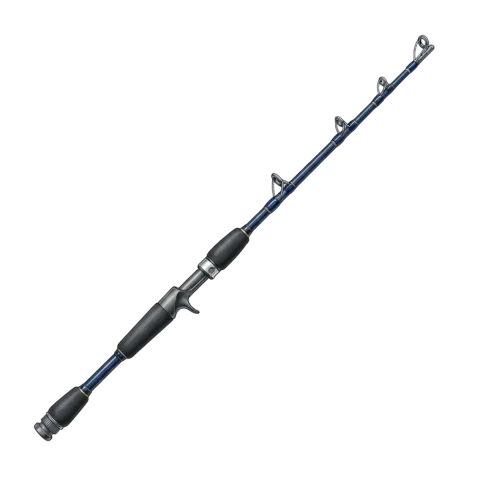
Rod
Boat rod
A boat rod is the short, stout fishing rod for work under the hull: bottom fishing, trolling, drift, and live bait in fresh or salt.
Sized for a typical fish
medium · 1.83 m
- Reel seat
- Casting
- Form factor
- One-piece
- Action
- Moderate-fast
- Grip
- EVA
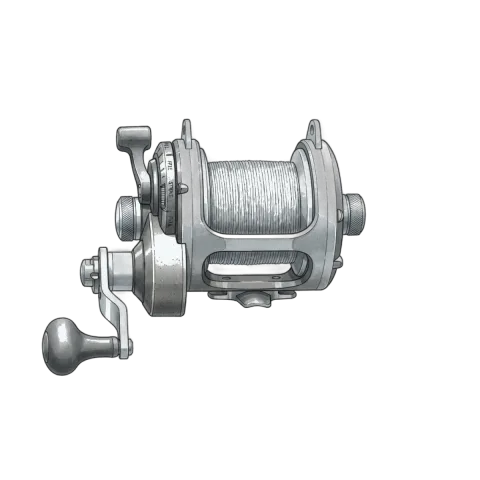
Reel
Conventional reel
A conventional reel is the lever-drag boat fishing reel for trolling and bottom fishing.
Sized for a typical fish
10 · 4 kg drag
- Spool
- Revolving
- Mount
- Over
- Drag
- Lever
- Retrieve
- Manual

Line
Braided line
Braided fishing line is the thin, no-stretch main for long casts, jigging, and feeling every tick on the retrieve.
Sized for a typical fish
9 kg · 0.14 mm
- Visibility
- High
- Abrasion
- Low
- Stretch
- None
- Sink rate
- Floats
Hook
Circle hook
A circle hook turns in the mouth and usually finds the corner of the jaw. You do not strike hard — you come tight. It includes freshwater.
Sized for a typical fish
3/0
- Points
- 1
- Offset
- No
- Barbed
- Yes
- Gap
- Standard
Best lures and baits for Jolthead porgy
Ranked lures and natural baits from every method, best first.
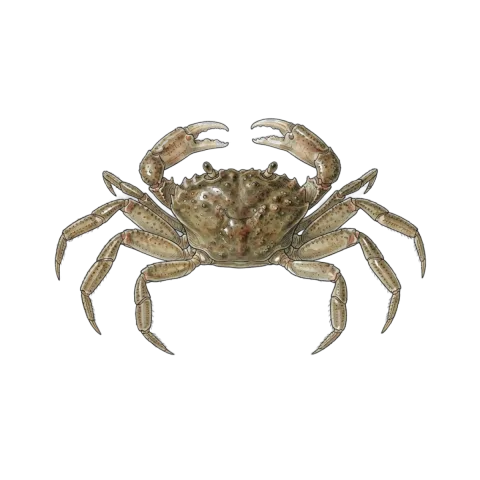
01
Crab
- Bottom Fishing
Hard upper shell protects the crab and anchors its vital organs.
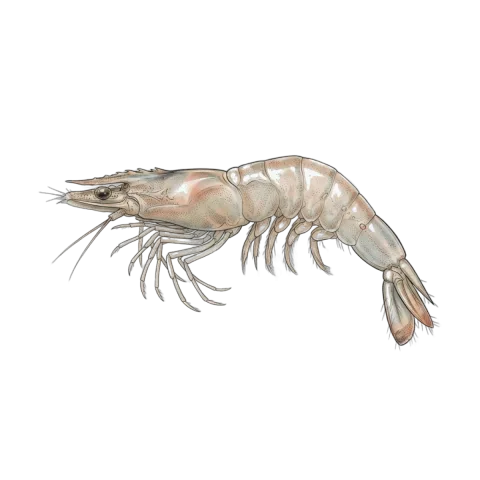
02
Shrimp
- Bottom Fishing
Translucent segmented carapace protects the body.
03
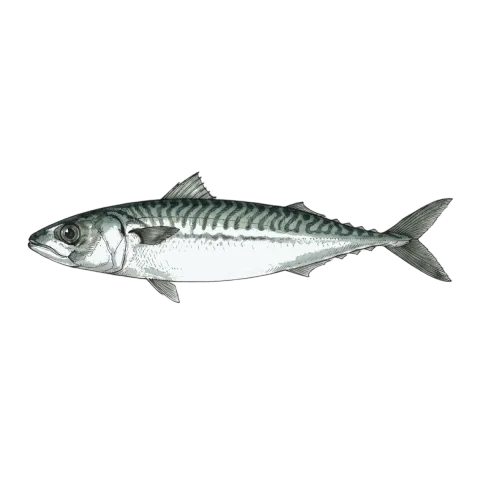
Mackerel
- Bottom Fishing
Distinctive wavy dorsal stripes provide high contrast and flash underwater.
04
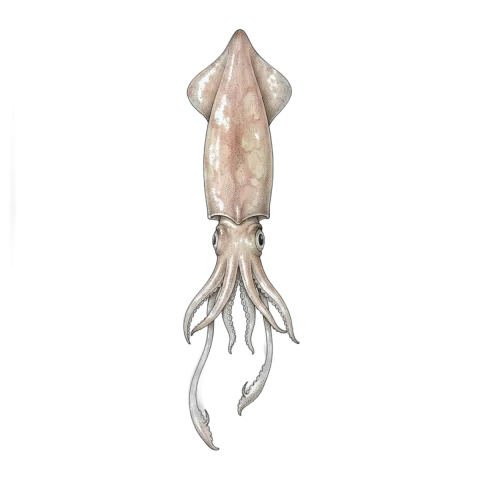
Squid
- Drift Fishing
Elongated muscular body holds internal organs and secretes scent in the water.
Diet and behavior of Jolthead porgy
-
Diet
Carnivore -
Feeds by
Hunts animals -
Hunts
Morning · Midday -
Main prey
Baitfish
Prey and predators of Jolthead porgy
Prey is what Jolthead porgy eats. Predators are the animals that eat it.
That is how it feeds, and how it is hunted.
Prey
What it eats
Baitfish
Where Jolthead porgy lives
Tied to reefs and rocky structure in shallow coastal water.
3–200 m

Where this species lives
Jolthead porgy photos for identification
Compare these photos with the catalog plate to identify the species.
Where to fish for Jolthead porgy
Mapped fishing spots where Jolthead porgy is recorded — open a pin for access and methods.
