How to catch Kelpfish
Chironemus marmoratus Günther, 1860
About Kelpfish fishing
The large kelpfish belongs to the family Chironemidae and stands out with its stout body, pointed snout, and pattern of dark blotches and white spots across its head and flanks. Growing up to a maximum standard length of forty centimetres and a weight of nearly zero point eight kilograms, this marine species inhabits shallow rocky reefs and dense kelp forests down to thirty metres. It thrives in high-energy waters subjected to powerful wave action and strong surges. As a bottom-dwelling site-attached predator, it relies on its large pectoral fins to hold position against currents while hunting small invertebrates including crabs, molluscs, and sea urchins.
-
Difficulty
Medium
-
Habitat
Saltwater
-
Also known as
Eastern kelpfish, Hiwihiwi, Large kelpfish

White spots
Evenly spaced white spots over the entire head and body identify this adult kelpfish.
Mottled coloration
Heavy dark mottling over a brownish body provides camouflage in kelp beds.
Kelpfish fishing facts
Characteristics
-
Typical size
40 cm SL -
Typical weight
0.2 kg (max 0.8 kg ) -
Preferred temperature
14.5–22.2 °C -
Depth
0–30 m -
Body shape
Fusiform / Normal -
Vulnerability score
38.8
How to catch Kelpfish
Tips for catching Kelpfish
Targeting this surge-zone resident requires presenting baits tight to the rocky seabed where it anchors itself against heavy wave action. Bottom rigs featuring small crabs or saltwater shrimps work exceptionally well when dropped into rocky gullies and kelp pockets in shallow coastal waters. Light float fishing can also score when the presentation is kept right at the base of weed-covered reef walls during calmer periods. Because these fish are poor swimmers that rely on sudden bursts of movement rather than open water cruising, keeping your bait stationary close to structural cover is essential for success.
Other names for Kelpfish
Local and alternate names anglers use for Kelpfish.
-
Large kelpfish
-
Kelpfish
-
Hiwihiwi
-
Eastern kelpfish
Best equipment to catch Kelpfish
Compare fishing methods for Kelpfish — sized kit for each technique.
Note: Typical fish is 0.2 kg Our algorithm will suggest the best equipment for you based on this weight.
Bottom Fishing
Presenting bait or rigs on or near the lake or sea floor.
85% Effectiveness

Rod
Spinning rod
A spinning rod is a fishing rod built to carry a spinning reel under the blank. You cast lures and light baits with it from shore or a boat.
Sized for a typical fish
ultralight · 1.8 m
- Reel seat
- Spinning
- Form factor
- Multi-piece
- Action
- Fast
- Grip
- EVA

Reel
Spinning reel
A spinning reel hangs under the fishing rod and is the default reel for casting lures and light baits. Line peels off an open spool with a bail.
Sized for a typical fish
1000 · 3 kg drag · 185 g
- Spool
- Fixed
- Mount
- Under
- Drag
- Front
- Retrieve
- Manual

Line
Monofilament line
Monofilament fishing line is the everyday main line: easy to knot, cheap to replace, and stretchy enough to forgive a hard strike.
Sized for a typical fish
1.3 kg · 0.125 mm
- Visibility
- Medium
- Abrasion
- Medium
- Stretch
- High
- Sink rate
- Slow

Leader
Fluorocarbon leader
A fluorocarbon leader is the clear, fast-sinking join between a visible main line and the lure or hook.
Sized for a typical fish
4 kg · 0.2 mm · 80 cm
- Visibility
- Very low
- Abrasion
- High
- Stretch
- Low
- Sink rate
- Fast

Hook
Circle hook
A circle hook turns in the mouth and usually finds the corner of the jaw. You do not strike hard — you come tight. It includes freshwater.
Sized for a typical fish
4
- Points
- 1
- Offset
- No
- Barbed
- Yes
- Gap
- Standard
Float Fishing
Suspending bait beneath a float at a controlled depth.
75% Effectiveness
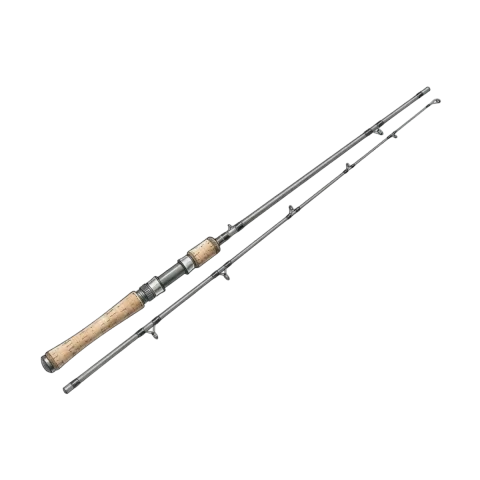
Rod
Float rod
A float rod is the all-round fishing rod for a float in rivers and still water, a step down in length from match.
Sized for a typical fish
light · 3.6 m
- Reel seat
- Spinning
- Form factor
- Multi-piece
- Action
- Moderate
- Grip
- Cork
Reel
Spinning reel
A spinning reel hangs under the fishing rod and is the default reel for casting lures and light baits. Line peels off an open spool with a bail.
Sized for a typical fish
1000 · 3 kg drag · 185 g
- Spool
- Fixed
- Mount
- Under
- Drag
- Front
- Retrieve
- Manual
Line
Monofilament line
Monofilament fishing line is the everyday main line: easy to knot, cheap to replace, and stretchy enough to forgive a hard strike.
Sized for a typical fish
1.3 kg · 0.125 mm
- Visibility
- Medium
- Abrasion
- Medium
- Stretch
- High
- Sink rate
- Slow
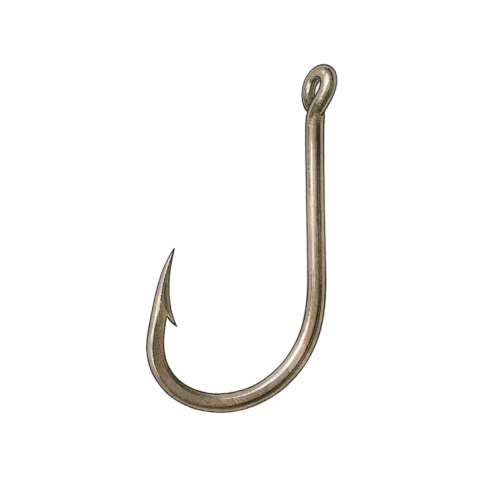
Hook
J-hook
A J-hook is the classic J-bend fishing hook for bait. You set it with a strike. Sizes are tokens such as 12 or 1/0.
Sized for a typical fish
12
- Points
- 1
- Offset
- No
- Barbed
- Yes
- Gap
- Standard
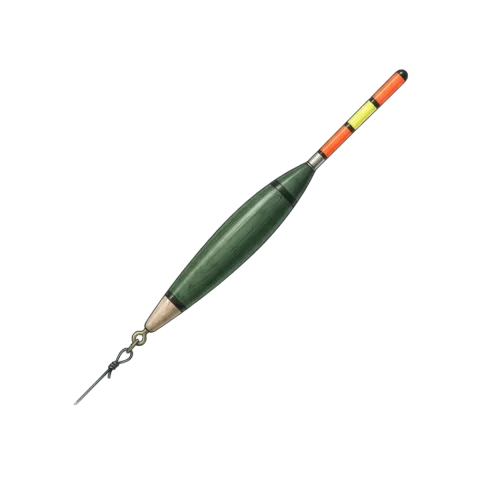
Float
Waggler
A waggler is a bottom-only attachment float for stillwaters and slow rivers. You shot it down and watch the antenna.
Sized for a typical fish
4 g
- Attachment
- Fixed
- Habitats
- Freshwater
- Methods
- Float Fishing
Best lures and baits for Kelpfish
Ranked lures and natural baits from every method, best first.
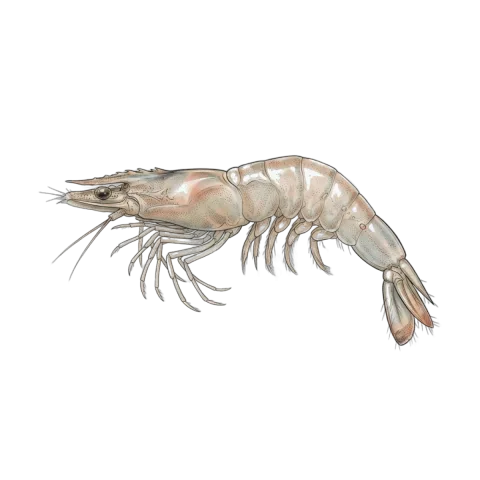
01
Shrimp
- Bottom Fishing
- Float Fishing
Translucent segmented carapace protects the body.
02
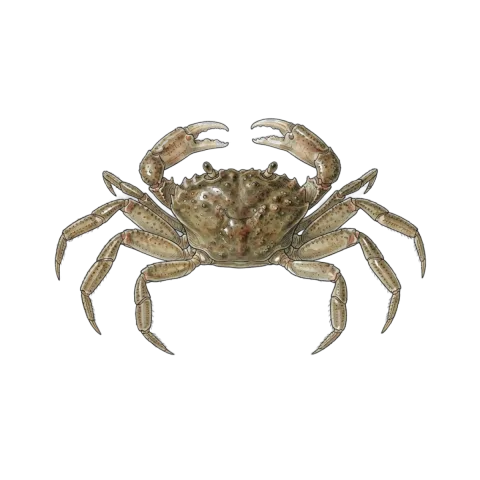
Crab
- Bottom Fishing
Hard upper shell protects the crab and anchors its vital organs.
Where Kelpfish spends the year — Non-migratory
Stays in the same waters year-round. Look for it on the same grounds rather than timing a run.
1 Eggs
Same water all year
Laid on the home grounds.
2 Juveniles
Same water all year
Grow up close by.
3 Adults
Same water all year
Keep to a small home range.
4 Spawners
Same water all year
Spawn on the same grounds, with only short moves.
Hover or tap a number to read each stage.
Diet and behavior of Kelpfish
-
Diet
Carnivore -
Feeds by
Hunts animals -
Feeds over
Hard bottom
Where Kelpfish lives
Tied to reefs and rocky structure in shallow coastal water.
0–30 m

Where this species lives
Kelpfish photos for identification
Compare these photos with the catalog plate to identify the species.