How to catch Marbled spinefoot
Siganus rivulatus Forsskål & Niebuhr, 1775
About Marbled spinefoot fishing
The marbled spinefoot is a gregarious, herbivorous ray-finned fish belonging to the family Siganidae. It features a fusiform, laterally compressed body with a forked caudal fin, a convex forehead, and a variable colour pattern of grey-green or brownish tones on the upper parts, silvery white underneath, and sometimes faint dark markings. Growing to a common length around twenty centimetres with a maximum length exceeding thirty centimetres, this species inhabits shallow coastal waters down to thirty metres. It forms schools over rocky bottoms, sandy substrates, and seagrass meadows, where it grazes primarily on algae. Spawning occurs during warmer months in sheltered inshore zones, and the species has notably expanded its range through migration into the eastern Mediterranean basin.
-
Difficulty
Medium
-
Average size
20 cm TL
-
Market value
High
-
Habitat
Brackish, Saltwater
-
Season
Spring, Summer, Autumn
-
Also known as
Marbled spinfoot, Rabbitfish, Rivulated rabbitfish, Spinefoot, Surf parrotfish

Caudal shape
Forked caudal fin shape distinguishes it from rounded tails.
Mouth position
Terminal mouth position located at the front tip of the head.
Horizontal stripes
Horizontal stripes across the body help identify the marbled spinefoot.
Marbled spinefoot fishing facts
Characteristics
-
Typical size
20 cm TL (max 30.2 cm TL ) -
Typical weight
0.2 kg (max 0.3 kg ) -
Preferred temperature
24.7–29.2 °C -
Depth
1–30 m -
Longevity
6 years -
Body shape
Fusiform / Normal -
Commercial?
-
Vulnerability score
30.9
Best hours
-
Low
Dawn
First light
-
Peak
Morning
After sunrise
-
Active
Midday
High sun
-
Peak
Afternoon
Late day
-
Low
Dusk
Last light
-
Low
Night
After dark
When to fish for Marbled spinefoot
How to catch Marbled spinefoot
Tips for catching Marbled spinefoot
Targeting this herbivorous browser requires light tackle, fine lines, and small hooks presented near rocky structures or dense seagrass beds where shallow inshore waters warm up. Because their diet consists predominantly of plant matter and algae, float fishing or light bottom ledgering using small pieces of bread crust or dough paste as bait yields the best results. Approach rocky ledges quietly as these fish move in schools and feed actively during daylight hours, particularly through the bright morning and afternoon windows. Exercise extreme caution when handling captured specimens due to the slender, venomous spines located on the dorsal, anal, and pelvic fins.
Other names for Marbled spinefoot
Local and alternate names anglers use for Marbled spinefoot.
-
Marbled spinefoot
-
Surf parrotfish
-
Spinefoot
-
Rivulated rabbitfish
-
Rabbitfish
-
Marbled spinfoot
Best equipment to catch Marbled spinefoot
Compare fishing methods for Marbled spinefoot — sized kit for each technique.
Note: Typical fish is 0.2 kg Our algorithm will suggest the best equipment for you based on this weight.
Float Fishing
Suspending bait beneath a float at a controlled depth.
70% Effectiveness
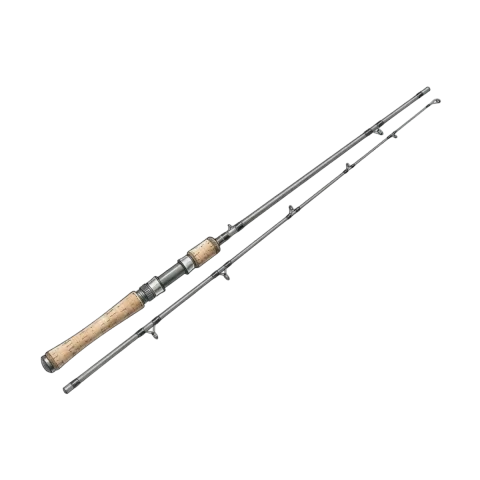
Rod
Float rod
A float rod is the all-round fishing rod for a float in rivers and still water, a step down in length from match.
Sized for a typical fish
light · 3.6 m
- Reel seat
- Spinning
- Form factor
- Multi-piece
- Action
- Moderate
- Grip
- Cork

Reel
Spinning reel
A spinning reel hangs under the fishing rod and is the default reel for casting lures and light baits. Line peels off an open spool with a bail.
Sized for a typical fish
1000 · 3 kg drag · 185 g
- Spool
- Fixed
- Mount
- Under
- Drag
- Front
- Retrieve
- Manual

Line
Monofilament line
Monofilament fishing line is the everyday main line: easy to knot, cheap to replace, and stretchy enough to forgive a hard strike.
Sized for a typical fish
1.3 kg · 0.125 mm
- Visibility
- Medium
- Abrasion
- Medium
- Stretch
- High
- Sink rate
- Slow
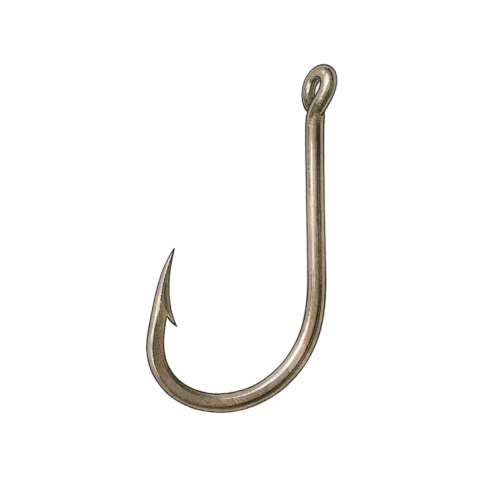
Hook
J-hook
A J-hook is the classic J-bend fishing hook for bait. You set it with a strike. Sizes are tokens such as 12 or 1/0.
Sized for a typical fish
12
- Points
- 1
- Offset
- No
- Barbed
- Yes
- Gap
- Standard
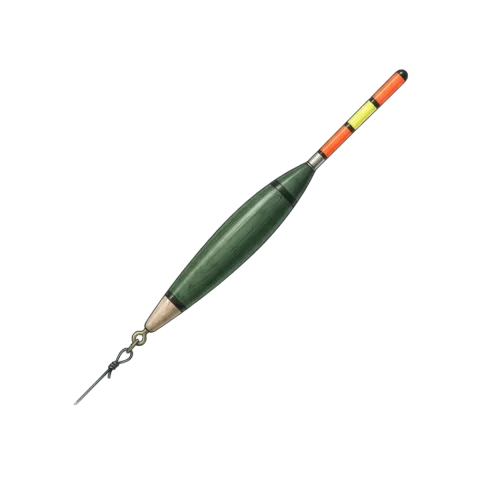
Float
Waggler
A waggler is a bottom-only attachment float for stillwaters and slow rivers. You shot it down and watch the antenna.
Sized for a typical fish
4 g
- Attachment
- Fixed
- Habitats
- Freshwater
- Methods
- Float Fishing
Bottom Fishing
Presenting bait or rigs on or near the lake or sea floor.
50% Effectiveness

Rod
Spinning rod
A spinning rod is a fishing rod built to carry a spinning reel under the blank. You cast lures and light baits with it from shore or a boat.
Sized for a typical fish
ultralight · 1.8 m
- Reel seat
- Spinning
- Form factor
- Multi-piece
- Action
- Fast
- Grip
- EVA
Reel
Spinning reel
A spinning reel hangs under the fishing rod and is the default reel for casting lures and light baits. Line peels off an open spool with a bail.
Sized for a typical fish
1000 · 3 kg drag · 185 g
- Spool
- Fixed
- Mount
- Under
- Drag
- Front
- Retrieve
- Manual
Line
Monofilament line
Monofilament fishing line is the everyday main line: easy to knot, cheap to replace, and stretchy enough to forgive a hard strike.
Sized for a typical fish
1.3 kg · 0.125 mm
- Visibility
- Medium
- Abrasion
- Medium
- Stretch
- High
- Sink rate
- Slow

Leader
Fluorocarbon leader
A fluorocarbon leader is the clear, fast-sinking join between a visible main line and the lure or hook.
Sized for a typical fish
4 kg · 0.2 mm · 80 cm
- Visibility
- Very low
- Abrasion
- High
- Stretch
- Low
- Sink rate
- Fast

Hook
Circle hook
A circle hook turns in the mouth and usually finds the corner of the jaw. You do not strike hard — you come tight. It includes freshwater.
Sized for a typical fish
4
- Points
- 1
- Offset
- No
- Barbed
- Yes
- Gap
- Standard
Best lures and baits for Marbled spinefoot
Ranked lures and natural baits from every method, best first.
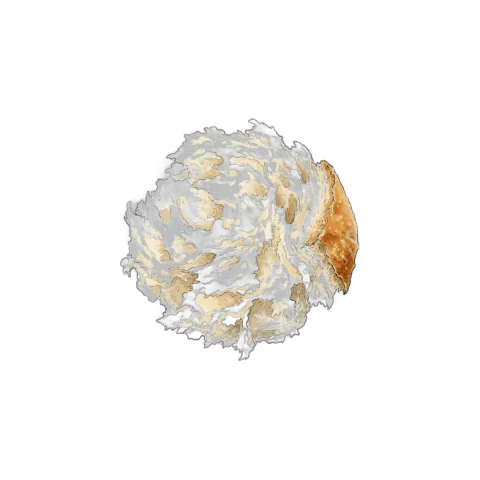
01
Bread
- Float Fishing
- Bottom Fishing
Soft inner bread compressed onto the hook for surface feeding.
How Marbled spinefoot migrates — Inshore–offshore
Shifts between shallow inshore water and deeper offshore grounds with the season.
1 Warm months
Inshore
Stay close inshore through the warm months.
2 Cold months
Offshore
Move offshore into deeper water as it cools.
Hover or tap a number to read each stage.
Diet and behavior of Marbled spinefoot
-
Diet
Herbivore -
Feeds by
Browses the bottom -
Hunts
Morning · Afternoon -
Feeds over
Soft bottom · Hard bottom · Seagrass
Prey and predators of Marbled spinefoot
Prey is what Marbled spinefoot eats. Predators are the animals that eat it.
That is how it feeds, and how it is hunted.
Prey
What it eats
Other prey
Predators
What hunts it
Fish
Where Marbled spinefoot lives
Tied to reefs and rocky structure in shallow coastal water.
1–30 m

Estuary
Where this species lives
Marbled spinefoot photos for identification
Compare these photos with the catalog plate to identify the species.
Where to fish for Marbled spinefoot
Mapped fishing spots where Marbled spinefoot is recorded — open a pin for access and methods.


