How to catch Pollack
Pollachius pollachius (Linnaeus, 1758)
About Pollack fishing
The pollack is a benthopelagic marine fish belonging to the cod family Gadidae, featuring a fusiform body with a strongly projecting lower jaw, a distinctive dark lateral line that curves over the pectoral fin, and a color scheme blending a dark back with silver-gray flanks and warm yellow-orange streaks. Growing up to 130 cm and 18.14 kg, this species inhabits inshore and offshore waters down to 200 metres, frequenting rocky reefs, kelp beds, shipwrecks, and rough ground. Adults typically lead a solitary life or form loose shoals, migrating towards deeper offshore structures as they mature, while juveniles stay close to the coast. As an active predatory hunter, it feeds primarily on various fish and swimming crustaceans. Highly regarded in European recreational fisheries for its strength, it provides challenging sport over rough grounds.
-
Difficulty
Medium
-
Average size
75 cm TL
-
Market value
Low
-
Habitat
Saltwater
-
Season
Spring, Summer, Autumn
-
Also known as
Callagh, Coalfish, Dover hake, European pollock, Grass whiting, Green pollack

Superior mouth
Lower jaw distinctly projecting beyond upper jaw identifies this pollack.
Forked caudal fin
The forked caudal fin helps distinguish it from other gadoids.
Pollack fishing facts
Characteristics
-
Typical size
75 cm TL (max 130 cm TL ) -
Typical weight
2.5 kg (max 18.1 kg ) -
Preferred temperature
7–11.9 °C -
Depth
40–200 m -
Longevity
8 years -
Body shape
Fusiform / Normal -
Commercial?
-
Vulnerability score
59.1
Best hours
-
Peak
Dawn
First light
-
Active
Morning
After sunrise
-
Low
Midday
High sun
-
Active
Afternoon
Late day
-
Peak
Dusk
Last light
-
Low
Night
After dark
When to fish for Pollack
How to catch Pollack
Tips for catching Pollack
Targeting pollack successfully requires presenting lures or natural baits close to heavy marine structures such as rocky drop-offs, submerged pinnacles, kelp fringes, and shipwrecks where the fish ambush passing prey. Light-tackle spinning with soft plastic shads, metal jigs, or lead-head lures worked tightly along the seabed proves exceptionally effective during periods of increased current movement. Dawn and dusk often trigger aggressive feeding behaviour as fish move up in the water column to hunt small schooling fish. Anglers should maintain close contact with the bottom, using an erratic retrieve that mimics a distressed baitfish to entice strikes. Boat angling over deep offshore wrecks using vertical jigging methods consistently yields larger specimens throughout the warmer summer and autumn months.
Other names for Pollack
Local and alternate names anglers use for Pollack.
-
Pollack
-
Pollock
-
Pollak
-
Lythe
-
Margate hake
-
Green pollack
-
Greenfish
-
Grass whiting
-
European pollock
-
Dover hake
-
Coalfish
-
Callagh
Best equipment to catch Pollack
Compare fishing methods for Pollack — sized kit for each technique.
Note: Typical fish is 2.5 kg Our algorithm will suggest the best equipment for you based on this weight.
Spinning
Casting and retrieving lures with a spinning rod and reel.
95% Effectiveness

Rod
Spinning rod
A spinning rod is a fishing rod built to carry a spinning reel under the blank. You cast lures and light baits with it from shore or a boat.
Sized for a typical fish
medium · 2.13 m
- Reel seat
- Spinning
- Form factor
- Multi-piece
- Action
- Fast
- Grip
- EVA

Reel
Spinning reel
A spinning reel hangs under the fishing rod and is the default reel for casting lures and light baits. Line peels off an open spool with a bail.
Sized for a typical fish
1000 · 3 kg drag · 185 g
- Spool
- Fixed
- Mount
- Under
- Drag
- Front
- Retrieve
- Manual

Line
Braided line
Braided fishing line is the thin, no-stretch main for long casts, jigging, and feeling every tick on the retrieve.
Sized for a typical fish
6 kg · 0.1 mm
- Visibility
- High
- Abrasion
- Low
- Stretch
- None
- Sink rate
- Floats

Leader
Fluorocarbon leader
A fluorocarbon leader is the clear, fast-sinking join between a visible main line and the lure or hook.
Sized for a typical fish
7 kg · 0.3 mm · 90 cm
- Visibility
- Very low
- Abrasion
- High
- Stretch
- Low
- Sink rate
- Fast
Jigging
Working vertical lures with an active up-and-down motion.
85% Effectiveness
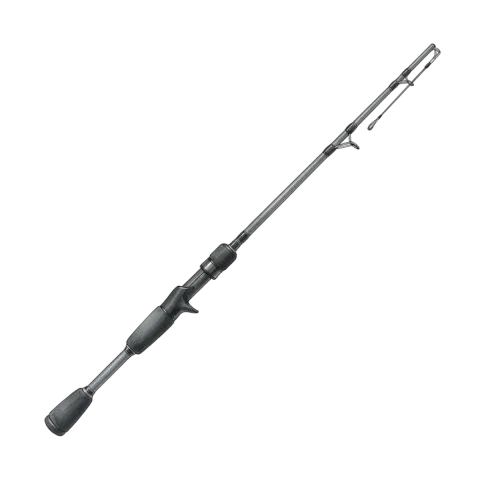
Rod
Jigging rod
A jigging rod is the short, powerful fishing rod for working a metal jig up through the column, including freshwater jigging.
Sized for a typical fish
heavy · 1.52 m
- Reel seat
- Casting
- Form factor
- One-piece
- Action
- Fast
- Grip
- EVA
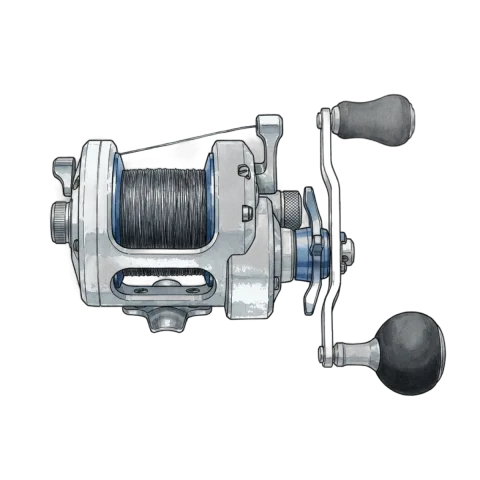
Reel
Jigging reel
A jigging reel is a compact, high-speed conventional for working metal jigs. A short retrieve picks up slack fast.
Sized for a typical fish
10 · 10 kg drag
- Spool
- Revolving
- Mount
- Over
- Drag
- Star
- Retrieve
- Manual
Line
Braided line
Braided fishing line is the thin, no-stretch main for long casts, jigging, and feeling every tick on the retrieve.
Sized for a typical fish
6 kg · 0.1 mm
- Visibility
- High
- Abrasion
- Low
- Stretch
- None
- Sink rate
- Floats
Leader
Fluorocarbon leader
A fluorocarbon leader is the clear, fast-sinking join between a visible main line and the lure or hook.
Sized for a typical fish
7 kg · 0.3 mm · 90 cm
- Visibility
- Very low
- Abrasion
- High
- Stretch
- Low
- Sink rate
- Fast
Bottom Fishing
Presenting bait or rigs on or near the lake or sea floor.
70% Effectiveness
Rod
Spinning rod
A spinning rod is a fishing rod built to carry a spinning reel under the blank. You cast lures and light baits with it from shore or a boat.
Sized for a typical fish
medium · 2.13 m
- Reel seat
- Spinning
- Form factor
- Multi-piece
- Action
- Fast
- Grip
- EVA
Reel
Spinning reel
A spinning reel hangs under the fishing rod and is the default reel for casting lures and light baits. Line peels off an open spool with a bail.
Sized for a typical fish
1000 · 3 kg drag · 185 g
- Spool
- Fixed
- Mount
- Under
- Drag
- Front
- Retrieve
- Manual

Line
Monofilament line
Monofilament fishing line is the everyday main line: easy to knot, cheap to replace, and stretchy enough to forgive a hard strike.
Sized for a typical fish
7.5 kg · 0.3 mm
- Visibility
- Medium
- Abrasion
- Medium
- Stretch
- High
- Sink rate
- Slow
Leader
Fluorocarbon leader
A fluorocarbon leader is the clear, fast-sinking join between a visible main line and the lure or hook.
Sized for a typical fish
9 kg · 0.35 mm · 100 cm
- Visibility
- Very low
- Abrasion
- High
- Stretch
- Low
- Sink rate
- Fast

Hook
Circle hook
A circle hook turns in the mouth and usually finds the corner of the jaw. You do not strike hard — you come tight. It includes freshwater.
Sized for a typical fish
2
- Points
- 1
- Offset
- No
- Barbed
- Yes
- Gap
- Standard
Best lures and baits for Pollack
Ranked lures and natural baits from every method, best first.
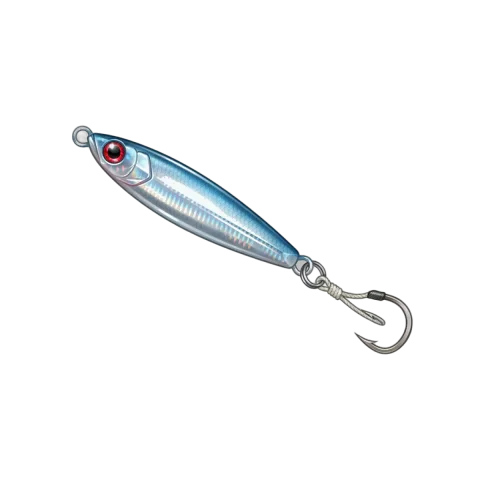
01
Metal jig
- Spinning
- Jigging
A long metal lure for speed-jigging the deep column.
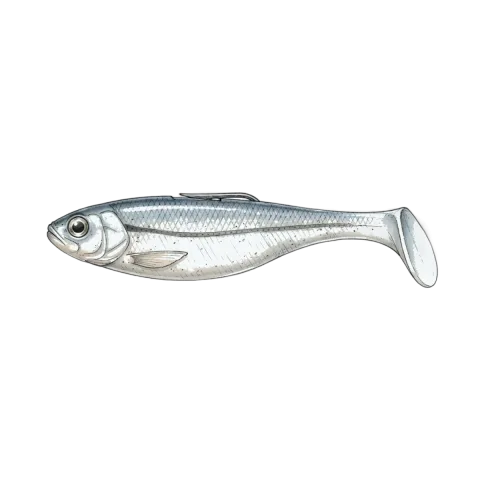
03
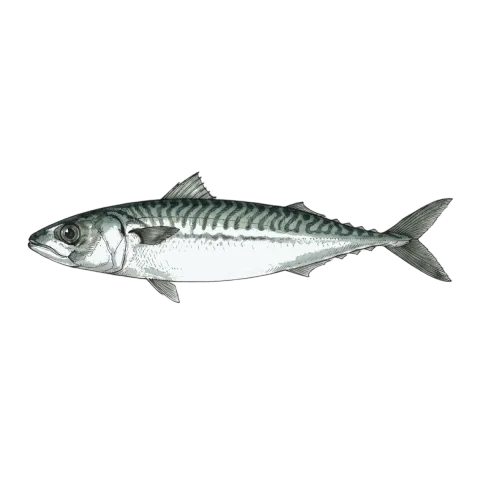
Mackerel
- Bottom Fishing
Distinctive wavy dorsal stripes provide high contrast and flash underwater.
04
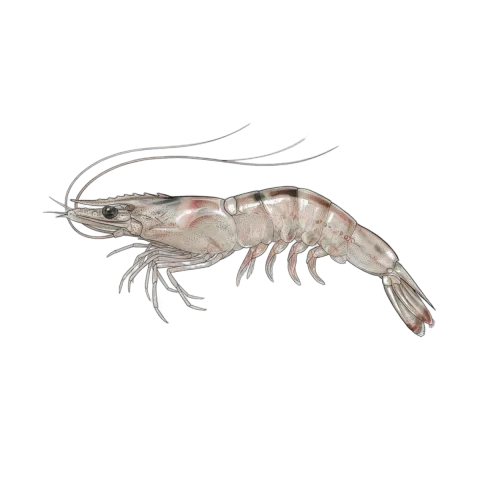
Prawn
- Bottom Fishing
Powerful fan-shaped tail propels the prawn backward when escaping predatory fish.
How Pollack migrates — Oceanodromous
Migrates within the sea between spawning, nursery and feeding grounds, and never enters fresh water. Follow its seasonal shifts along the coast and offshore.
1 Eggs
Spawning grounds
Laid on the spawning grounds.
2 Larvae
→ Nursery grounds
Drift with the currents to the nursery grounds.
3 Juveniles
Nursery grounds
Grow up in sheltered nursery waters.
4 Adults
Feeding grounds
Range widely over the feeding grounds.
5 Spawners
→ Spawning grounds
Return to the spawning grounds each season.
It stays in the sea and never runs up into fresh water.
Hover or tap a number to read each stage.
Diet and behavior of Pollack
-
Diet
Top predator -
Feeds by
Hunts animals -
Hunts
Dawn · Dusk -
Feeds over
Hard bottom -
Main prey
Baitfish
Prey and predators of Pollack
Prey is what Pollack eats. Predators are the animals that eat it.
That is how it feeds, and how it is hunted.
Prey
What it eats
Predators
What hunts it
Fish
Where Pollack lives
Lives near the bottom but swims in the water just above it. Cover the lower column, not only the mud.
40–200 m · usually 40–100 m

Where this species lives
Pollack photos for identification
Compare these photos with the catalog plate to identify the species.
Where to fish for Pollack
Mapped fishing spots where Pollack is recorded — open a pin for access and methods.


