How to catch Pompano dolphinfish
Coryphaena equiselis Linnaeus, 1758
About Pompano dolphinfish fishing
The pompano dolphinfish is a pelagic oceanic member of the family Coryphaenidae recognized by its fusiform compressed body, convex forehead, and brilliant blue-green back paired with silvery-golden flanks marked by diffuse dark spots. Growing up to a maximum length of nearly one hundred and forty-six centimetres and weights exceeding thirty kilograms, this oceanodromous predator typically inhabits warm tropical and subtropical waters from the surface down to four hundred metres. They form schooling groups that frequently congregate beneath floating objects, Sargassum weed lines, and vessel hulls, where they actively hunt small fish and squid. Highly regarded as an energetic game fish, the species is valued for its explosive surface strikes and exceptional table qualities.
-
Difficulty
Medium
-
Average size
50 cm TL
-
Habitat
Saltwater
-
Season
Spring, Summer, Autumn
-
Also known as
Blue dolphin, Dolphin, Lesser dolphin, Lesser dolphin-fish, Little dolphin, Little mahimahi

Caudal Shape
Deeply forked caudal fin helps distinguish this species.
Mouth Position
Terminal mouth position aids identification.
Forehead Profile
Clearly convex forehead profile characteristic of the species.
Diffuse Spots
Numerous diffuse spots on the flanks.
Pompano dolphinfish fishing facts
Characteristics
-
Typical size
50 cm TL (max 145.7 cm TL ) -
Typical weight
4.5 kg (max 34.4 kg ) -
Preferred temperature
14.2–27.9 °C -
Depth
0–400 m -
Longevity
4 years -
Body shape
Fusiform / Normal -
Vulnerability score
40
Best hours
-
Peak
Dawn
First light
-
Peak
Morning
After sunrise
-
Low
Midday
High sun
-
Active
Afternoon
Late day
-
Active
Dusk
Last light
-
Low
Night
After dark
When to fish for Pompano dolphinfish
How to catch Pompano dolphinfish
Tips for catching Pompano dolphinfish
Anglers targeting this oceanic sprinter should focus their efforts around floating debris, weed lines, and offshore structures where schooling fish congregate near the surface. Trolling small feathered skirts, strip baits, or rigged squids at moderate speeds across current lines is the most effective way to locate cruising packs. Once a fish is hooked, keeping it active near the vessel often entices the rest of the school into range, allowing anglers to switch to light spinning tackle or pitch live baits and soft plastics into the wake for aggressive visual strikes. Early morning and daylight hours offer the prime window for encounters as these visual hunters actively patrol the upper water column.
Other names for Pompano dolphinfish
Local and alternate names anglers use for Pompano dolphinfish.
-
Pompano dolphinfish
-
Dolphin
-
Small dolphin
-
Sailors dophin fish
-
Little mahimahi
-
Little dolphin
-
Lesser dolphin-fish
-
Lesser dolphin
-
Pompano dolphin fish
-
Mahi mahi
-
Pompano dolfinfish
-
Pompano dolphin
-
Pompano mahi mahi
-
Blue dolphin
Best equipment to catch Pompano dolphinfish
Compare fishing methods for Pompano dolphinfish — sized kit for each technique.
Note: Typical fish is 4.5 kg Our algorithm will suggest the best equipment for you based on this weight.
Trolling
Drawing lures or baits behind a moving boat.
90% Effectiveness
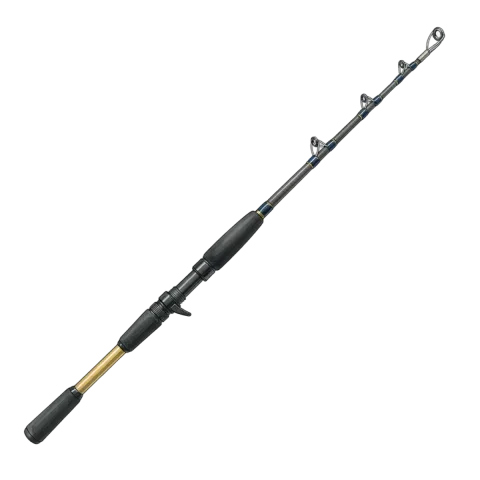
Rod
Trolling rod
A trolling rod is built to sit in a holder and pull a lure or bait at speed. Moderate action so the rod, not the reel, plays the fish.
Sized for a typical fish
medium-heavy · 2.13 m
- Reel seat
- Casting
- Form factor
- One-piece
- Action
- Moderate
- Grip
- EVA
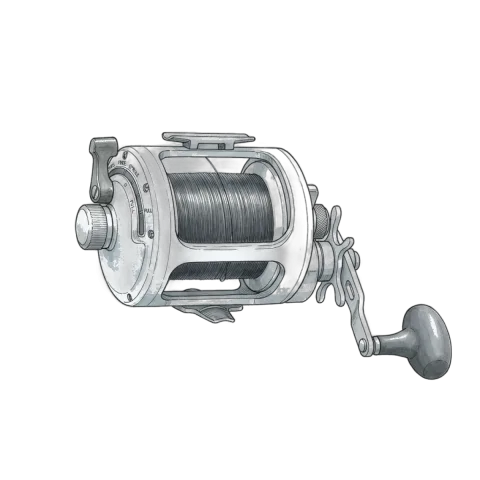
Reel
Trolling reel
A trolling reel is the dedicated lever-drag fishing reel for pulling lures behind a boat, often in a holder all day.
Sized for a typical fish
20 · 15 kg drag
- Spool
- Revolving
- Mount
- Over
- Drag
- Lever
- Retrieve
- Manual

Line
Braided line
Braided fishing line is the thin, no-stretch main for long casts, jigging, and feeling every tick on the retrieve.
Sized for a typical fish
9 kg · 0.14 mm
- Visibility
- High
- Abrasion
- Low
- Stretch
- None
- Sink rate
- Floats

Leader
Fluorocarbon leader
A fluorocarbon leader is the clear, fast-sinking join between a visible main line and the lure or hook.
Sized for a typical fish
9 kg · 0.35 mm · 100 cm
- Visibility
- Very low
- Abrasion
- High
- Stretch
- Low
- Sink rate
- Fast
Spinning
Casting and retrieving lures with a spinning rod and reel.
80% Effectiveness

Rod
Spinning rod
A spinning rod is a fishing rod built to carry a spinning reel under the blank. You cast lures and light baits with it from shore or a boat.
Sized for a typical fish
medium-heavy · 3 m
- Reel seat
- Spinning
- Form factor
- Multi-piece
- Action
- Fast
- Grip
- EVA

Reel
Spinning reel
A spinning reel hangs under the fishing rod and is the default reel for casting lures and light baits. Line peels off an open spool with a bail.
Sized for a typical fish
1000 · 3 kg drag · 185 g
- Spool
- Fixed
- Mount
- Under
- Drag
- Front
- Retrieve
- Manual
Line
Braided line
Braided fishing line is the thin, no-stretch main for long casts, jigging, and feeling every tick on the retrieve.
Sized for a typical fish
9 kg · 0.14 mm
- Visibility
- High
- Abrasion
- Low
- Stretch
- None
- Sink rate
- Floats
Leader
Fluorocarbon leader
A fluorocarbon leader is the clear, fast-sinking join between a visible main line and the lure or hook.
Sized for a typical fish
9 kg · 0.35 mm · 100 cm
- Visibility
- Very low
- Abrasion
- High
- Stretch
- Low
- Sink rate
- Fast
Live Baiting
Fishing a live baitfish or live invertebrate as the primary presentation.
70% Effectiveness
Rod
Spinning rod
A spinning rod is a fishing rod built to carry a spinning reel under the blank. You cast lures and light baits with it from shore or a boat.
Sized for a typical fish
heavy · 2.13 m
- Reel seat
- Spinning
- Form factor
- Multi-piece
- Action
- Fast
- Grip
- EVA
Reel
Spinning reel
A spinning reel hangs under the fishing rod and is the default reel for casting lures and light baits. Line peels off an open spool with a bail.
Sized for a typical fish
4000 · 8 kg drag · 275 g
- Spool
- Fixed
- Mount
- Under
- Drag
- Front
- Retrieve
- Manual

Line
Monofilament line
Monofilament fishing line is the everyday main line: easy to knot, cheap to replace, and stretchy enough to forgive a hard strike.
Sized for a typical fish
19 kg · 0.505 mm
- Visibility
- Medium
- Abrasion
- Medium
- Stretch
- High
- Sink rate
- Slow
Leader
Fluorocarbon leader
A fluorocarbon leader is the clear, fast-sinking join between a visible main line and the lure or hook.
Sized for a typical fish
36.3 kg · 0.847 mm · 150 cm
- Visibility
- Very low
- Abrasion
- High
- Stretch
- Low
- Sink rate
- Fast

Hook
Circle hook
A circle hook turns in the mouth and usually finds the corner of the jaw. You do not strike hard — you come tight. It includes freshwater.
Sized for a typical fish
3/0
- Points
- 1
- Offset
- No
- Barbed
- Yes
- Gap
- Standard
Best lures and baits for Pompano dolphinfish
Ranked lures and natural baits from every method, best first.
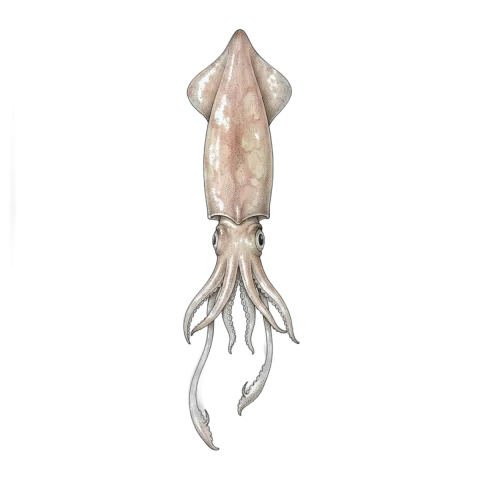
01
Squid
- Trolling
- Spinning
Elongated muscular body holds internal organs and secretes scent in the water.
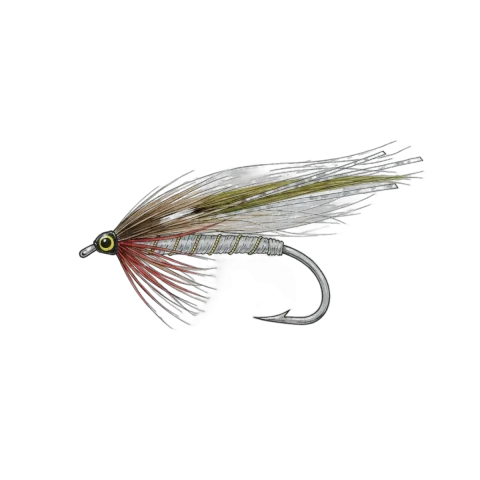
03
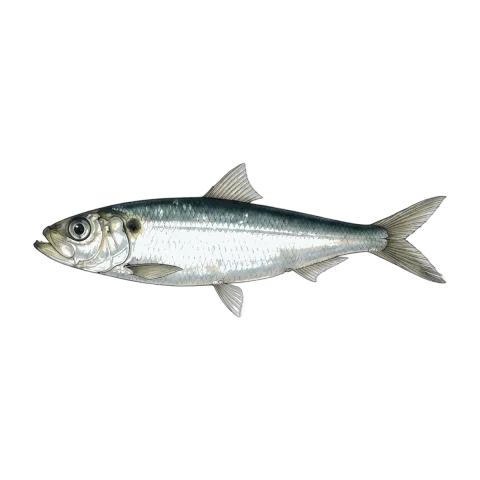
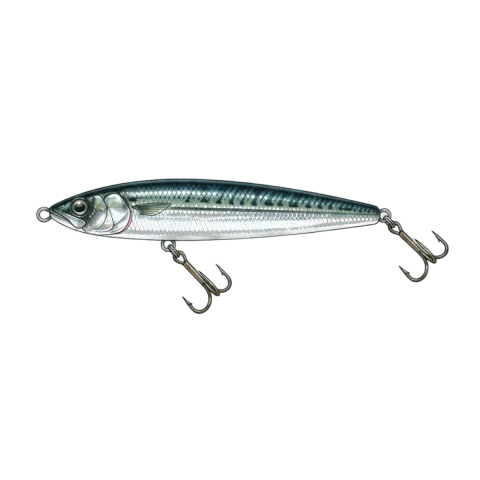
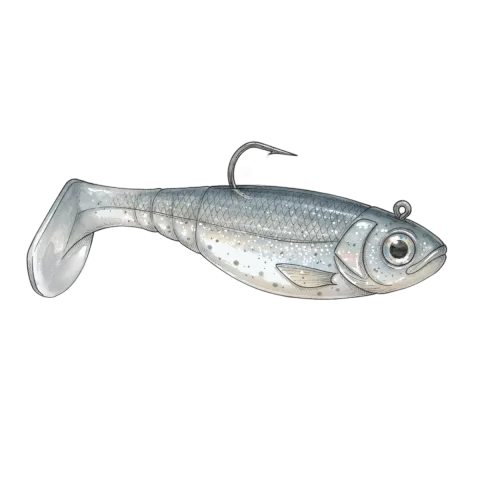
Sardine
- Trolling
Elongated silvery baitfish body releases strong scent trails.
06
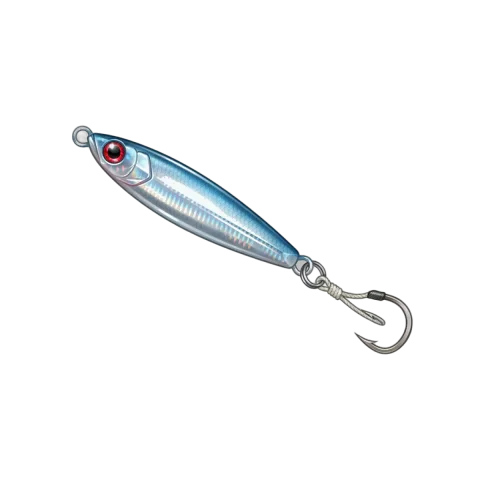
Metal jig
- Spinning
A long metal lure for speed-jigging the deep column.
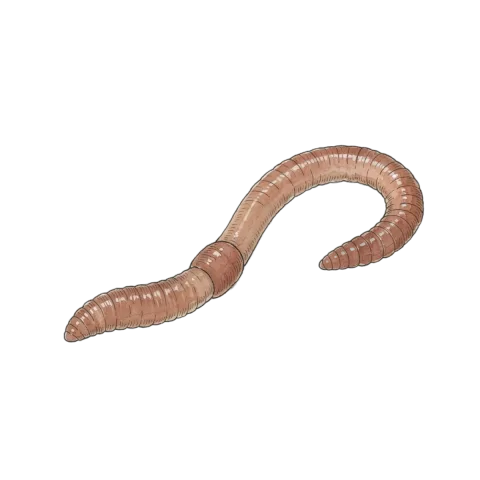
07
Live baitfish
- Live Baiting
Elongated segmented worm body provides natural movement to attract fish.
How Pompano dolphinfish migrates — Oceanodromous
Migrates within the sea between spawning, nursery and feeding grounds, and never enters fresh water. Follow its seasonal shifts along the coast and offshore.
1 Eggs
Spawning grounds
Laid on the spawning grounds.
2 Larvae
→ Nursery grounds
Drift with the currents to the nursery grounds.
3 Juveniles
Nursery grounds
Grow up in sheltered nursery waters.
4 Adults
Feeding grounds
Range widely over the feeding grounds.
5 Spawners
→ Spawning grounds
Return to the spawning grounds each season.
It stays in the sea and never runs up into fresh water.
Hover or tap a number to read each stage.
Diet and behavior of Pompano dolphinfish
-
Diet
Top predator -
Feeds by
Hunts animals -
Hunts
Dawn · Morning -
Main prey
Baitfish
Prey and predators of Pompano dolphinfish
Prey is what Pompano dolphinfish eats. Predators are the animals that eat it.
That is how it feeds, and how it is hunted.
Prey
What it eats
Baitfish
Predators
What hunts it
Where Pompano dolphinfish lives
Pelagic in the open ocean beyond the shelf break.
0–400 m

Where this species lives
Pompano dolphinfish photos for identification
Compare these photos with the catalog plate to identify the species.
Where to fish for Pompano dolphinfish
Mapped fishing spots where Pompano dolphinfish is recorded — open a pin for access and methods.
