How to catch Silver scabbardfish
Lepidopus caudatus (Euphrasen, 1788)
About Silver scabbardfish fishing
The silver scabbardfish is an eel-like benthopelagic predator belonging to the cutlassfish family Trichiuridae. Growing up to two metres in length with a slender, compressed silver body and a distinctively concave forehead, this marine species inhabits the outer continental shelf and upper slopes down to significant depths over soft sandy and muddy ground. It undertakes vertical migrations into midwater at night to feed on schooling fish, crustaceans and small squid, occasionally forming dense aggregations or stranding inshore during winter upwellings.
-
Difficulty
Medium
-
Average size
117 cm SL
-
Market value
Medium
-
Habitat
Saltwater
-
Season
Spring, Summer, Autumn, Winter
-
Also known as
Buttersnoek, Cutlassfish, Frostfish, Hairtail, Ribbonfish, Scabbard fish

Forked caudal shape
Forked tail fin distinguishes it from ribbonfishes.
Superior mouth
Superior mouth position with prominent teeth indicates a predatory habit.
Long dorsal fin
Dorsal fin extending over most of the back length.
Striking body shape
Elongated, ribbon-like body shape characteristic of scabbardfishes.
Silver scabbardfish fishing facts
Characteristics
-
Typical size
117 cm SL (max 210 cm TL ) -
Typical weight
1.2 kg (max 8 kg ) -
Preferred temperature
9.8–16 °C -
Depth
42–620 m -
Longevity
8 years -
Body shape
Eel Like -
Commercial?
-
Vulnerability score
53.1
Best hours
-
Active
Dawn
First light
-
Low
Morning
After sunrise
-
Low
Midday
High sun
-
Low
Afternoon
Late day
-
Active
Dusk
Last light
-
Peak
Night
After dark
When to fish for Silver scabbardfish
How to catch Silver scabbardfish
Tips for catching Silver scabbardfish
Targeting this deep-water benthopelagic predator requires heavy bottom-fishing gear or vertical jigging outfits capable of reaching depths beyond one hundred metres along the continental shelf edge. Anglers achieve the best results during dark hours when these fish move upward into midwater columns to hunt. Natural baits such as strips of mackerel, sardine or squid fished on multi-hook ledger rigs are highly effective, while vertical metal jigs worked near deep drop-offs can also tempt strikes during their nocturnal feeding movements, particularly in winter months when they migrate closer inshore.
Other names for Silver scabbardfish
Local and alternate names anglers use for Silver scabbardfish.
-
Frostfish
-
Cutlassfish
-
Hairtail
-
Ribbonfish
-
Silver scabbardfish
-
Silver scabbard fish
-
Scabbardfish
-
Scabbard fish
-
Buttersnoek
-
Southern frostfish
Best equipment to catch Silver scabbardfish
Compare fishing methods for Silver scabbardfish — sized kit for each technique.
Note: Typical fish is 1.2 kg Our algorithm will suggest the best equipment for you based on this weight.
Bottom Fishing
Presenting bait or rigs on or near the lake or sea floor.
75% Effectiveness

Rod
Spinning rod
A spinning rod is a fishing rod built to carry a spinning reel under the blank. You cast lures and light baits with it from shore or a boat.
Sized for a typical fish
medium-light · 2.13 m
- Reel seat
- Spinning
- Form factor
- Multi-piece
- Action
- Fast
- Grip
- EVA

Reel
Spinning reel
A spinning reel hangs under the fishing rod and is the default reel for casting lures and light baits. Line peels off an open spool with a bail.
Sized for a typical fish
1000 · 3 kg drag · 185 g
- Spool
- Fixed
- Mount
- Under
- Drag
- Front
- Retrieve
- Manual

Line
Monofilament line
Monofilament fishing line is the everyday main line: easy to knot, cheap to replace, and stretchy enough to forgive a hard strike.
Sized for a typical fish
3.6 kg · 0.2 mm
- Visibility
- Medium
- Abrasion
- Medium
- Stretch
- High
- Sink rate
- Slow

Leader
Fluorocarbon leader
A fluorocarbon leader is the clear, fast-sinking join between a visible main line and the lure or hook.
Sized for a typical fish
4 kg · 0.2 mm · 80 cm
- Visibility
- Very low
- Abrasion
- High
- Stretch
- Low
- Sink rate
- Fast

Hook
Circle hook
A circle hook turns in the mouth and usually finds the corner of the jaw. You do not strike hard — you come tight. It includes freshwater.
Sized for a typical fish
2
- Points
- 1
- Offset
- No
- Barbed
- Yes
- Gap
- Standard
Jigging
Working vertical lures with an active up-and-down motion.
60% Effectiveness
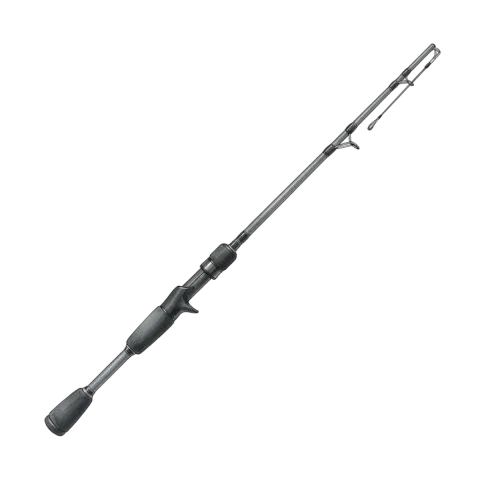
Rod
Jigging rod
A jigging rod is the short, powerful fishing rod for working a metal jig up through the column, including freshwater jigging.
Sized for a typical fish
heavy · 1.52 m
- Reel seat
- Casting
- Form factor
- One-piece
- Action
- Fast
- Grip
- EVA
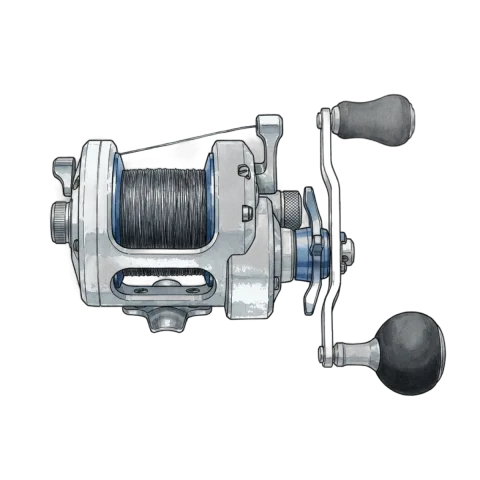
Reel
Jigging reel
A jigging reel is a compact, high-speed conventional for working metal jigs. A short retrieve picks up slack fast.
Sized for a typical fish
10 · 10 kg drag
- Spool
- Revolving
- Mount
- Over
- Drag
- Star
- Retrieve
- Manual

Line
Braided line
Braided fishing line is the thin, no-stretch main for long casts, jigging, and feeling every tick on the retrieve.
Sized for a typical fish
6 kg · 0.1 mm
- Visibility
- High
- Abrasion
- Low
- Stretch
- None
- Sink rate
- Floats
Leader
Fluorocarbon leader
A fluorocarbon leader is the clear, fast-sinking join between a visible main line and the lure or hook.
Sized for a typical fish
7 kg · 0.3 mm · 90 cm
- Visibility
- Very low
- Abrasion
- High
- Stretch
- Low
- Sink rate
- Fast
Best lures and baits for Silver scabbardfish
Ranked lures and natural baits from every method, best first.
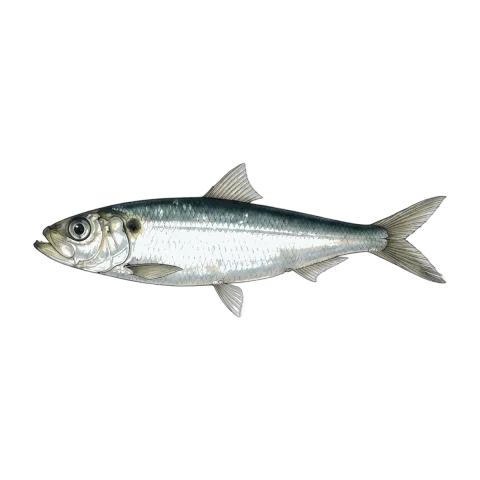
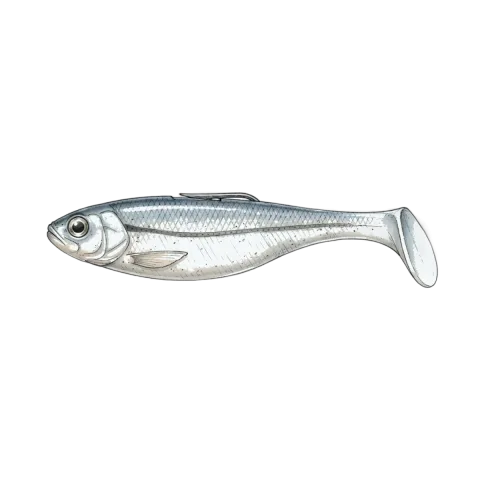
01
Sardine
- Bottom Fishing
Elongated silvery baitfish body releases strong scent trails.
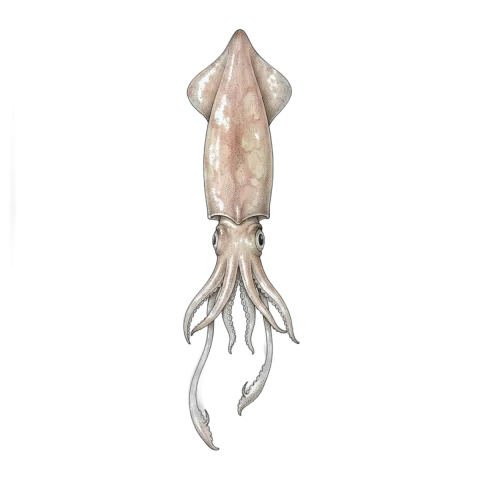
02
Squid
- Bottom Fishing
Elongated muscular body holds internal organs and secretes scent in the water.
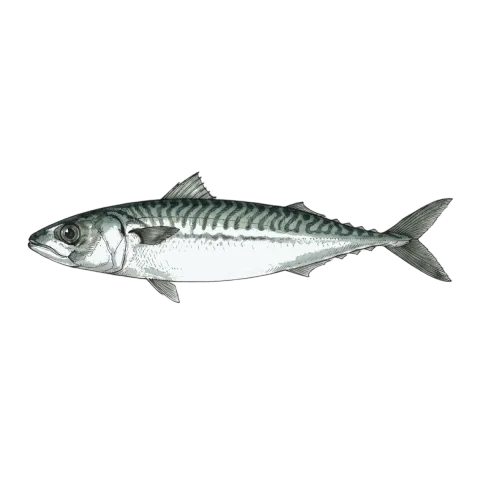
03
Mackerel
- Bottom Fishing
Distinctive wavy dorsal stripes provide high contrast and flash underwater.
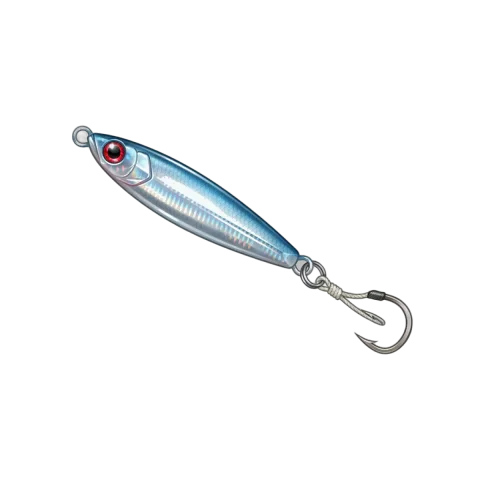
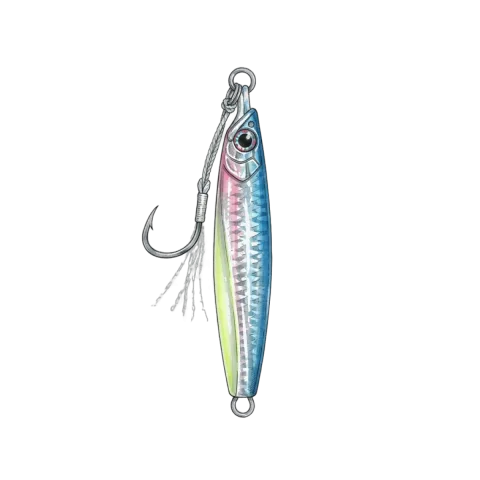
04
Metal jig
- Jigging
A long metal lure for speed-jigging the deep column.
How Silver scabbardfish migrates — Oceanodromous
Migrates within the sea between spawning, nursery and feeding grounds, and never enters fresh water. Follow its seasonal shifts along the coast and offshore.
1 Eggs
Spawning grounds
Laid on the spawning grounds.
2 Larvae
→ Nursery grounds
Drift with the currents to the nursery grounds.
3 Juveniles
Nursery grounds
Grow up in sheltered nursery waters.
4 Adults
Feeding grounds
Range widely over the feeding grounds.
5 Spawners
→ Spawning grounds
Return to the spawning grounds each season.
It stays in the sea and never runs up into fresh water.
Hover or tap a number to read each stage.
Diet and behavior of Silver scabbardfish
-
Diet
Carnivore -
Feeds by
Hunts animals -
Hunts
Night -
Feeds over
Soft bottom -
Main prey
Baitfish
Prey and predators of Silver scabbardfish
Prey is what Silver scabbardfish eats. Predators are the animals that eat it.
That is how it feeds, and how it is hunted.
Prey
What it eats
Predators
What hunts it
Where Silver scabbardfish lives
Lives near the bottom but swims in the water just above it. Cover the lower column, not only the mud.
42–620 m · usually 100–300 m

Where this species lives
Silver scabbardfish photos for identification
Compare these photos with the catalog plate to identify the species.
Where to fish for Silver scabbardfish
Mapped fishing spots where Silver scabbardfish is recorded — open a pin for access and methods.


