How to catch South European Toothcarp
Aphanius fasciatus (Valenciennes, 1821)
About South European Toothcarp fishing
The Mediterranean banded killifish is a small member of the Aphaniidae family characterized by an elongated fusiform body with flattened sides and a broadly rounded caudal fin. Males display an olive green to bluish back with silvery flanks marked by ten to fifteen dark transverse bands alongside yellowish fins, while females exhibit a duller grey green appearance with faint narrow markings. Growing to a maximum length of nearly seven centimetres and a common length around five and a half centimetres, this short lived benthopelagic species inhabits shallow coastal lagoons, river mouths, saline marshes, and hypersaline pools down to twenty metres depth. It feeds by grazing on algae, detritus, small crustaceans, and aquatic insect larvae, completing its life cycle in still to slow flowing fresh, brackish, and marine waters where females deposit eggs on submerged vegetation from spring through early autumn.
-
Difficulty
Medium
-
Average size
5.5 cm
-
Habitat
Freshwater, Brackish, Saltwater
-
Season
Spring, Summer, Autumn
-
Also known as
Mediterranean banded killifish

Truncate caudal shape
Caudal fin is more or less truncate, typical of the species.
Abdominal pelvic-fin
Pelvic fins are located far back on the abdomen.
Dark vertical bars
Series of dark vertical bars along the silvery-yellow body sides.
South European Toothcarp fishing facts
Characteristics
-
Typical size
5.5 cm (max 6.8 cm TL ) -
Typical weight
0.2 kg (max 0 kg ) -
Preferred temperature
17.6–20.1 °C -
Depth
1–20 m -
Longevity
15.2 years -
Body shape
Fusiform / Normal -
Vulnerability score
14.3
Best hours
-
Low
Dawn
First light
-
Peak
Morning
After sunrise
-
Peak
Midday
High sun
-
Active
Afternoon
Late day
-
Low
Dusk
Last light
-
Low
Night
After dark
When to fish for South European Toothcarp
How to catch South European Toothcarp
Tips for catching South European Toothcarp
This tiny coastal inhabitant thrives in shallow lagoons, salt marshes and river mouths where dense aquatic vegetation and submerged weeds offer shelter and feeding zones. Because of its diminutive size and protected status in many regions, targeted angling is uncommon, but when studied or sampled by naturalists it is approached using ultra-light tackle in very shallow margins. Micro-presentations featuring tiny natural baits suspended near the bottom or close to weed beds align with its omnivorous diet of small invertebrates and plant detritus. Fishing is most productive during daylight hours in calmer warmer months when these schooling fish are actively foraging around coastal shallows.
Other names for South European Toothcarp
Local and alternate names anglers use for South European Toothcarp.
-
South European Toothcarp
-
Mediterranean banded killifish
Best equipment to catch South European Toothcarp
Compare fishing methods for South European Toothcarp — sized kit for each technique.
Note: Typical fish is 0.2 kg Our algorithm will suggest the best equipment for you based on this weight.
Pole Fishing
Presenting bait on a long pole with no reel.
20% Effectiveness
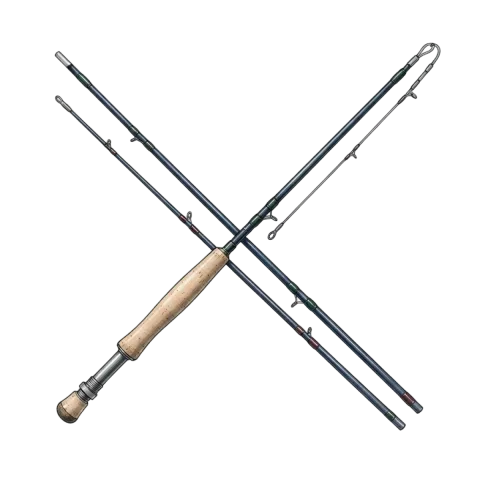
Rod
Pole rod
A fishing pole is a telescopic, reel-less rod for presenting a light float or rig under the tip. You ship it; you do not cast it.
Sized for a typical fish
5 m
- Reel seat
- None
- Form factor
- Multi-piece
- Action
- Moderate
- Grip
- Cork

Line
Monofilament line
Monofilament fishing line is the everyday main line: easy to knot, cheap to replace, and stretchy enough to forgive a hard strike.
Sized for a typical fish
1.3 kg · 0.125 mm
- Visibility
- Medium
- Abrasion
- Medium
- Stretch
- High
- Sink rate
- Slow
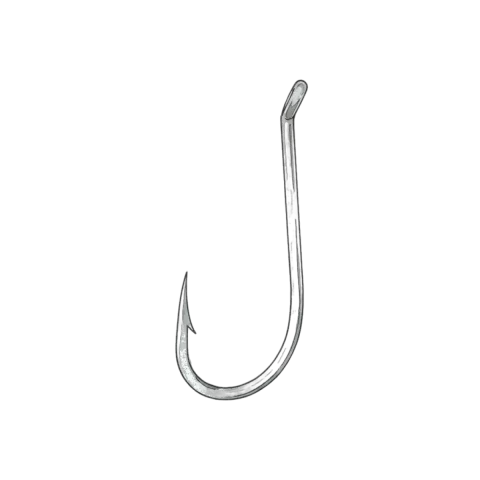
Hook
Aberdeen hook
An Aberdeen hook is a light-wire, long-shank hook for live minnows and delicate baits. It straightens on a snag before the line breaks.
Sized for a typical fish
12
- Points
- 1
- Offset
- No
- Barbed
- Yes
- Gap
- Narrow
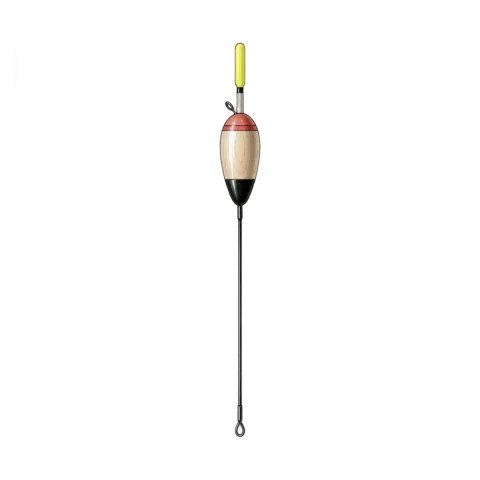
Float
Pole float
A pole float is a tiny, sensitive float fished under a pole, not cast. It is not a pole rod.
Sized for a typical fish
0.8 g
- Attachment
- Fixed
- Habitats
- Freshwater
- Methods
- Pole Fishing
Float Fishing
Suspending bait beneath a float at a controlled depth.
15% Effectiveness

Rod
Float rod
A float rod is the all-round fishing rod for a float in rivers and still water, a step down in length from match.
Sized for a typical fish
light · 3.6 m
- Reel seat
- Spinning
- Form factor
- Multi-piece
- Action
- Moderate
- Grip
- Cork

Reel
Spinning reel
A spinning reel hangs under the fishing rod and is the default reel for casting lures and light baits. Line peels off an open spool with a bail.
Sized for a typical fish
1000 · 3 kg drag · 185 g
- Spool
- Fixed
- Mount
- Under
- Drag
- Front
- Retrieve
- Manual
Line
Monofilament line
Monofilament fishing line is the everyday main line: easy to knot, cheap to replace, and stretchy enough to forgive a hard strike.
Sized for a typical fish
1.3 kg · 0.125 mm
- Visibility
- Medium
- Abrasion
- Medium
- Stretch
- High
- Sink rate
- Slow

Hook
J-hook
A J-hook is the classic J-bend fishing hook for bait. You set it with a strike. Sizes are tokens such as 12 or 1/0.
Sized for a typical fish
12
- Points
- 1
- Offset
- No
- Barbed
- Yes
- Gap
- Standard

Float
Waggler
A waggler is a bottom-only attachment float for stillwaters and slow rivers. You shot it down and watch the antenna.
Sized for a typical fish
4 g
- Attachment
- Fixed
- Habitats
- Freshwater
- Methods
- Float Fishing
Best lures and baits for South European Toothcarp
Ranked lures and natural baits from every method, best first.
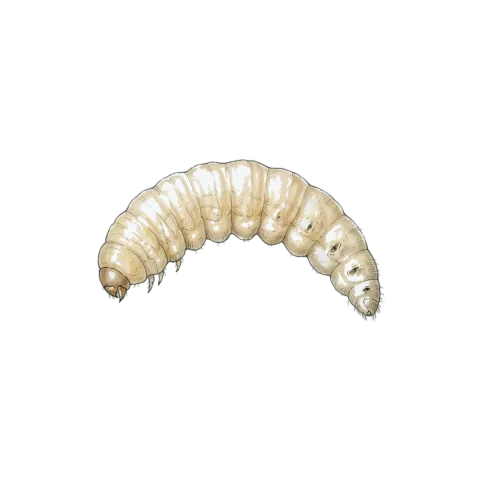
01
Maggot
- Pole Fishing
- Float Fishing
Segmented white body provides enticing natural movement and scent.
Where South European Toothcarp spends the year — Non-migratory
Stays in the same waters year-round. Look for it on the same grounds rather than timing a run.
1 Eggs
Same water all year
Laid on the home grounds.
2 Juveniles
Same water all year
Grow up close by.
3 Adults
Same water all year
Keep to a small home range.
4 Spawners
Same water all year
Spawn on the same grounds, with only short moves.
Hover or tap a number to read each stage.
Diet and behavior of South European Toothcarp
-
Diet
Omnivore -
Feeds by
Grazes plants -
Hunts
Morning · Midday
Where South European Toothcarp lives
Lives near the bottom but swims in the water just above it. Cover the lower column, not only the mud.
1–20 m

River mouth
Where this species lives
South European Toothcarp photos for identification
Compare these photos with the catalog plate to identify the species.