How to catch Tarpon snook
Centropomus pectinatus Poey, 1860
About Tarpon snook fishing
The tarpon snook is a small member of the Centropomidae family featuring a slender fusiform body, a large projecting lower jaw, and a brownish olive back fading to silver sides. Growing commonly up to forty centimetres in total length, this benthopelagic predator inhabits shallow coastal waters, mangrove creeks, and estuaries while frequently pushing far upstream into fresh water. It relies on a diet of small fish and crustaceans, holding tight to submerged structure to ambush passing prey. Highly regarded by light tackle enthusiasts for its spirited fight, it is targeted extensively across its tropical American range.
-
Difficulty
Medium
-
Average size
40 cm TL
-
Market value
Very high
-
Habitat
Freshwater, Brackish, Saltwater
-
Season
Spring, Summer, Autumn
-
Also known as
Blackfin snook, Comb-tooth snook, Culan snook, Robalito de las aletas prietas, Tarpon Snook

Lateral Stripe
A prominent dark lateral line running from gills to the tail base.
Protruding Jaw
Strongly projecting lower jaw typical of predatory snooks.
Two Dorsal Fins
Distinctly separated first spiny dorsal and second soft dorsal fins.
Tarpon snook fishing facts
Characteristics
-
Typical size
40 cm TL (max 56 cm TL ) -
Typical weight
0.3 kg (max 1.5 kg ) -
Preferred temperature
25.9–28 °C -
Depth
1–50 m -
Body shape
Fusiform / Normal -
Commercial?
-
Vulnerability score
29.2
Best hours
-
Peak
Dawn
First light
-
Active
Morning
After sunrise
-
Low
Midday
High sun
-
Low
Afternoon
Late day
-
Peak
Dusk
Last light
-
Active
Night
After dark
When to fish for Tarpon snook
How to catch Tarpon snook
Tips for catching Tarpon snook
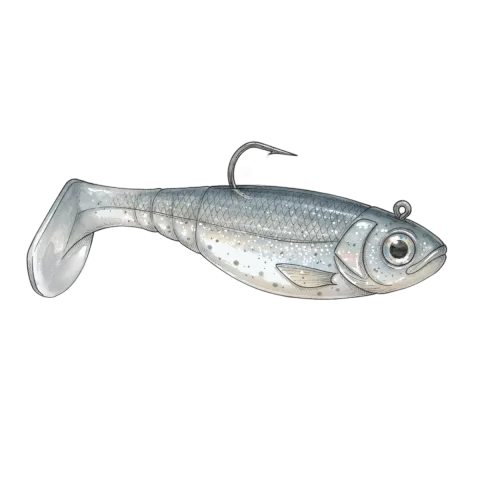
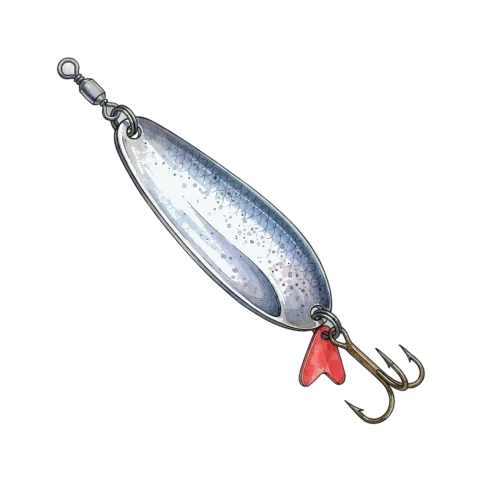
Succeeding with this agile inshore predator requires presenting offerings close to mangrove roots, dock pilings, and rocky current breaks where fish wait to ambush prey. Spinners achieve great success casting slender soft plastic paddle tails or metallic spoons on a steady retrieve with intermittent pauses. Live shrimp or small baitfish rigged on circle hooks fished around tidal bottlenecks can entice hesitant fish during low light periods. Targeting them during early morning or late evening hours across warm months yields the most consistent action.
Other names for Tarpon snook
Local and alternate names anglers use for Tarpon snook.
-
Tarpon snook
-
Robalito de las aletas prietas
-
Culan snook
-
Comb-tooth snook
-
Blackfin snook
Best equipment to catch Tarpon snook
Compare fishing methods for Tarpon snook — sized kit for each technique.
Note: Typical fish is 0.3 kg Our algorithm will suggest the best equipment for you based on this weight.
Spinning
Casting and retrieving lures with a spinning rod and reel.
95% Effectiveness

Rod
Spinning rod
A spinning rod is a fishing rod built to carry a spinning reel under the blank. You cast lures and light baits with it from shore or a boat.
Sized for a typical fish
ultralight · 1.8 m
- Reel seat
- Spinning
- Form factor
- Multi-piece
- Action
- Fast
- Grip
- EVA

Reel
Spinning reel
A spinning reel hangs under the fishing rod and is the default reel for casting lures and light baits. Line peels off an open spool with a bail.
Sized for a typical fish
1000 · 3 kg drag · 185 g
- Spool
- Fixed
- Mount
- Under
- Drag
- Front
- Retrieve
- Manual

Line
Braided line
Braided fishing line is the thin, no-stretch main for long casts, jigging, and feeling every tick on the retrieve.
Sized for a typical fish
6 kg · 0.1 mm
- Visibility
- High
- Abrasion
- Low
- Stretch
- None
- Sink rate
- Floats

Leader
Fluorocarbon leader
A fluorocarbon leader is the clear, fast-sinking join between a visible main line and the lure or hook.
Sized for a typical fish
7 kg · 0.3 mm · 90 cm
- Visibility
- Very low
- Abrasion
- High
- Stretch
- Low
- Sink rate
- Fast
Live Baiting
Fishing a live baitfish or live invertebrate as the primary presentation.
85% Effectiveness
Rod
Spinning rod
A spinning rod is a fishing rod built to carry a spinning reel under the blank. You cast lures and light baits with it from shore or a boat.
Sized for a typical fish
ultralight · 1.8 m
- Reel seat
- Spinning
- Form factor
- Multi-piece
- Action
- Fast
- Grip
- EVA
Reel
Spinning reel
A spinning reel hangs under the fishing rod and is the default reel for casting lures and light baits. Line peels off an open spool with a bail.
Sized for a typical fish
1000 · 3 kg drag · 185 g
- Spool
- Fixed
- Mount
- Under
- Drag
- Front
- Retrieve
- Manual

Line
Monofilament line
Monofilament fishing line is the everyday main line: easy to knot, cheap to replace, and stretchy enough to forgive a hard strike.
Sized for a typical fish
1.3 kg · 0.125 mm
- Visibility
- Medium
- Abrasion
- Medium
- Stretch
- High
- Sink rate
- Slow
Leader
Fluorocarbon leader
A fluorocarbon leader is the clear, fast-sinking join between a visible main line and the lure or hook.
Sized for a typical fish
4 kg · 0.2 mm · 80 cm
- Visibility
- Very low
- Abrasion
- High
- Stretch
- Low
- Sink rate
- Fast

Hook
Circle hook
A circle hook turns in the mouth and usually finds the corner of the jaw. You do not strike hard — you come tight. It includes freshwater.
Sized for a typical fish
4
- Points
- 1
- Offset
- No
- Barbed
- Yes
- Gap
- Standard
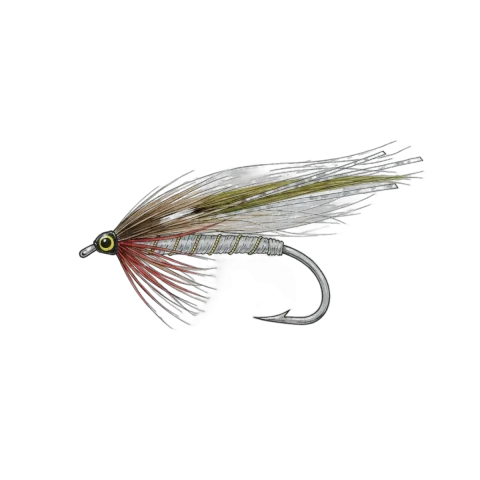
Fly Fishing
Presenting artificial flies with a fly rod and weighted line.
75% Effectiveness
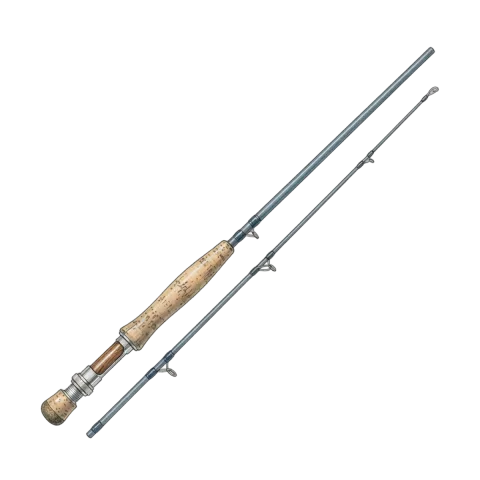
Rod
Fly rod
A fly rod is a fishing rod sized by line weight, with a fly reel seat. The fly line, not a heavy lure, loads the blank.
Sized for a typical fish
2.44 m · 3wt
- Reel seat
- Fly
- Form factor
- Multi-piece
- Action
- Moderate-fast
- Grip
- Cork
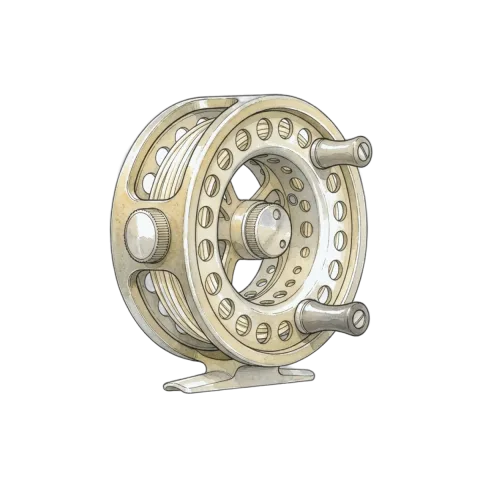
Reel
Fly reel
A fly reel is a large-arbor drum that stores backing and fly line. Drag is a disc; the reel does not cast the fly.
Sized for a typical fish
2 kg drag · 3wt
- Spool
- Drum
- Mount
- Under
- Drag
- Disc
- Retrieve
- Manual
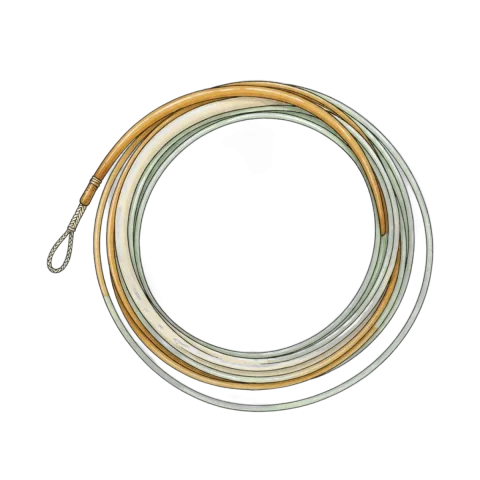
Line
Fly line
Fly line is the weighted shooting line that carries a near-weightless fly. Match it by weight class to the fly rod, not by kilo rating.
Sized for a typical fish
3wt
- Visibility
- Medium
- Abrasion
- Medium
- Stretch
- Low
- Sink rate
- Slow
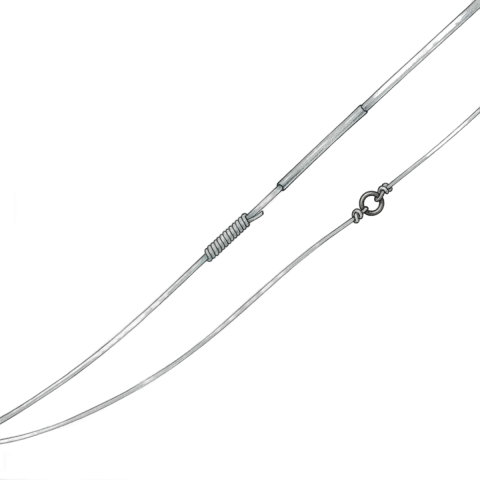
Leader
Tippet
Tippet is the fine, replaceable end of a fly leader, sized in X so you can match the fly and the fish.
Sized for a typical fish
1.6 kg · 0.13 mm · 75 cm · 6X
- Visibility
- Medium
- Abrasion
- Medium
- Stretch
- Medium
- Sink rate
- Slow
Best lures and baits for Tarpon snook
Ranked lures and natural baits from every method, best first.
03
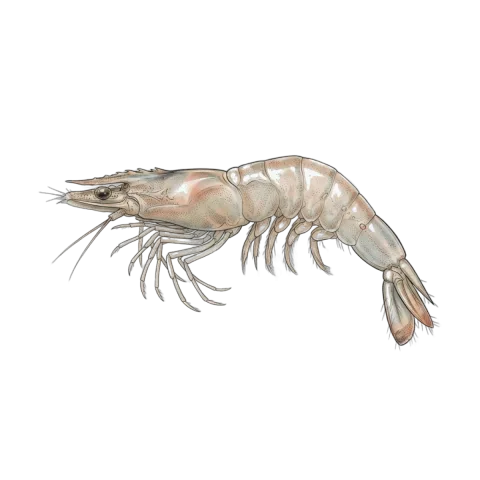
Shrimp
- Live Baiting
Translucent segmented carapace protects the body.
04
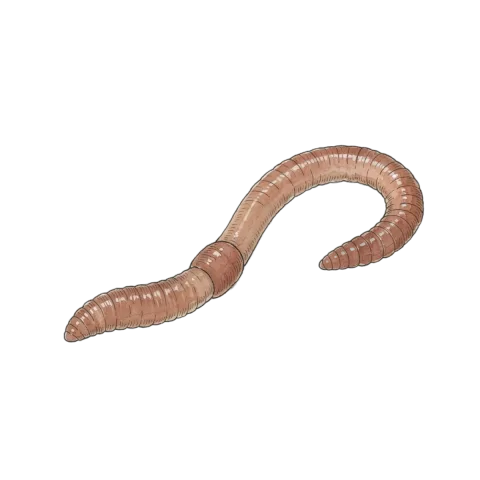
Live baitfish
- Live Baiting
Elongated segmented worm body provides natural movement to attract fish.
How Tarpon snook migrates — Catadromous
Grows in fresh or brackish water and migrates to the sea to spawn. Estuaries and lower rivers fire when adults drop downstream.
1 Eggs
Sea
Spawned out at sea.
2 Larvae
→ Estuary
Drift with the currents towards the coast.
3 Juveniles
→ Fresh water
Enter estuaries, and many move on into fresh water.
4 Adults
Fresh water
Feed and grow in rivers, lakes and estuaries, often for years.
5 Spawners
→ Sea
Head downstream and out to sea to spawn.
Many only reach estuaries and the lower river; eels travel far inland.
Hover or tap a number to read each stage.
Diet and behavior of Tarpon snook
-
Diet
Top predator -
Hunts
Dawn · Dusk
Where Tarpon snook lives
Lives near the bottom but swims in the water just above it. Cover the lower column, not only the mud.
1–50 m

River mouth
Where this species lives