How to catch Threespot leporinus
Leporinus friderici (Bloch, 1794)
About Threespot leporinus fishing
The threespot leporinus is an elongate freshwater fish belonging to the family Anostomidae, readily distinguished by three dark rounded blotches along its flanks. Reaching a standard length of up to 40 cm and a maximum recorded weight of 1.5 kg, this species features a robust fusiform body and a terminal mouth equipped with four strong teeth on each jaw used for crushing hard food items. It inhabits the tropical river basins of South America, preferring flowing streams and deeper river channels during dry periods while moving into flooded zones during rainy seasons. Its diet is primarily herbivorous and omnivorous, consisting of fruits, seeds, plant matter, and occasional insects. Highly regarded for the exceptional quality of its flesh, it remains an important resource for subsistence and local fisheries.
-
Difficulty
Medium
-
Average size
25 cm
-
Habitat
Freshwater
-
Also known as
Characin, Frederici's leporinus

Body spots
Distinct dark vertical blotches along the lateral line identify this species.
Lateral stripe
A prominent dark horizontal stripe running across the body.
Threespot leporinus fishing facts
Characteristics
-
Typical size
25 cm (max 40 cm SL ) -
Typical weight
0.3 kg (max 1.5 kg ) -
Longevity
23.9 years -
Body shape
Fusiform / Normal -
Vulnerability score
37.8
When to fish for Threespot leporinus
How to catch Threespot leporinus
Tips for catching Threespot leporinus
Anglers target this species in deep river channels during dry seasonal low-water periods using light tackle and delicate presentations. Because these fish feed primarily on plant matter, fruits, and seeds, small vegetable baits or sweetcorn fished cleanly on the bottom or suspended just above structure yield the best results. A sensitive float setup helps detect subtle bites from the powerful crushing jaws, while careful presentation around submerged branches and root systems increases success.
Other names for Threespot leporinus
Local and alternate names anglers use for Threespot leporinus.
-
Threespot leporinus
-
Frederici's leporinus
-
Characin
Best equipment to catch Threespot leporinus
Compare fishing methods for Threespot leporinus — sized kit for each technique.
Note: Typical fish is 0.3 kg Our algorithm will suggest the best equipment for you based on this weight.
Float Fishing
Suspending bait beneath a float at a controlled depth.
75% Effectiveness

Rod
Float rod
A float rod is the all-round fishing rod for a float in rivers and still water, a step down in length from match.
Sized for a typical fish
light · 3.6 m
- Reel seat
- Spinning
- Form factor
- Multi-piece
- Action
- Moderate
- Grip
- Cork

Reel
Spinning reel
A spinning reel hangs under the fishing rod and is the default reel for casting lures and light baits. Line peels off an open spool with a bail.
Sized for a typical fish
1000 · 3 kg drag · 185 g
- Spool
- Fixed
- Mount
- Under
- Drag
- Front
- Retrieve
- Manual

Line
Monofilament line
Monofilament fishing line is the everyday main line: easy to knot, cheap to replace, and stretchy enough to forgive a hard strike.
Sized for a typical fish
1.3 kg · 0.125 mm
- Visibility
- Medium
- Abrasion
- Medium
- Stretch
- High
- Sink rate
- Slow

Hook
J-hook
A J-hook is the classic J-bend fishing hook for bait. You set it with a strike. Sizes are tokens such as 12 or 1/0.
Sized for a typical fish
12
- Points
- 1
- Offset
- No
- Barbed
- Yes
- Gap
- Standard

Float
Waggler
A waggler is a bottom-only attachment float for stillwaters and slow rivers. You shot it down and watch the antenna.
Sized for a typical fish
4 g
- Attachment
- Fixed
- Habitats
- Freshwater
- Methods
- Float Fishing
Bottom Fishing
Presenting bait or rigs on or near the lake or sea floor.
65% Effectiveness

Rod
Spinning rod
A spinning rod is a fishing rod built to carry a spinning reel under the blank. You cast lures and light baits with it from shore or a boat.
Sized for a typical fish
ultralight · 1.8 m
- Reel seat
- Spinning
- Form factor
- Multi-piece
- Action
- Fast
- Grip
- EVA
Reel
Spinning reel
A spinning reel hangs under the fishing rod and is the default reel for casting lures and light baits. Line peels off an open spool with a bail.
Sized for a typical fish
1000 · 3 kg drag · 185 g
- Spool
- Fixed
- Mount
- Under
- Drag
- Front
- Retrieve
- Manual
Line
Monofilament line
Monofilament fishing line is the everyday main line: easy to knot, cheap to replace, and stretchy enough to forgive a hard strike.
Sized for a typical fish
1.3 kg · 0.125 mm
- Visibility
- Medium
- Abrasion
- Medium
- Stretch
- High
- Sink rate
- Slow

Leader
Fluorocarbon leader
A fluorocarbon leader is the clear, fast-sinking join between a visible main line and the lure or hook.
Sized for a typical fish
4 kg · 0.2 mm · 80 cm
- Visibility
- Very low
- Abrasion
- High
- Stretch
- Low
- Sink rate
- Fast

Hook
Circle hook
A circle hook turns in the mouth and usually finds the corner of the jaw. You do not strike hard — you come tight. It includes freshwater.
Sized for a typical fish
4
- Points
- 1
- Offset
- No
- Barbed
- Yes
- Gap
- Standard
Best lures and baits for Threespot leporinus
Ranked lures and natural baits from every method, best first.
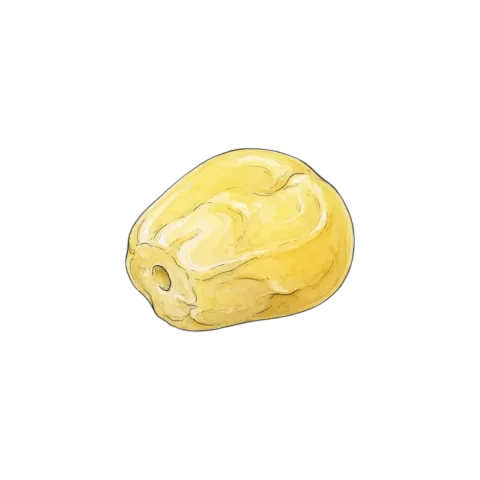
01
Corn
- Float Fishing
- Bottom Fishing
Plump yellow sweetcorn kernel used as effective freshwater fishing bait.
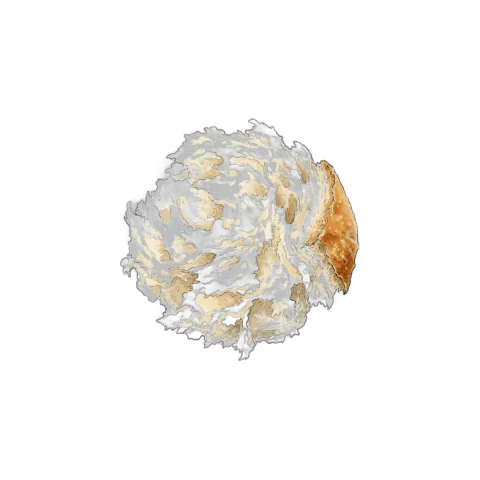
02
Bread
- Float Fishing
Soft inner bread compressed onto the hook for surface feeding.
How Threespot leporinus migrates — Potamodromous
Migrates within rivers and lakes only. Fish upstream runs and seasonal lake movements, not saltwater.
1 Eggs
Upstream
Laid on gravel or weed upstream or in flooded shallows.
2 Larvae
→ Main river or lake
Fry drift or swim down to slower water.
3 Adults
Main river or lake
Feed in the main river or lake.
4 Spawners
→ Upstream
Move upstream or into the shallows to spawn.
The whole cycle stays in fresh water.
Hover or tap a number to read each stage.
Diet and behavior of Threespot leporinus
-
Diet
Carnivore -
Feeds by
Mixed feeder -
Main prey
Detritus · Plants
Prey and predators of Threespot leporinus
Prey is what Threespot leporinus eats. Predators are the animals that eat it.
That is how it feeds, and how it is hunted.
Prey
What it eats
Where Threespot leporinus lives
Lives near the bottom but swims in the water just above it. Cover the lower column, not only the mud.

Where this species lives
Threespot leporinus photos for identification
Compare these photos with the catalog plate to identify the species.