How to catch Tripletail
Lobotes surinamensis (Bloch, 1790)
About Tripletail fishing
The Atlantic tripletail is a deep-bodied, robust marine fish belonging to the family Lobotidae, easily recognised by its rounded dorsal and anal fins that extend past the tail to create a distinctive three-lobed appearance. Adults typically measure around eighty centimetres and feature a slightly concave forehead, a mottled brownish-yellow or dark bronze upper body, and paler silvery-grey flanks. In European waters, this pelagic and oceanodromous species is a rare visitor found near coastal structures, buoys, and drifting flotsam where it often floats on its side to mimic debris. They feed primarily on crustaceans and small fish across warm temperate to tropical zones, descending into deeper offshore waters during the colder winter months.
-
Difficulty
Medium
-
Average size
80 cm TL
-
Market value
Very high
-
Habitat
Brackish, Saltwater
-
Season
Spring, Summer, Autumn
-
Also known as
Atlantic tripletail, Black grunt, Black perch, Bouy fish, Bouyfish, Brown triple tail

Concave forehead
Distinctly concave head profile helps identify the tripletail.
Rounded caudal shape
Rounded caudal fin merges with soft dorsal and anal fins for a trilobed appearance.
Terminal mouth
Upward-slanting terminal mouth position aids in species recognition.
Extended dorsal fin
High continuous dorsal fin base extends far along the back.
Tripletail fishing facts
Characteristics
-
Typical size
80 cm TL (max 110 cm TL ) -
Typical weight
2.5 kg (max 19.2 kg ) -
Preferred temperature
18.3–29 °C -
Depth
0–70 m -
Longevity
3 years -
Body shape
Short And / Or Deep -
Commercial?
-
Vulnerability score
34.3
Best hours
-
Low
Dawn
First light
-
Peak
Morning
After sunrise
-
Active
Midday
High sun
-
Peak
Afternoon
Late day
-
Low
Dusk
Last light
-
Low
Night
After dark
When to fish for Tripletail
How to catch Tripletail
Tips for catching Tripletail
Anglers targeting tripletail focus their efforts during the warmer summer and early autumn months when these fish congregate around offshore buoys, channel markers, and floating timber. Because these fish have a habit of hovering motionless just beneath the surface beside floating cover, sight casting is often the most productive approach. Presenting a live shrimp or small crab right in front of a drifting fish yields high success, as does twitching a surface lure or sinking a soft plastic past their field of vision. When afloat in coastal zones, scanning the shade lines of surface debris will quickly reveal their distinctive shape, requiring quiet boat handling to avoid spooking a wary specimen.
Other names for Tripletail
Local and alternate names anglers use for Tripletail.
-
Brown tripletail
-
Bouyfish
-
Brown triple tail
-
Flasher
-
Dusky perch
-
Dusky triple-tail
-
Black grunt
-
Black perch
-
Atlantic tripletail
-
Conchy leaf
-
Dusky tripletail
-
Bouy fish
-
Tripletail
-
Triple tail
-
Sleepfish
-
Triple-tail
-
Jumping cod
-
Tripple tail
Best equipment to catch Tripletail
Compare fishing methods for Tripletail — sized kit for each technique.
Note: Typical fish is 2.5 kg Our algorithm will suggest the best equipment for you based on this weight.
Live Baiting
Fishing a live baitfish or live invertebrate as the primary presentation.
80% Effectiveness

Rod
Spinning rod
A spinning rod is a fishing rod built to carry a spinning reel under the blank. You cast lures and light baits with it from shore or a boat.
Sized for a typical fish
medium · 2.13 m
- Reel seat
- Spinning
- Form factor
- Multi-piece
- Action
- Fast
- Grip
- EVA

Reel
Spinning reel
A spinning reel hangs under the fishing rod and is the default reel for casting lures and light baits. Line peels off an open spool with a bail.
Sized for a typical fish
1000 · 3 kg drag · 185 g
- Spool
- Fixed
- Mount
- Under
- Drag
- Front
- Retrieve
- Manual

Line
Monofilament line
Monofilament fishing line is the everyday main line: easy to knot, cheap to replace, and stretchy enough to forgive a hard strike.
Sized for a typical fish
7.5 kg · 0.3 mm
- Visibility
- Medium
- Abrasion
- Medium
- Stretch
- High
- Sink rate
- Slow

Leader
Fluorocarbon leader
A fluorocarbon leader is the clear, fast-sinking join between a visible main line and the lure or hook.
Sized for a typical fish
9 kg · 0.35 mm · 100 cm
- Visibility
- Very low
- Abrasion
- High
- Stretch
- Low
- Sink rate
- Fast

Hook
Circle hook
A circle hook turns in the mouth and usually finds the corner of the jaw. You do not strike hard — you come tight. It includes freshwater.
Sized for a typical fish
2
- Points
- 1
- Offset
- No
- Barbed
- Yes
- Gap
- Standard
Spinning
Casting and retrieving lures with a spinning rod and reel.
70% Effectiveness
Rod
Spinning rod
A spinning rod is a fishing rod built to carry a spinning reel under the blank. You cast lures and light baits with it from shore or a boat.
Sized for a typical fish
medium · 2.13 m
- Reel seat
- Spinning
- Form factor
- Multi-piece
- Action
- Fast
- Grip
- EVA
Reel
Spinning reel
A spinning reel hangs under the fishing rod and is the default reel for casting lures and light baits. Line peels off an open spool with a bail.
Sized for a typical fish
1000 · 3 kg drag · 185 g
- Spool
- Fixed
- Mount
- Under
- Drag
- Front
- Retrieve
- Manual

Line
Braided line
Braided fishing line is the thin, no-stretch main for long casts, jigging, and feeling every tick on the retrieve.
Sized for a typical fish
6 kg · 0.1 mm
- Visibility
- High
- Abrasion
- Low
- Stretch
- None
- Sink rate
- Floats
Leader
Fluorocarbon leader
A fluorocarbon leader is the clear, fast-sinking join between a visible main line and the lure or hook.
Sized for a typical fish
7 kg · 0.3 mm · 90 cm
- Visibility
- Very low
- Abrasion
- High
- Stretch
- Low
- Sink rate
- Fast
Bottom Fishing
Presenting bait or rigs on or near the lake or sea floor.
60% Effectiveness
Rod
Spinning rod
A spinning rod is a fishing rod built to carry a spinning reel under the blank. You cast lures and light baits with it from shore or a boat.
Sized for a typical fish
medium · 2.13 m
- Reel seat
- Spinning
- Form factor
- Multi-piece
- Action
- Fast
- Grip
- EVA
Reel
Spinning reel
A spinning reel hangs under the fishing rod and is the default reel for casting lures and light baits. Line peels off an open spool with a bail.
Sized for a typical fish
1000 · 3 kg drag · 185 g
- Spool
- Fixed
- Mount
- Under
- Drag
- Front
- Retrieve
- Manual
Line
Monofilament line
Monofilament fishing line is the everyday main line: easy to knot, cheap to replace, and stretchy enough to forgive a hard strike.
Sized for a typical fish
7.5 kg · 0.3 mm
- Visibility
- Medium
- Abrasion
- Medium
- Stretch
- High
- Sink rate
- Slow
Leader
Fluorocarbon leader
A fluorocarbon leader is the clear, fast-sinking join between a visible main line and the lure or hook.
Sized for a typical fish
9 kg · 0.35 mm · 100 cm
- Visibility
- Very low
- Abrasion
- High
- Stretch
- Low
- Sink rate
- Fast
Hook
Circle hook
A circle hook turns in the mouth and usually finds the corner of the jaw. You do not strike hard — you come tight. It includes freshwater.
Sized for a typical fish
2
- Points
- 1
- Offset
- No
- Barbed
- Yes
- Gap
- Standard
Fly Fishing
Presenting artificial flies with a fly rod and weighted line.
50% Effectiveness
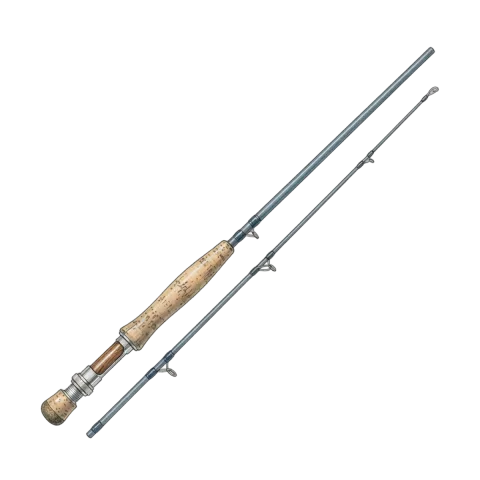
Rod
Fly rod
A fly rod is a fishing rod sized by line weight, with a fly reel seat. The fly line, not a heavy lure, loads the blank.
Sized for a typical fish
2.74 m · 6wt
- Reel seat
- Fly
- Form factor
- Multi-piece
- Action
- Moderate-fast
- Grip
- Cork
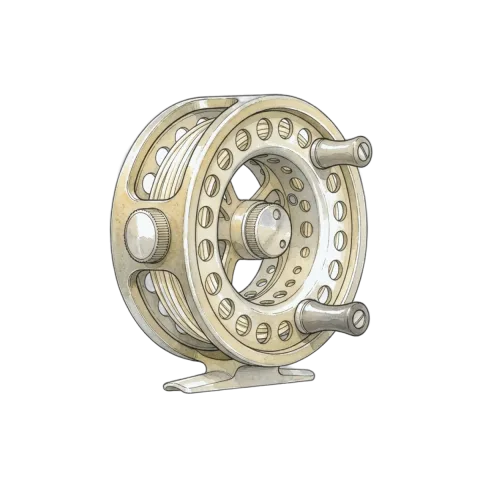
Reel
Fly reel
A fly reel is a large-arbor drum that stores backing and fly line. Drag is a disc; the reel does not cast the fly.
Sized for a typical fish
5 kg drag · 6wt
- Spool
- Drum
- Mount
- Under
- Drag
- Disc
- Retrieve
- Manual
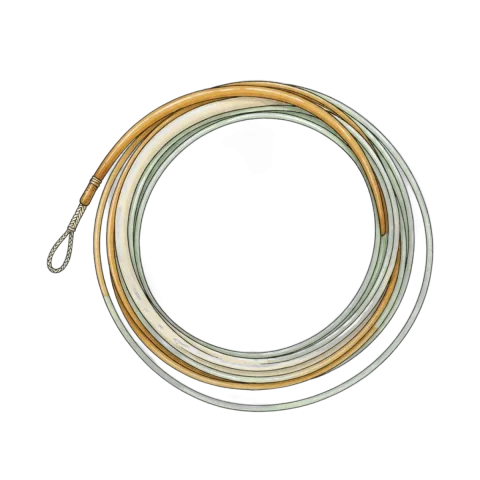
Line
Fly line
Fly line is the weighted shooting line that carries a near-weightless fly. Match it by weight class to the fly rod, not by kilo rating.
Sized for a typical fish
6wt
- Visibility
- Medium
- Abrasion
- Medium
- Stretch
- Low
- Sink rate
- Slow
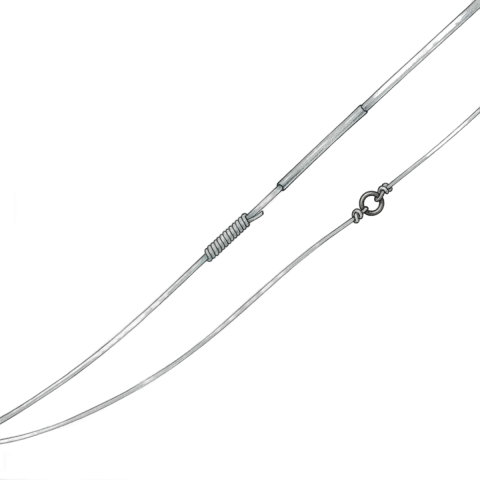
Leader
Tippet
Tippet is the fine, replaceable end of a fly leader, sized in X so you can match the fly and the fish.
Sized for a typical fish
3.6 kg · 0.2 mm · 80 cm · 3X
- Visibility
- Medium
- Abrasion
- Medium
- Stretch
- Medium
- Sink rate
- Slow
Best lures and baits for Tripletail
Ranked lures and natural baits from every method, best first.
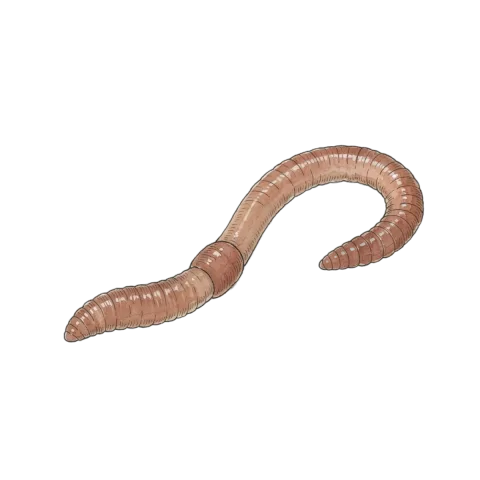
01
Live baitfish
- Live Baiting
Elongated segmented worm body provides natural movement to attract fish.
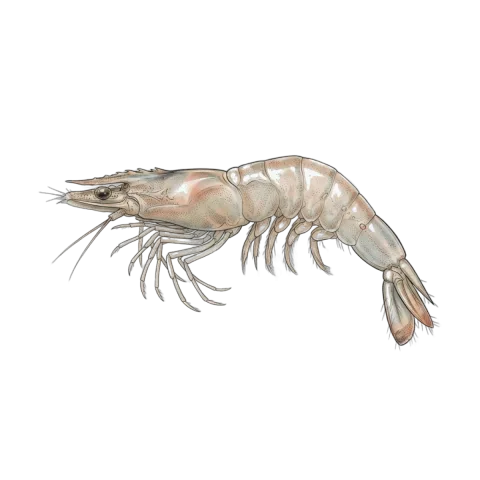
02
Shrimp
- Live Baiting
Translucent segmented carapace protects the body.
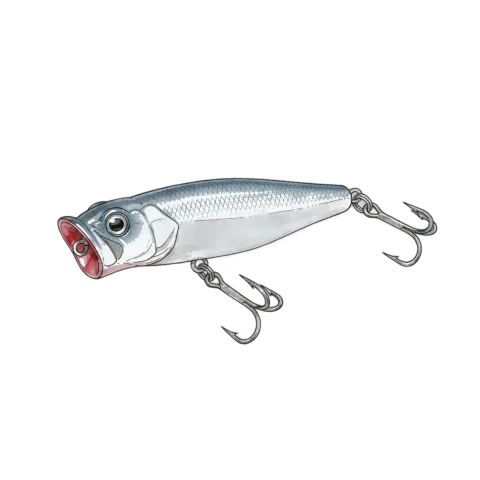
03
Topwater plug
- Spinning
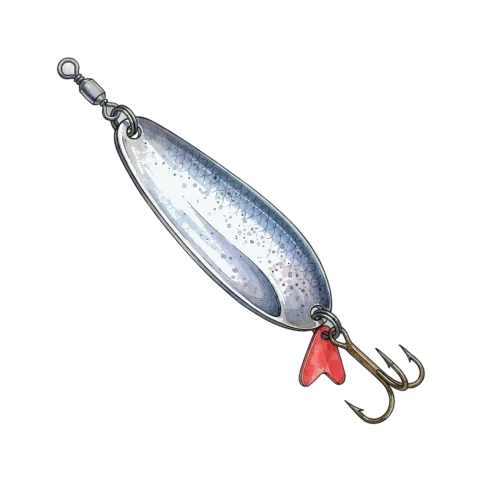
A floating plug that pops and gurgles on the surface.
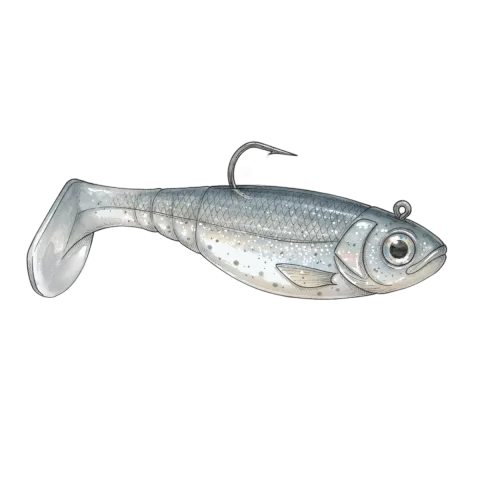
06
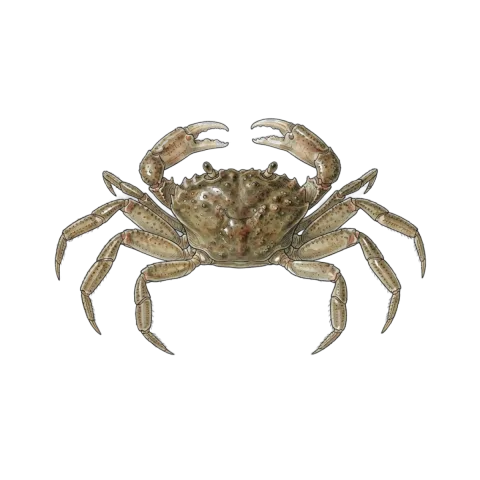
Crab
- Bottom Fishing
Hard upper shell protects the crab and anchors its vital organs.
07
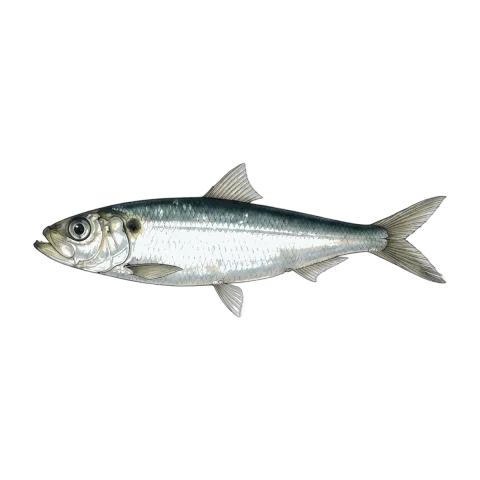
Sardine
- Bottom Fishing
Elongated silvery baitfish body releases strong scent trails.
How Tripletail migrates — Oceanodromous
Migrates within the sea between spawning, nursery and feeding grounds, and never enters fresh water. Follow its seasonal shifts along the coast and offshore.
1 Eggs
Spawning grounds
Laid on the spawning grounds.
2 Larvae
→ Nursery grounds
Drift with the currents to the nursery grounds.
3 Juveniles
Nursery grounds
Grow up in sheltered nursery waters.
4 Adults
Feeding grounds
Range widely over the feeding grounds.
5 Spawners
→ Spawning grounds
Return to the spawning grounds each season.
It stays in the sea and never runs up into fresh water.
Hover or tap a number to read each stage.
Diet and behavior of Tripletail
-
Diet
Top predator -
Feeds by
Hunts animals -
Hunts
Morning · Afternoon -
Feeds over
Coral reefs -
Main prey
Baitfish
Prey and predators of Tripletail
Prey is what Tripletail eats. Predators are the animals that eat it.
That is how it feeds, and how it is hunted.
Prey
What it eats
Where Tripletail lives
Lives near the bottom but swims in the water just above it. Cover the lower column, not only the mud.
0–70 m · usually 0–70 m

Estuary
Where this species lives
Tripletail photos for identification
Compare these photos with the catalog plate to identify the species.
Where to fish for Tripletail
Mapped fishing spots where Tripletail is recorded — open a pin for access and methods.


