How to catch Yellow bullhead
Ameiurus natalis (Lesueur, 1819)
About Yellow bullhead fishing
The yellow bullhead is a member of the catfish family Ictaluridae characterised by an elongated body shape, smooth scaleless skin, and a distinctive set of pale or white barbels beneath its chin. It typically displays a yellow-olive to slate-black back with bright yellow to white underparts and a rounded caudal fin margin. Reaching a maximum length of sixty centimetres and a common length of twenty-two point five centimetres, this demersal freshwater species inhabits sluggish pools, backwaters, and slow creeks with soft mud, sand, or gravel substrates. As a nocturnal scavenger, it feeds primarily on aquatic insects, crustaceans, mollusks, and plant matter using highly sensitive barbels to locate food in dark or murky waters. Spawning occurs in shallow nests near submerged cover during late spring and early summer, where both parents exhibit brood care to protect the eggs and young fry.
-
Difficulty
Medium
-
Average size
22.5 cm TL
-
Habitat
Freshwater
-
Season
Spring, Summer, Autumn
-
Also known as
Bullhead

Chin Barbels
Long light-colored chin barbels help identify this catfish species.
Rounded Tail Fin
Rounded caudal fin distinguishes yellow bullhead from forked-tail catfishes.
Adipose Fin
Fleshy adipose fin fused to the back characterizes ictalurid catfishes.
Yellow bullhead fishing facts
Characteristics
-
Typical size
22.5 cm TL (max 60 cm TL ) -
Typical weight
0.4 kg (max 1.9 kg ) -
Depth
10 m -
Longevity
4 years -
Body shape
Elongated -
Vulnerability score
47.6
Best hours
-
Active
Dawn
First light
-
Low
Morning
After sunrise
-
Low
Midday
High sun
-
Low
Afternoon
Late day
-
Active
Dusk
Last light
-
Peak
Night
After dark
When to fish for Yellow bullhead
How to catch Yellow bullhead
Tips for catching Yellow bullhead
Targeting yellow bullheads is most successful after dark when these bottom-dwelling scavengers emerge from daytime retreats around submerged timber, root wads, and soft silt edges to feed. Because they rely heavily on scent and touch rather than sight, anglers should use bottom rigs or sliding float presentations baited with natural offerings like worms, pieces of fish, or freshwater crustaceans that release strong scent trails. Keep your bait resting directly on the floor of slow-moving rivers, oxbows, or shallow ponds where the current is minimal. Fishing is generally most productive during the warmer months from late spring through early autumn, particularly during overcast conditions or twilight hours when the fish move closer to shore in search of food.
Other names for Yellow bullhead
Local and alternate names anglers use for Yellow bullhead.
-
Yellow bullhead
-
Bullhead
Best equipment to catch Yellow bullhead
Compare fishing methods for Yellow bullhead — sized kit for each technique.
Note: Typical fish is 0.4 kg Our algorithm will suggest the best equipment for you based on this weight.
Bottom Fishing
Presenting bait or rigs on or near the lake or sea floor.
90% Effectiveness

Rod
Spinning rod
A spinning rod is a fishing rod built to carry a spinning reel under the blank. You cast lures and light baits with it from shore or a boat.
Sized for a typical fish
ultralight · 1.8 m
- Reel seat
- Spinning
- Form factor
- Multi-piece
- Action
- Fast
- Grip
- EVA

Reel
Spinning reel
A spinning reel hangs under the fishing rod and is the default reel for casting lures and light baits. Line peels off an open spool with a bail.
Sized for a typical fish
1000 · 3 kg drag · 185 g
- Spool
- Fixed
- Mount
- Under
- Drag
- Front
- Retrieve
- Manual

Line
Monofilament line
Monofilament fishing line is the everyday main line: easy to knot, cheap to replace, and stretchy enough to forgive a hard strike.
Sized for a typical fish
1.3 kg · 0.125 mm
- Visibility
- Medium
- Abrasion
- Medium
- Stretch
- High
- Sink rate
- Slow

Leader
Fluorocarbon leader
A fluorocarbon leader is the clear, fast-sinking join between a visible main line and the lure or hook.
Sized for a typical fish
4 kg · 0.2 mm · 80 cm
- Visibility
- Very low
- Abrasion
- High
- Stretch
- Low
- Sink rate
- Fast

Hook
Circle hook
A circle hook turns in the mouth and usually finds the corner of the jaw. You do not strike hard — you come tight. It includes freshwater.
Sized for a typical fish
4
- Points
- 1
- Offset
- No
- Barbed
- Yes
- Gap
- Standard
Float Fishing
Suspending bait beneath a float at a controlled depth.
80% Effectiveness
Rod
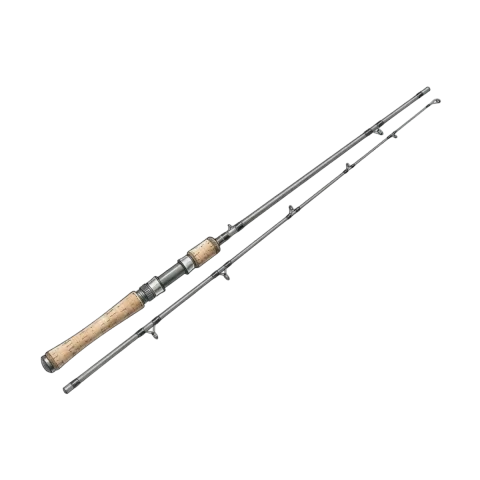
Float rod
A float rod is the all-round fishing rod for a float in rivers and still water, a step down in length from match.
Sized for a typical fish
light · 3.6 m
- Reel seat
- Spinning
- Form factor
- Multi-piece
- Action
- Moderate
- Grip
- Cork
Reel
Spinning reel
A spinning reel hangs under the fishing rod and is the default reel for casting lures and light baits. Line peels off an open spool with a bail.
Sized for a typical fish
1000 · 3 kg drag · 185 g
- Spool
- Fixed
- Mount
- Under
- Drag
- Front
- Retrieve
- Manual
Line
Monofilament line
Monofilament fishing line is the everyday main line: easy to knot, cheap to replace, and stretchy enough to forgive a hard strike.
Sized for a typical fish
1.3 kg · 0.125 mm
- Visibility
- Medium
- Abrasion
- Medium
- Stretch
- High
- Sink rate
- Slow
Hook
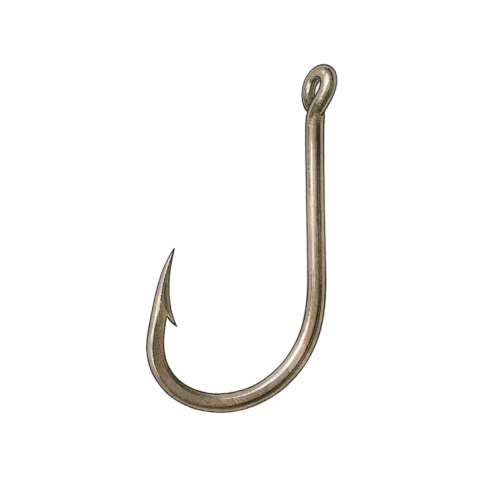
J-hook
A J-hook is the classic J-bend fishing hook for bait. You set it with a strike. Sizes are tokens such as 12 or 1/0.
Sized for a typical fish
8
- Points
- 1
- Offset
- No
- Barbed
- Yes
- Gap
- Standard
Float
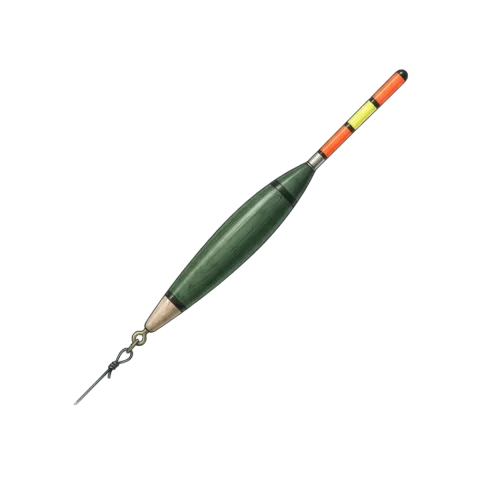
Waggler
A waggler is a bottom-only attachment float for stillwaters and slow rivers. You shot it down and watch the antenna.
Sized for a typical fish
4 g
- Attachment
- Fixed
- Habitats
- Freshwater
- Methods
- Float Fishing
Feeder Fishing
Ledgering with a swimfeeder or method feeder and a quiver-tip rod.
75% Effectiveness
Rod
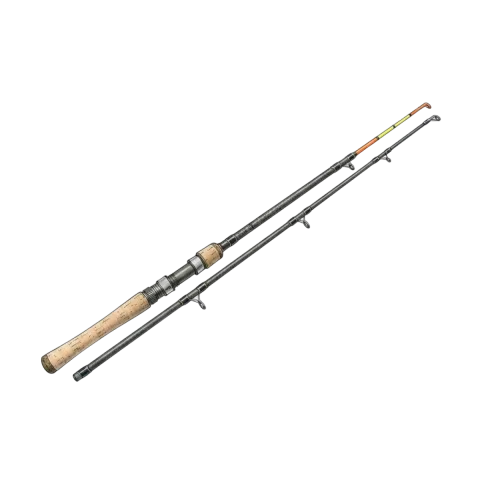
Feeder rod
A feeder rod is a long, quiver-tipped fishing rod for casting a feeder and watching the tip for bites.
Sized for a typical fish
medium · 3.3 m
- Reel seat
- Spinning
- Form factor
- Multi-piece
- Action
- Moderate
- Grip
- Cork
Reel
Spinning reel
A spinning reel hangs under the fishing rod and is the default reel for casting lures and light baits. Line peels off an open spool with a bail.
Sized for a typical fish
1000 · 3 kg drag · 185 g
- Spool
- Fixed
- Mount
- Under
- Drag
- Front
- Retrieve
- Manual
Line
Monofilament line
Monofilament fishing line is the everyday main line: easy to knot, cheap to replace, and stretchy enough to forgive a hard strike.
Sized for a typical fish
1.3 kg · 0.125 mm
- Visibility
- Medium
- Abrasion
- Medium
- Stretch
- High
- Sink rate
- Slow
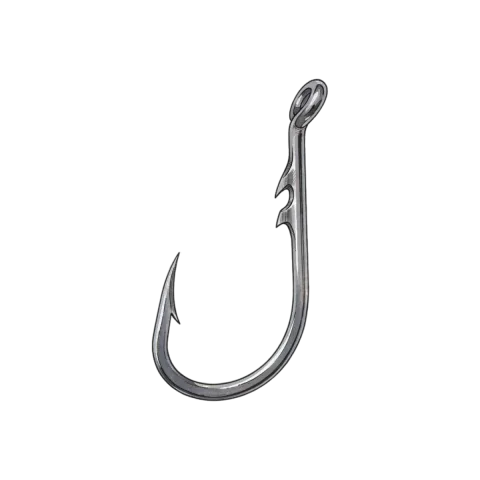
Hook
Baitholder hook
A baitholder hook has barbs on the shank to stop a worm or piece of bait sliding down. Classic float and feeder hook.
Sized for a typical fish
8
- Points
- 1
- Offset
- No
- Barbed
- Yes
- Gap
- Standard
Best lures and baits for Yellow bullhead
Ranked lures and natural baits from every method, best first.
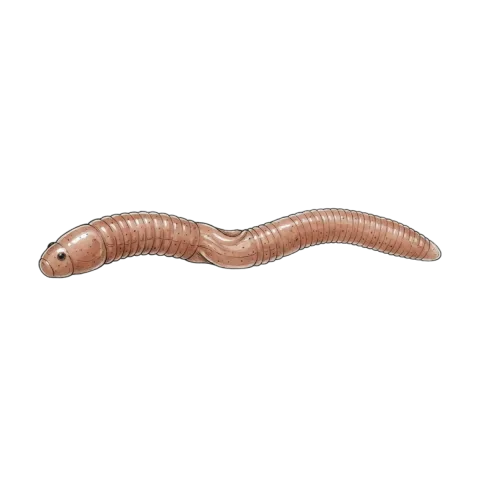
01
Worm
- Bottom Fishing
- Float Fishing
- Feeder Fishing
Rounded anterior end containing the mouth used for anchoring the bait on the hook.
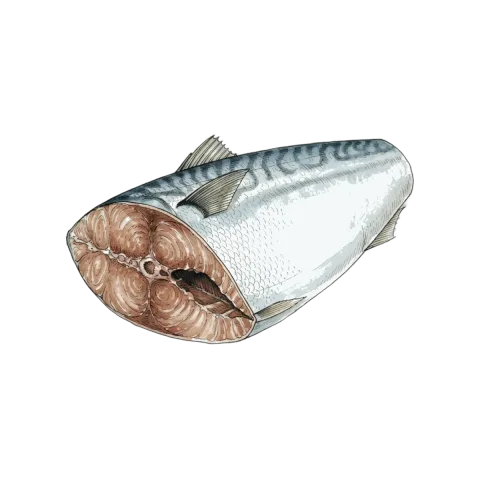
02
Fish chunks
- Bottom Fishing
Freshly sliced fish chunk providing rich scent attraction for bottom fishing.
Where Yellow bullhead spends the year — Non-migratory
Stays in the same waters year-round. Look for it on the same grounds rather than timing a run.
1 Eggs
Same water all year
Laid on the home grounds.
2 Juveniles
Same water all year
Grow up close by.
3 Adults
Same water all year
Keep to a small home range.
4 Spawners
Same water all year
Spawn on the same grounds, with only short moves.
Hover or tap a number to read each stage.
Diet and behavior of Yellow bullhead
-
Diet
Carnivore -
Feeds by
Hunts animals -
Hunts
Night
Prey and predators of Yellow bullhead
Prey is what Yellow bullhead eats. Predators are the animals that eat it.
That is how it feeds, and how it is hunted.
Prey
What it eats
Other prey
Where Yellow bullhead lives
Lives on or just above the bottom. Work jigs, bait, and lures along the seabed.

Where this species lives
Yellow bullhead photos for identification
Compare these photos with the catalog plate to identify the species.