How to catch Yellowbelly flounder
Rhombosolea leporina Günther, 1862
About Yellowbelly flounder fishing
The yellowbelly flounder is a compact demersal flatfish belonging to the family Rhombosoleidae, distinguished by a short, deep body shape with both eyes situated on its right side. Growing up to a maximum length of 32 cm and weighing around 0.6 kg, it features an olive-brown ocular side capable of rapid camouflage against sandy and muddy substrates, complemented by a pale yellowish blind side. Endemic to New Zealand coastal waters, this species thrives in shallow estuaries, tidal harbours, and mudflats from the intertidal zone down to 50 metres, preferring temperatures between 11.7 and 20.2 degrees Celsius. Juveniles inhabit sheltered inshore nurseries for up to two years before maturing and migrating offshore to deeper coastal waters for winter spawning. Highly regarded for its exceptional table qualities, it feeds primarily on benthic invertebrates such as small worms, crabs, and shrimp.
-
Difficulty
Medium
-
Average size
25 cm TL
-
Market value
Medium
-
Habitat
Saltwater
-
Season
Spring, Autumn, Winter
-
Also known as
New Zealand flounder, Yellow-belly flounder

Diamond body shape
Rhomboidal body profile distinguishes this flounder species.
Spotted fins
Dark spots pattern the rounded caudal fin.
Yellowbelly flounder fishing facts
Characteristics
-
Typical size
25 cm TL (max 32 cm TL ) -
Typical weight
0.2 kg (max 0.6 kg ) -
Preferred temperature
11.7–20.2 °C -
Depth
1–50 m -
Longevity
4 years -
Body shape
Short And / Or Deep -
Commercial?
-
Vulnerability score
21.7
Best hours
-
Low
Dawn
First light
-
Peak
Morning
After sunrise
-
Low
Midday
High sun
-
Active
Afternoon
Late day
-
Peak
Dusk
Last light
-
Low
Night
After dark
When to fish for Yellowbelly flounder
How to catch Yellowbelly flounder
Tips for catching Yellowbelly flounder
Anglers target yellowbelly flounder by wading across shallow estuarine mudflats and sandflats during incoming tides or by fishing from small boats in sheltered harbours. Success relies on extreme stealth, as these fish lie camouflaged on the bottom and spook easily if approached carelessly. Wading anglers use light spinning tackle equipped with micro softbaits, twitching small soft worms or plastic grubs slowly across the seafloor right past the fish to trigger an aggressive strike. Alternatively, presentation of natural baits like small segments of marine worms, prawns, or tiny crabs on fine bottom-fishing rigs works exceptionally well. Polarised sunglasses are essential for spotting resting or feeding fish against the sediment in shallow water.
Other names for Yellowbelly flounder
Local and alternate names anglers use for Yellowbelly flounder.
-
Yellowbelly flounder
-
Yellow-belly flounder
-
New Zealand flounder
Best equipment to catch Yellowbelly flounder
Compare fishing methods for Yellowbelly flounder — sized kit for each technique.
Note: Typical fish is 0.2 kg Our algorithm will suggest the best equipment for you based on this weight.
Spinning
Casting and retrieving lures with a spinning rod and reel.
85% Effectiveness

Rod
Spinning rod
A spinning rod is a fishing rod built to carry a spinning reel under the blank. You cast lures and light baits with it from shore or a boat.
Sized for a typical fish
ultralight · 1.8 m
- Reel seat
- Spinning
- Form factor
- Multi-piece
- Action
- Fast
- Grip
- EVA

Reel
Spinning reel
A spinning reel hangs under the fishing rod and is the default reel for casting lures and light baits. Line peels off an open spool with a bail.
Sized for a typical fish
1000 · 3 kg drag · 185 g
- Spool
- Fixed
- Mount
- Under
- Drag
- Front
- Retrieve
- Manual

Line
Braided line
Braided fishing line is the thin, no-stretch main for long casts, jigging, and feeling every tick on the retrieve.
Sized for a typical fish
6 kg · 0.1 mm
- Visibility
- High
- Abrasion
- Low
- Stretch
- None
- Sink rate
- Floats

Leader
Fluorocarbon leader
A fluorocarbon leader is the clear, fast-sinking join between a visible main line and the lure or hook.
Sized for a typical fish
7 kg · 0.3 mm · 90 cm
- Visibility
- Very low
- Abrasion
- High
- Stretch
- Low
- Sink rate
- Fast
Bottom Fishing
Presenting bait or rigs on or near the lake or sea floor.
80% Effectiveness
Rod
Spinning rod
A spinning rod is a fishing rod built to carry a spinning reel under the blank. You cast lures and light baits with it from shore or a boat.
Sized for a typical fish
ultralight · 1.8 m
- Reel seat
- Spinning
- Form factor
- Multi-piece
- Action
- Fast
- Grip
- EVA
Reel
Spinning reel
A spinning reel hangs under the fishing rod and is the default reel for casting lures and light baits. Line peels off an open spool with a bail.
Sized for a typical fish
1000 · 3 kg drag · 185 g
- Spool
- Fixed
- Mount
- Under
- Drag
- Front
- Retrieve
- Manual

Line
Monofilament line
Monofilament fishing line is the everyday main line: easy to knot, cheap to replace, and stretchy enough to forgive a hard strike.
Sized for a typical fish
1.3 kg · 0.125 mm
- Visibility
- Medium
- Abrasion
- Medium
- Stretch
- High
- Sink rate
- Slow
Leader
Fluorocarbon leader
A fluorocarbon leader is the clear, fast-sinking join between a visible main line and the lure or hook.
Sized for a typical fish
4 kg · 0.2 mm · 80 cm
- Visibility
- Very low
- Abrasion
- High
- Stretch
- Low
- Sink rate
- Fast

Hook
Circle hook
A circle hook turns in the mouth and usually finds the corner of the jaw. You do not strike hard — you come tight. It includes freshwater.
Sized for a typical fish
4
- Points
- 1
- Offset
- No
- Barbed
- Yes
- Gap
- Standard
Best lures and baits for Yellowbelly flounder
Ranked lures and natural baits from every method, best first.
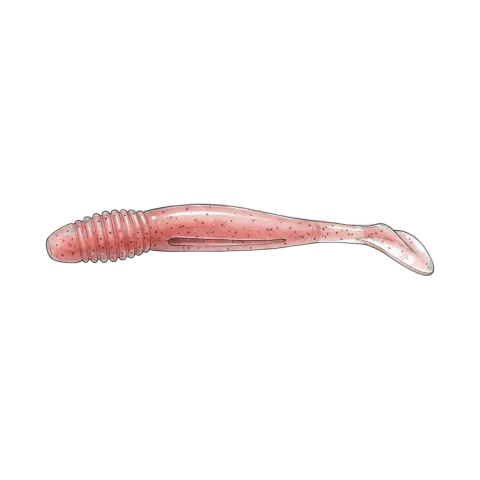
01
Soft worm
- Spinning
A long soft worm for Texas, wacky, and ned-style spinning.
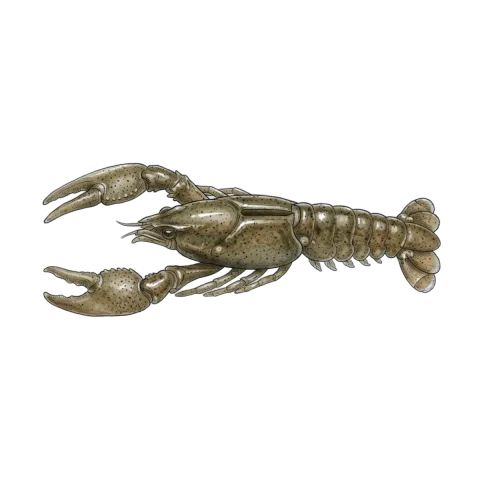
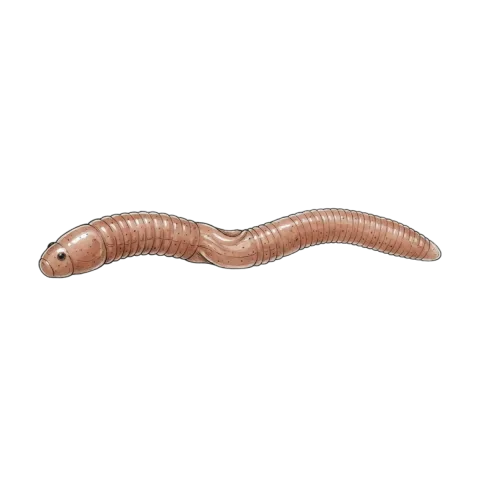
03
Worm
- Bottom Fishing
Rounded anterior end containing the mouth used for anchoring the bait on the hook.
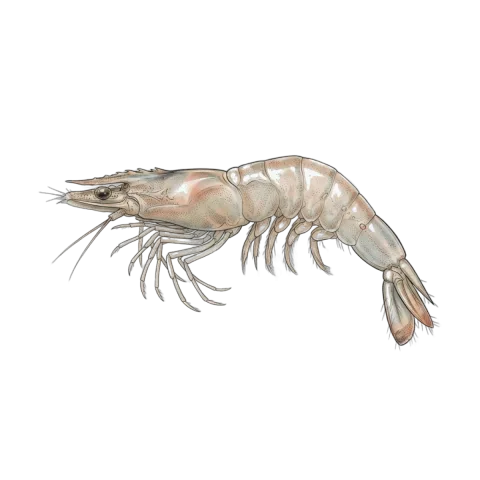
04
Shrimp
- Bottom Fishing
Translucent segmented carapace protects the body.
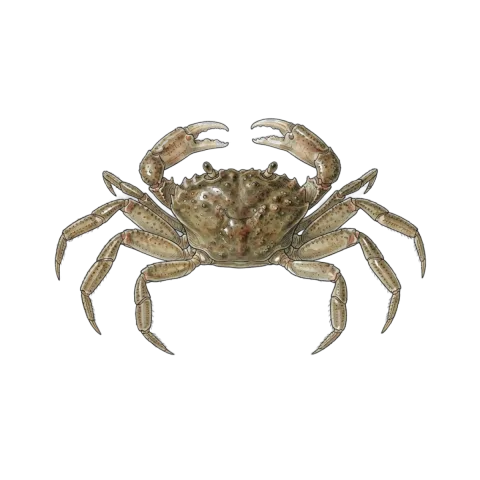
05
Crab
- Bottom Fishing
Hard upper shell protects the crab and anchors its vital organs.
How Yellowbelly flounder migrates — Inshore–offshore
Shifts between shallow inshore water and deeper offshore grounds with the season.
1 Warm months
Inshore
Stay close inshore through the warm months.
2 Cold months
Offshore
Move offshore into deeper water as it cools.
Hover or tap a number to read each stage.
Diet and behavior of Yellowbelly flounder
-
Diet
Carnivore -
Hunts
Morning · Dusk
Where Yellowbelly flounder lives
Lives on or just above the bottom. Work jigs, bait, and lures along the seabed.
1–50 m

Where this species lives
Yellowbelly flounder photos for identification
Compare these photos with the catalog plate to identify the species.
Where to fish for Yellowbelly flounder
Mapped fishing spots where Yellowbelly flounder is recorded — open a pin for access and methods.


