How to catch Agone
Alosa agone (Scopoli, 1786)
About Agone fishing
The agone is a small pelagic freshwater fish belonging to the family Alosidae, native to deep subalpine lakes in Italy and Switzerland. It features a slender fusiform body with a bluish-green back, brilliant silver sides marked by dark shoulder spots, and a distinctive ventral keel. Typically growing to around twenty-five centimetres, this schooling species inhabits deep open water basins for most of the year before undertaking a shallow water migration towards shorelines and lake surfaces during the summer months to spawn over gravelly substrates at night. Feeding primarily on planktonic crustaceans and small invertebrates, it has historically held immense cultural and culinary value for regional fisheries.
-
Difficulty
Medium
-
Average size
25 cm
-
Market value
Low
-
Habitat
Freshwater
-
Season
Spring, Summer, Autumn
-
Also known as
Mediterranean shad, Twaite shad

Straight dorsal profile
An almost straight dorsal profile distinguishes this species from Mediterranean congeners.
Shoulder spot row
A distinct row of dark spots runs horizontally along the upper shoulder.
Terminal mouth
The moderately large terminal mouth helps identify this pelagic clupeid.
Agone fishing facts
Characteristics
-
Typical size
25 cm (max 42.6 cm TL ) -
Typical weight
0.2 kg (max 0.8 kg ) -
Longevity
8 years -
Body shape
Fusiform / Normal -
Commercial?
-
Vulnerability score
49.3
Best hours
-
Low
Dawn
First light
-
Active
Morning
After sunrise
-
Low
Midday
High sun
-
Low
Afternoon
Late day
-
Peak
Dusk
Last light
-
Peak
Night
After dark
When to fish for Agone
How to catch Agone
Tips for catching Agone
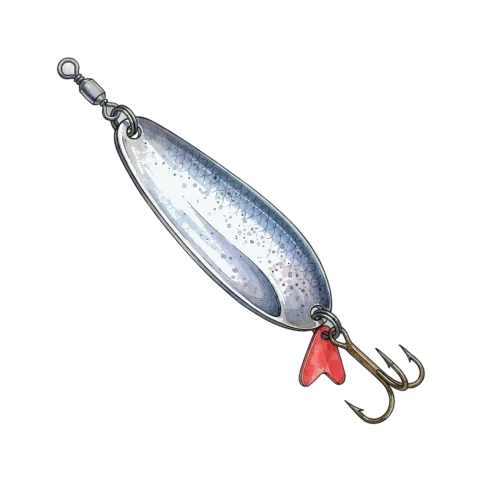
Anglers target this pelagic shoaling species primarily during its warm-weather nearshore movement using multi-hook rigs suspended beneath light floats or by casting micro-spoons and small artificial lures that mimic tiny shimmering prey. Success relies heavily on timing the approach to shallow areas during late spring and summer months when schools congregate near the surface, especially during low-light conditions or calm evening hours. Presentations should remain delicate and carefully depth-controlled to entice the cautious feeding habits of fish suspended in the upper water column close to structural drop-offs or piers.
Other names for Agone
Local and alternate names anglers use for Agone.
-
Mediterranean shad
-
Twaite shad
-
Agone
Best equipment to catch Agone
Compare fishing methods for Agone — sized kit for each technique.
Note: Typical fish is 0.2 kg Our algorithm will suggest the best equipment for you based on this weight.
Float Fishing
Suspending bait beneath a float at a controlled depth.
85% Effectiveness

Rod
Float rod
A float rod is the all-round fishing rod for a float in rivers and still water, a step down in length from match.
Sized for a typical fish
light · 3.6 m
- Reel seat
- Spinning
- Form factor
- Multi-piece
- Action
- Moderate
- Grip
- Cork

Reel
Spinning reel
A spinning reel hangs under the fishing rod and is the default reel for casting lures and light baits. Line peels off an open spool with a bail.
Sized for a typical fish
1000 · 3 kg drag · 185 g
- Spool
- Fixed
- Mount
- Under
- Drag
- Front
- Retrieve
- Manual

Line
Monofilament line
Monofilament fishing line is the everyday main line: easy to knot, cheap to replace, and stretchy enough to forgive a hard strike.
Sized for a typical fish
1.3 kg · 0.125 mm
- Visibility
- Medium
- Abrasion
- Medium
- Stretch
- High
- Sink rate
- Slow

Hook
J-hook
A J-hook is the classic J-bend fishing hook for bait. You set it with a strike. Sizes are tokens such as 12 or 1/0.
Sized for a typical fish
12
- Points
- 1
- Offset
- No
- Barbed
- Yes
- Gap
- Standard

Float
Waggler
A waggler is a bottom-only attachment float for stillwaters and slow rivers. You shot it down and watch the antenna.
Sized for a typical fish
4 g
- Attachment
- Fixed
- Habitats
- Freshwater
- Methods
- Float Fishing
Spinning
Casting and retrieving lures with a spinning rod and reel.
60% Effectiveness

Rod
Spinning rod
A spinning rod is a fishing rod built to carry a spinning reel under the blank. You cast lures and light baits with it from shore or a boat.
Sized for a typical fish
ultralight · 1.8 m
- Reel seat
- Spinning
- Form factor
- Multi-piece
- Action
- Fast
- Grip
- EVA
Reel
Spinning reel
A spinning reel hangs under the fishing rod and is the default reel for casting lures and light baits. Line peels off an open spool with a bail.
Sized for a typical fish
1000 · 3 kg drag · 185 g
- Spool
- Fixed
- Mount
- Under
- Drag
- Front
- Retrieve
- Manual

Line
Braided line
Braided fishing line is the thin, no-stretch main for long casts, jigging, and feeling every tick on the retrieve.
Sized for a typical fish
6 kg · 0.1 mm
- Visibility
- High
- Abrasion
- Low
- Stretch
- None
- Sink rate
- Floats

Leader
Fluorocarbon leader
A fluorocarbon leader is the clear, fast-sinking join between a visible main line and the lure or hook.
Sized for a typical fish
7 kg · 0.3 mm · 90 cm
- Visibility
- Very low
- Abrasion
- High
- Stretch
- Low
- Sink rate
- Fast
Best lures and baits for Agone
Ranked lures and natural baits from every method, best first.
01
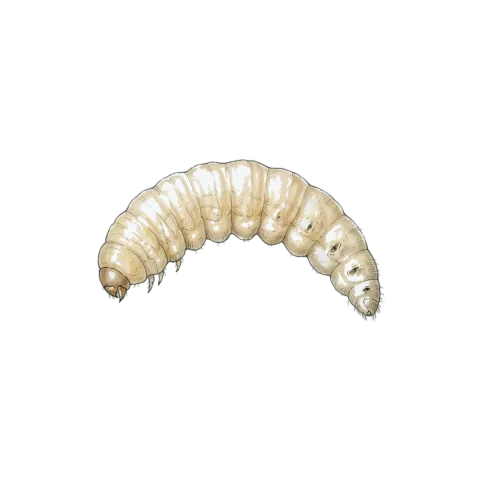
Maggot
- Float Fishing
Segmented white body provides enticing natural movement and scent.
Where Agone spends the year — Non-migratory
Stays in the same waters year-round. Look for it on the same grounds rather than timing a run.
1 Eggs
Same water all year
Laid on the home grounds.
2 Juveniles
Same water all year
Grow up close by.
3 Adults
Same water all year
Keep to a small home range.
4 Spawners
Same water all year
Spawn on the same grounds, with only short moves.
Hover or tap a number to read each stage.
Diet and behavior of Agone
-
Diet
Carnivore -
Hunts
Dusk · Night
Where Agone lives
Open-water fish in the main water column, away from the bottom.

Where this species lives
Agone photos for identification
Compare these photos with the catalog plate to identify the species.