How to catch Arapaima
Arapaima gigas (Schinz, 1822)
About Arapaima fishing
The arapaima is an enormous freshwater fish belonging to the family arapaimidae, featuring a streamlined fusiform body, heavy armor-like scales, and a dark grey-green coloration blended with reddish hues on the flanks. Reaching remarkable proportions up to 450 cm in maximum length, this obligate air breather possesses a specialized vascularised swim bladder that forces it to surface regularly for air with a characteristic loud gulp. It inhabits warm tropical freshwater rivers, floodplain lakes, and flooded forests, feeding primarily on fish and other aquatic macrofauna. Spawning occurs throughout the wet months in shallow nests where adults diligently guard their eggs and fry. Due to its impressive size, powerful fights, and prehistoric appearance, it is highly valued by sport anglers worldwide.
-
Difficulty
Medium
-
Average size
200 cm TL
-
Habitat
Freshwater
-
Season
Spring, Summer, Autumn, Winter
-
Also known as
Giant arapaima, Pirarucu

Cycloid scales
Large prominent cycloid scales cover the elongated body of this giant species.
Red flank markings
Vibrant reddish orange patches accent the posterior scales and fins near the tail.
Superior mouth
Upward-pointing mouth adapted for feeding near the water surface.
Arapaima fishing facts
Characteristics
-
Typical size
200 cm TL (max 450 cm TL ) -
Typical weight
35 kg (max 200 kg ) -
Longevity
7.7 years -
Body shape
Fusiform / Normal -
Vulnerability score
54
Best hours
-
Peak
Dawn
First light
-
Peak
Morning
After sunrise
-
Low
Midday
High sun
-
Low
Afternoon
Late day
-
Active
Dusk
Last light
-
Active
Night
After dark
When to fish for Arapaima
How to catch Arapaima
Tips for catching Arapaima
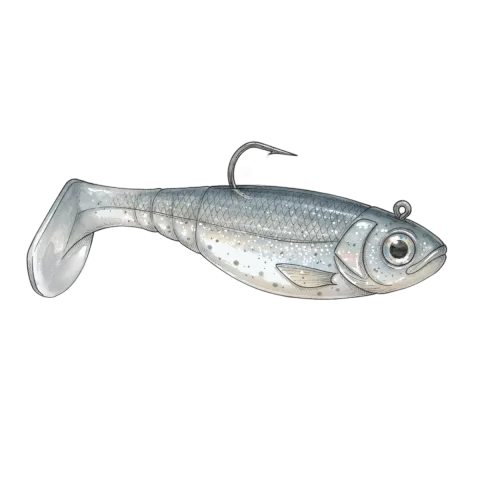
Angling for this giant prehistoric predator requires heavy-duty tackle capable of withstanding explosive surface runs and immense power. Target shallow lagoons, oxbow lakes, and flooded forest margins where fish regularly roll to break the surface for air. Watch the water surface to locate rolling individuals, then present suspended deadbaits or livebaits beneath a float right in their path. When targeting them with artificials, use extra-large surface plugs, heavy streamers, or large soft swimbaits retrieved with slow, deliberate movements. Dawn and morning hours offer prime opportunities before temperatures peak, and anglers should employ heavy braided lines with robust leaders to successfully tame these heavyweights.
Other names for Arapaima
Local and alternate names anglers use for Arapaima.
-
Arapaima
-
Pirarucu
-
Giant arapaima
Best equipment to catch Arapaima
Compare fishing methods for Arapaima — sized kit for each technique.
Note: Typical fish is 35 kg Our algorithm will suggest the best equipment for you based on this weight.
Float Fishing
Suspending bait beneath a float at a controlled depth.
90% Effectiveness

Rod
Float rod
A float rod is the all-round fishing rod for a float in rivers and still water, a step down in length from match.
Sized for a typical fish
medium · 4.2 m
- Reel seat
- Spinning
- Form factor
- Multi-piece
- Action
- Moderate
- Grip
- Cork

Reel
Spinning reel
A spinning reel hangs under the fishing rod and is the default reel for casting lures and light baits. Line peels off an open spool with a bail.
Sized for a typical fish
30000 · 30 kg drag · 1107 g
- Spool
- Fixed
- Mount
- Under
- Drag
- Front
- Retrieve
- Manual

Line
Monofilament line
Monofilament fishing line is the everyday main line: easy to knot, cheap to replace, and stretchy enough to forgive a hard strike.
Sized for a typical fish
130 kg · 1.6 mm
- Visibility
- Medium
- Abrasion
- Medium
- Stretch
- High
- Sink rate
- Slow

Hook
J-hook
A J-hook is the classic J-bend fishing hook for bait. You set it with a strike. Sizes are tokens such as 12 or 1/0.
Sized for a typical fish
4/0
- Points
- 1
- Offset
- No
- Barbed
- Yes
- Gap
- Standard

Float
Waggler
A waggler is a bottom-only attachment float for stillwaters and slow rivers. You shot it down and watch the antenna.
Sized for a typical fish
4 g
- Attachment
- Fixed
- Habitats
- Freshwater
- Methods
- Float Fishing
Fly Fishing
Presenting artificial flies with a fly rod and weighted line.
85% Effectiveness
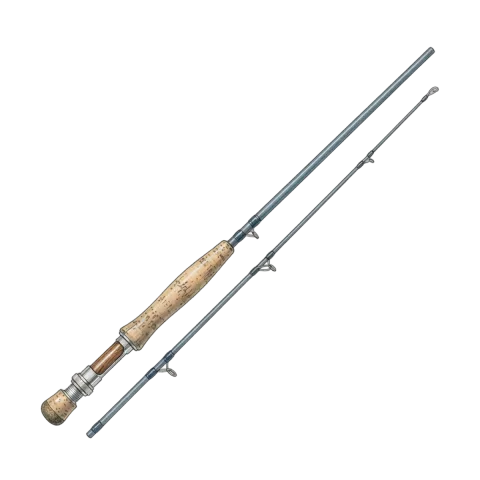
Rod
Fly rod
A fly rod is a fishing rod sized by line weight, with a fly reel seat. The fly line, not a heavy lure, loads the blank.
Sized for a typical fish
2.9 m · 10wt
- Reel seat
- Fly
- Form factor
- Multi-piece
- Action
- Moderate-fast
- Grip
- Cork
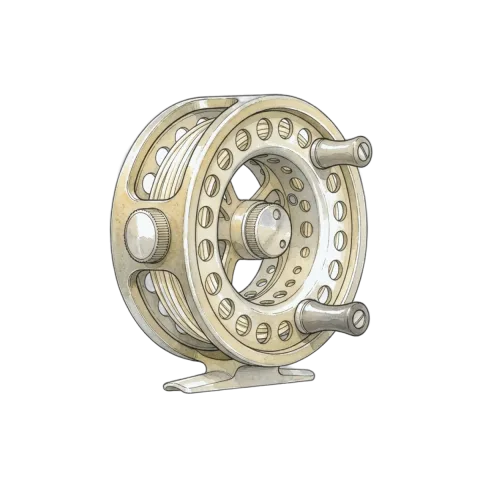
Reel
Fly reel
A fly reel is a large-arbor drum that stores backing and fly line. Drag is a disc; the reel does not cast the fly.
Sized for a typical fish
10 kg drag · 10wt
- Spool
- Drum
- Mount
- Under
- Drag
- Disc
- Retrieve
- Manual
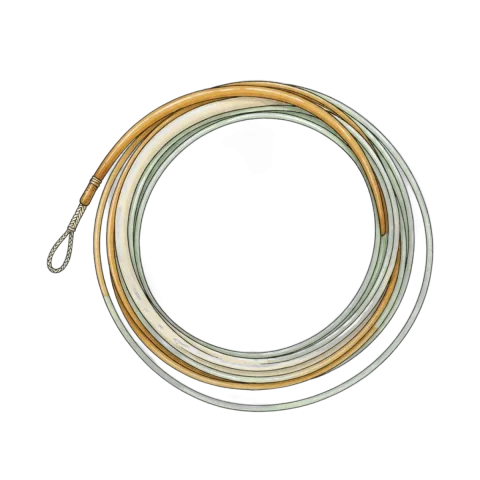
Line
Fly line
Fly line is the weighted shooting line that carries a near-weightless fly. Match it by weight class to the fly rod, not by kilo rating.
Sized for a typical fish
10wt
- Visibility
- Medium
- Abrasion
- Medium
- Stretch
- Low
- Sink rate
- Slow
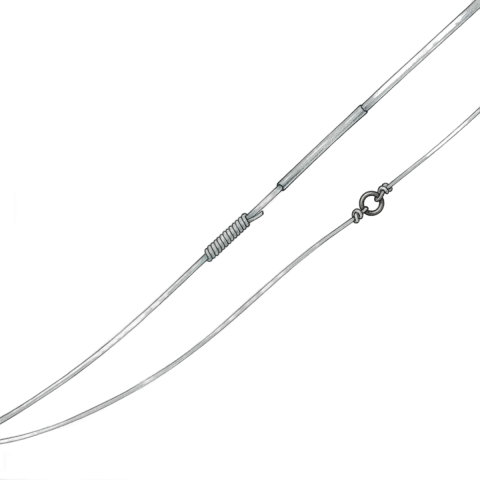
Leader
Tippet
Tippet is the fine, replaceable end of a fly leader, sized in X so you can match the fly and the fish.
Sized for a typical fish
8.5 kg · 0.3 mm · 100 cm · 0X
- Visibility
- Medium
- Abrasion
- Medium
- Stretch
- Medium
- Sink rate
- Slow
Spinning
Casting and retrieving lures with a spinning rod and reel.
80% Effectiveness

Rod
Spinning rod
A spinning rod is a fishing rod built to carry a spinning reel under the blank. You cast lures and light baits with it from shore or a boat.
Sized for a typical fish
extra-heavy · 2.18 m
- Reel seat
- Spinning
- Form factor
- Multi-piece
- Action
- Fast
- Grip
- EVA
Reel
Spinning reel
A spinning reel hangs under the fishing rod and is the default reel for casting lures and light baits. Line peels off an open spool with a bail.
Sized for a typical fish
20000 · 30 kg drag · 997 g
- Spool
- Fixed
- Mount
- Under
- Drag
- Front
- Retrieve
- Manual

Line
Braided line
Braided fishing line is the thin, no-stretch main for long casts, jigging, and feeling every tick on the retrieve.
Sized for a typical fish
90 kg · 0.76 mm
- Visibility
- High
- Abrasion
- Low
- Stretch
- None
- Sink rate
- Floats

Leader
Fluorocarbon leader
A fluorocarbon leader is the clear, fast-sinking join between a visible main line and the lure or hook.
Sized for a typical fish
136.1 kg · 1.885 mm · 180 cm
- Visibility
- Very low
- Abrasion
- High
- Stretch
- Low
- Sink rate
- Fast
Bottom Fishing
Presenting bait or rigs on or near the lake or sea floor.
75% Effectiveness
Rod
Spinning rod
A spinning rod is a fishing rod built to carry a spinning reel under the blank. You cast lures and light baits with it from shore or a boat.
Sized for a typical fish
extra-heavy · 2.18 m
- Reel seat
- Spinning
- Form factor
- Multi-piece
- Action
- Fast
- Grip
- EVA
Reel
Spinning reel
A spinning reel hangs under the fishing rod and is the default reel for casting lures and light baits. Line peels off an open spool with a bail.
Sized for a typical fish
30000 · 30 kg drag · 1107 g
- Spool
- Fixed
- Mount
- Under
- Drag
- Front
- Retrieve
- Manual
Line
Monofilament line
Monofilament fishing line is the everyday main line: easy to knot, cheap to replace, and stretchy enough to forgive a hard strike.
Sized for a typical fish
130 kg · 1.6 mm
- Visibility
- Medium
- Abrasion
- Medium
- Stretch
- High
- Sink rate
- Slow
Leader
Fluorocarbon leader
A fluorocarbon leader is the clear, fast-sinking join between a visible main line and the lure or hook.
Sized for a typical fish
136.1 kg · 1.885 mm · 180 cm
- Visibility
- Very low
- Abrasion
- High
- Stretch
- Low
- Sink rate
- Fast

Hook
Circle hook
A circle hook turns in the mouth and usually finds the corner of the jaw. You do not strike hard — you come tight. It includes freshwater.
Sized for a typical fish
6/0
- Points
- 1
- Offset
- No
- Barbed
- Yes
- Gap
- Standard
Best lures and baits for Arapaima
Ranked lures and natural baits from every method, best first.
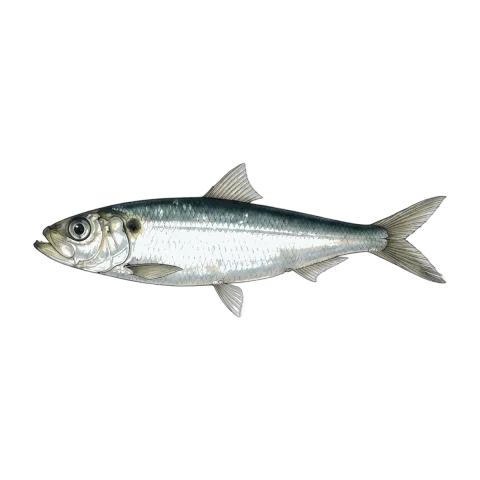
01
Sardine
- Float Fishing
- Bottom Fishing
Elongated silvery baitfish body releases strong scent trails.
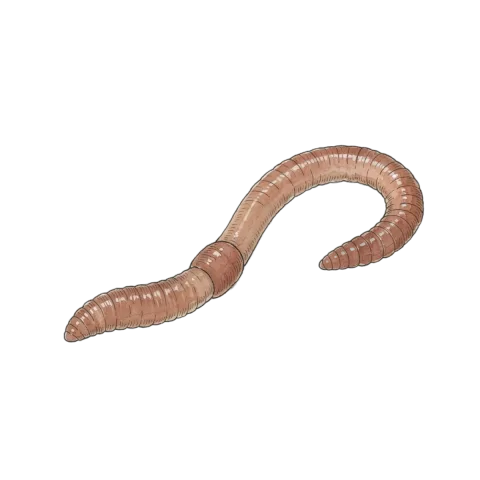
02
Live baitfish
- Float Fishing
Elongated segmented worm body provides natural movement to attract fish.
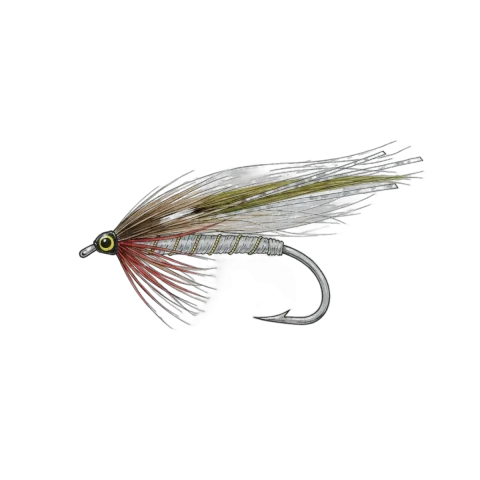
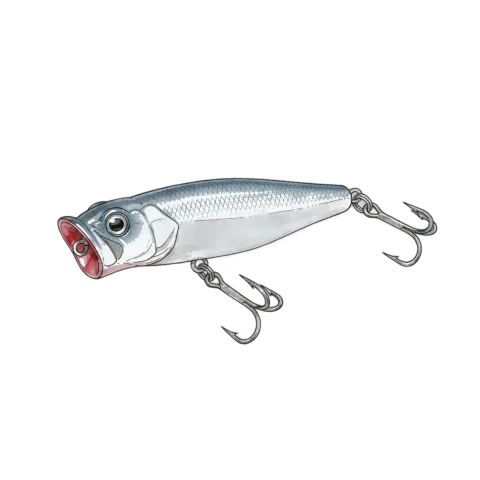
04
Topwater plug
- Spinning
A floating plug that pops and gurgles on the surface.
How Arapaima migrates — Potamodromous
Migrates within rivers and lakes only. Fish upstream runs and seasonal lake movements, not saltwater.
1 Eggs
Upstream
Laid on gravel or weed upstream or in flooded shallows.
2 Larvae
→ Main river or lake
Fry drift or swim down to slower water.
3 Adults
Main river or lake
Feed in the main river or lake.
4 Spawners
→ Upstream
Move upstream or into the shallows to spawn.
The whole cycle stays in fresh water.
Hover or tap a number to read each stage.
Diet and behavior of Arapaima
-
Diet
Carnivore -
Feeds by
Hunts animals -
Hunts
Dawn · Morning -
Main prey
Baitfish
Prey and predators of Arapaima
Prey is what Arapaima eats. Predators are the animals that eat it.
That is how it feeds, and how it is hunted.
Prey
What it eats
Baitfish
Predators
What hunts it
Where Arapaima lives
Lives on or just above the bottom. Work jigs, bait, and lures along the seabed.

Where this species lives
Arapaima photos for identification
Compare these photos with the catalog plate to identify the species.