How to catch Atlantic chub mackerel
Scomber colias Gmelin, 1789
About Atlantic chub mackerel fishing
The Atlantic chub mackerel is a streamlined pelagic fish belonging to the family Scombridae, distinguished by its deeply forked tail, tiny scales, and distinctive silvery body marked with dark oblique zigzagging lines above and a paler, spotted belly. Growing up to 55 cm in maximum length and typically encountered around 30 cm, this schooling species inhabits brackish and saltwater environments from surface waters down to 200 metres. It feeds primarily on zooplankton, small crustaceans, cephalopods, and small pelagic fish. Spawning occurs during the early months of the year, and the species is widely distributed across temperate and subtropical marine waters, functioning as a vital forage fish in coastal and neritic ecosystems.
-
Difficulty
Medium
-
Average size
30 cm
-
Market value
Very high
-
Habitat
Brackish, Saltwater
-
Season
Spring, Summer, Autumn
-
Also known as
Atlantic Chub Mackerel

Wavy dorsal bars
Dark undulating lines along the back distinguish the mackerel pattern.
Spotted lower flank
Irregular dark spots and mottling spread across the lower silvery sides.
Dorsal finlets
Small separate finlets behind the second dorsal fin identify scombrids.
Atlantic chub mackerel fishing facts
Characteristics
-
Typical size
30 cm (max 55 cm TL ) -
Typical weight
0.3 kg (max 1.4 kg ) -
Preferred temperature
13.9–27.3 °C -
Depth
0–200 m -
Longevity
7 years -
Body shape
Fusiform / Normal -
Commercial?
-
Vulnerability score
33.3
Best hours
-
Peak
Dawn
First light
-
Active
Morning
After sunrise
-
Low
Midday
High sun
-
Active
Afternoon
Late day
-
Peak
Dusk
Last light
-
Low
Night
After dark
When to fish for Atlantic chub mackerel
How to catch Atlantic chub mackerel
Tips for catching Atlantic chub mackerel
Anglers targeting the Atlantic chub mackerel find the best sport during the warmer months when large schools move into coastal and neritic waters to feed actively near the surface. Early morning and late afternoon offer the finest catch rates as schools rise to hunt zooplankton and small baitfish close to harbours, piers, and rocky points. Light spinning gear outfitted with small metallic spoons, reflective jigs, or feathered sabiki rigs yields excellent results when cast into surface feeding boils and retrieved briskly. Alternatively, float fishing with strips of sardine or small pieces of marine worm suspended at mid-depths around structured coastal zones provides a reliable presentation for securing multiple fish from passing schools.
Other names for Atlantic chub mackerel
Local and alternate names anglers use for Atlantic chub mackerel.
-
Atlantic chub mackerel
Best equipment to catch Atlantic chub mackerel
Compare fishing methods for Atlantic chub mackerel — sized kit for each technique.
Note: Typical fish is 0.3 kg Our algorithm will suggest the best equipment for you based on this weight.
Spinning
Casting and retrieving lures with a spinning rod and reel.
85% Effectiveness

Rod
Spinning rod
A spinning rod is a fishing rod built to carry a spinning reel under the blank. You cast lures and light baits with it from shore or a boat.
Sized for a typical fish
ultralight · 1.8 m
- Reel seat
- Spinning
- Form factor
- Multi-piece
- Action
- Fast
- Grip
- EVA

Reel
Spinning reel
A spinning reel hangs under the fishing rod and is the default reel for casting lures and light baits. Line peels off an open spool with a bail.
Sized for a typical fish
1000 · 3 kg drag · 185 g
- Spool
- Fixed
- Mount
- Under
- Drag
- Front
- Retrieve
- Manual

Line
Braided line
Braided fishing line is the thin, no-stretch main for long casts, jigging, and feeling every tick on the retrieve.
Sized for a typical fish
6 kg · 0.1 mm
- Visibility
- High
- Abrasion
- Low
- Stretch
- None
- Sink rate
- Floats

Leader
Fluorocarbon leader
A fluorocarbon leader is the clear, fast-sinking join between a visible main line and the lure or hook.
Sized for a typical fish
7 kg · 0.3 mm · 90 cm
- Visibility
- Very low
- Abrasion
- High
- Stretch
- Low
- Sink rate
- Fast
Float Fishing
Suspending bait beneath a float at a controlled depth.
75% Effectiveness
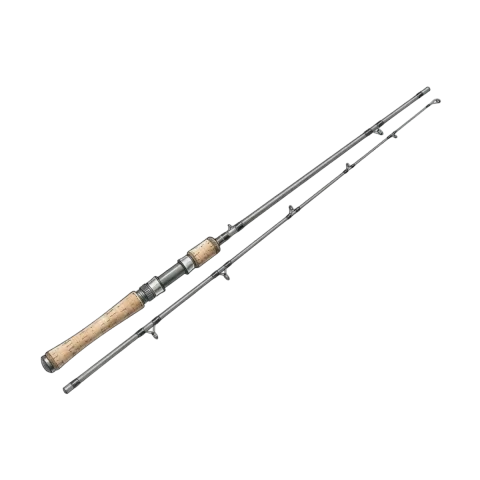
Rod
Float rod
A float rod is the all-round fishing rod for a float in rivers and still water, a step down in length from match.
Sized for a typical fish
light · 3.6 m
- Reel seat
- Spinning
- Form factor
- Multi-piece
- Action
- Moderate
- Grip
- Cork
Reel
Spinning reel
A spinning reel hangs under the fishing rod and is the default reel for casting lures and light baits. Line peels off an open spool with a bail.
Sized for a typical fish
1000 · 3 kg drag · 185 g
- Spool
- Fixed
- Mount
- Under
- Drag
- Front
- Retrieve
- Manual

Line
Monofilament line
Monofilament fishing line is the everyday main line: easy to knot, cheap to replace, and stretchy enough to forgive a hard strike.
Sized for a typical fish
1.3 kg · 0.125 mm
- Visibility
- Medium
- Abrasion
- Medium
- Stretch
- High
- Sink rate
- Slow
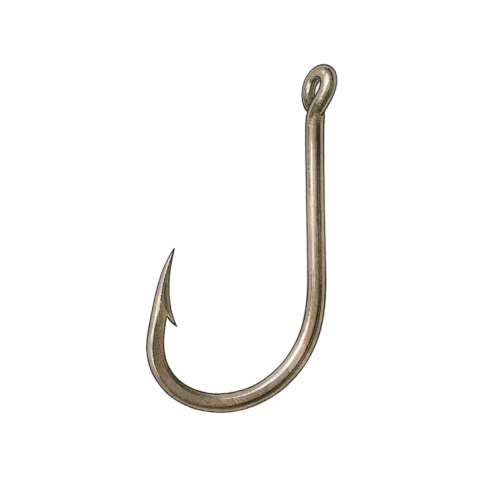
Hook
J-hook
A J-hook is the classic J-bend fishing hook for bait. You set it with a strike. Sizes are tokens such as 12 or 1/0.
Sized for a typical fish
12
- Points
- 1
- Offset
- No
- Barbed
- Yes
- Gap
- Standard
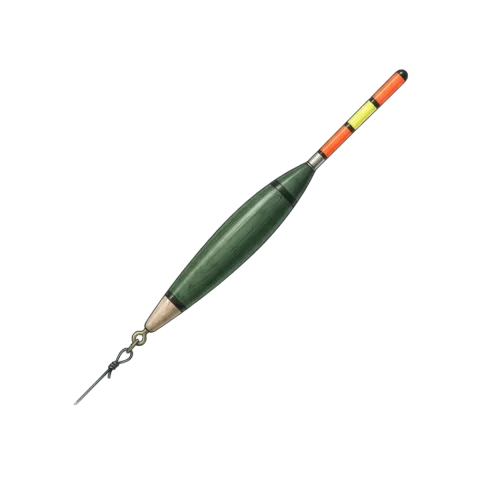
Float
Waggler
A waggler is a bottom-only attachment float for stillwaters and slow rivers. You shot it down and watch the antenna.
Sized for a typical fish
4 g
- Attachment
- Fixed
- Habitats
- Freshwater
- Methods
- Float Fishing
Best lures and baits for Atlantic chub mackerel
Ranked lures and natural baits from every method, best first.
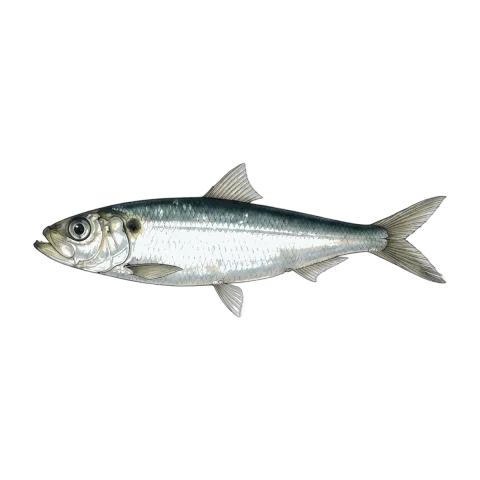
01
Sardine
- Spinning
- Float Fishing
Elongated silvery baitfish body releases strong scent trails.
02
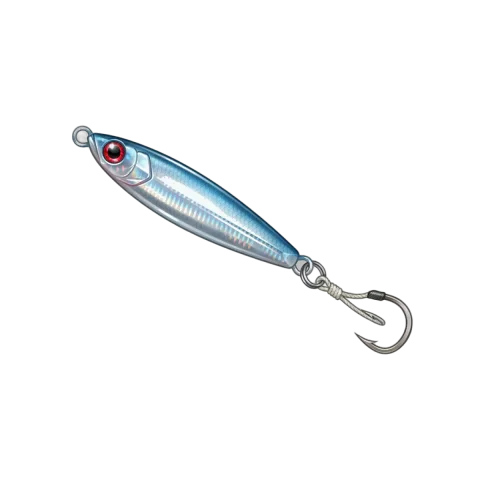
Metal jig
- Spinning
A long metal lure for speed-jigging the deep column.
03
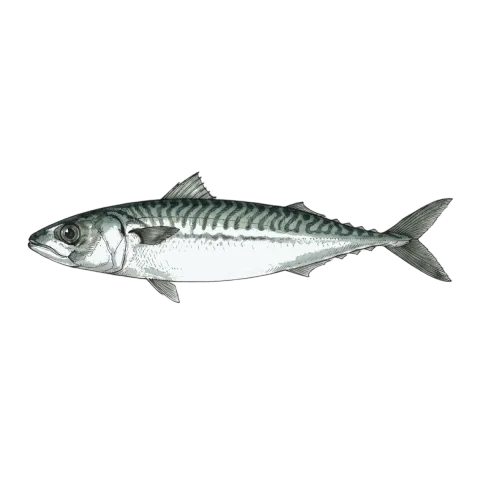
Mackerel
- Spinning
Distinctive wavy dorsal stripes provide high contrast and flash underwater.
04
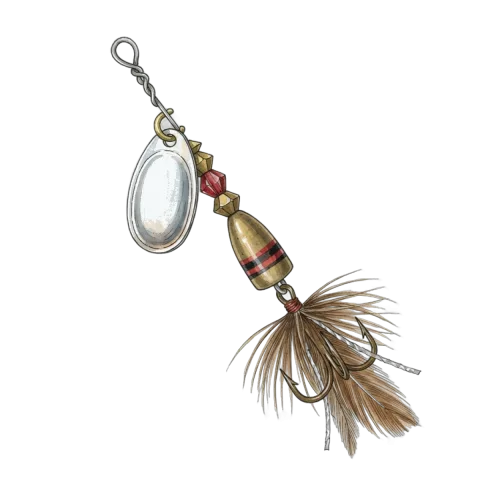
Inline spinner
- Spinning
An inline spinner with a blade that flashes on a straight retrieve.
How Atlantic chub mackerel migrates — Oceanodromous
Migrates within the sea between spawning, nursery and feeding grounds, and never enters fresh water. Follow its seasonal shifts along the coast and offshore.
1 Eggs
Spawning grounds
Laid on the spawning grounds.
2 Larvae
→ Nursery grounds
Drift with the currents to the nursery grounds.
3 Juveniles
Nursery grounds
Grow up in sheltered nursery waters.
4 Adults
Feeding grounds
Range widely over the feeding grounds.
5 Spawners
→ Spawning grounds
Return to the spawning grounds each season.
It stays in the sea and never runs up into fresh water.
Hover or tap a number to read each stage.
Diet and behavior of Atlantic chub mackerel
-
Diet
Carnivore -
Hunts
Dawn · Dusk
Where Atlantic chub mackerel lives
Pelagic over the continental shelf — coastal open water, not the deep ocean.
0–200 m

Estuary
Where this species lives
Atlantic chub mackerel photos for identification
Compare these photos with the catalog plate to identify the species.