How to catch Australian bull ray
Myliobatis australis Macleay, 1881
About Australian bull ray fishing
The Australian bull ray is a large benthopelagic cartilaginous fish belonging to the family Myliobatidae. It features a distinctive diamond-shaped disc with wide pectoral fins, a projecting frog-like head, and a long, whip-like tail armed with a venomous spine. Its dorsal surface typically displays an olive-green, dark brown, or yellowish hue marked with grey or pale blue patterns, contrasting with a white underside. Inhabiting coastal waters, sandy flats, seagrass meadows, bays, and estuaries down to 85 metres, this species feeds primarily on benthic crabs and shelled molluscs. It is recognized as a game fish that provides strong sporting qualities for coastal anglers.
-
Difficulty
Medium
-
Market value
Medium
-
Habitat
Saltwater
-
Season
Spring, Autumn, Winter
-
Also known as
Bull-ray, Cowfish, Cowray, Eagle ray, Fly-aways, Mill ray

Broad Head
Distinctive blunt snout and elevated head profile identify this eagle ray species.
Whip Tail
Long slender whip-like tail bearing a serrated spine distinguishes it from flat rays.
Small Dorsal Fin
Small dorsal fin positioned just behind the pelvic fins on the tail base.
Australian bull ray fishing facts
Characteristics
-
Typical size
120 cm WD -
Typical weight
9.5 kg (max 56.5 kg ) -
Preferred temperature
15–20.1 °C -
Depth
1–85 m -
Body shape
Other -
Commercial?
-
Vulnerability score
60.6
Best hours
-
Active
Dawn
First light
-
Peak
Morning
After sunrise
-
Low
Midday
High sun
-
Peak
Afternoon
Late day
-
Active
Dusk
Last light
-
Low
Night
After dark
When to fish for Australian bull ray
How to catch Australian bull ray
Tips for catching Australian bull ray
To target this powerful ray, focus your efforts on shallow sandy flats, estuary channels, and nearshore areas where individuals forage for crustaceans and molluscs. Heavy surfcasting tackle equipped with a wire trace is essential, as these fish make strong, sustained runs when hooked. Present natural baits such as whole crabs or squid strips directly on the seabed where the rays use electro-reception and jetting techniques to uncover buried prey. Early morning and late afternoon hours provide the most reliable sport, particularly during warmer months when activity levels peak across coastal flats and bays.
Other names for Australian bull ray
Local and alternate names anglers use for Australian bull ray.
-
Australian bull ray
-
Whiptail ray
-
Whip ray
-
Southern eagle ray
-
Ray
-
Mill ray
-
Fly-aways
-
Eagle ray
-
Cowray
-
Cowfish
-
Bull-ray
Best equipment to catch Australian bull ray
Compare fishing methods for Australian bull ray — sized kit for each technique.
Note: Typical fish is 9.5 kg Our algorithm will suggest the best equipment for you based on this weight.
Surfcasting
Long-range bait or lure casting from an open beach or surf.
80% Effectiveness
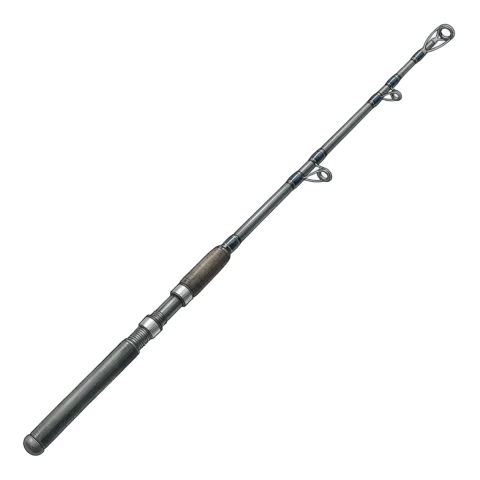
Rod
Surfcasting rod
A surfcasting rod is the long beach fishing rod for punching bait past the breakers. Length and a moderate-fast action load for distance.
Sized for a typical fish
heavy · 4.5 m
- Reel seat
- Spinning
- Form factor
- Multi-piece
- Action
- Moderate-fast
- Grip
- EVA

Reel
Spinning reel
A spinning reel hangs under the fishing rod and is the default reel for casting lures and light baits. Line peels off an open spool with a bail.
Sized for a typical fish
4000 · 8 kg drag · 275 g
- Spool
- Fixed
- Mount
- Under
- Drag
- Front
- Retrieve
- Manual

Line
Braided line
Braided fishing line is the thin, no-stretch main for long casts, jigging, and feeling every tick on the retrieve.
Sized for a typical fish
20 kg · 0.25 mm
- Visibility
- High
- Abrasion
- Low
- Stretch
- None
- Sink rate
- Floats
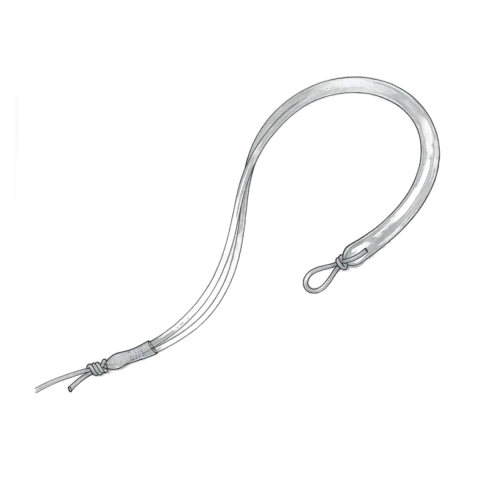
Leader
Shock leader
A shock leader is a thick mono or tapered section that takes the cast. Carp shock is heavy (around 0.65 to 0.75 mm), not thin fluorocarbon.
Sized for a typical fish
22.5 kg · 0.65 mm · 900 cm
- Visibility
- Medium
- Abrasion
- High
- Stretch
- High
- Sink rate
- Slow
Bottom Fishing
Presenting bait or rigs on or near the lake or sea floor.
75% Effectiveness

Rod
Spinning rod
A spinning rod is a fishing rod built to carry a spinning reel under the blank. You cast lures and light baits with it from shore or a boat.
Sized for a typical fish
extra-heavy · 2.18 m
- Reel seat
- Spinning
- Form factor
- Multi-piece
- Action
- Fast
- Grip
- EVA
Reel
Spinning reel
A spinning reel hangs under the fishing rod and is the default reel for casting lures and light baits. Line peels off an open spool with a bail.
Sized for a typical fish
8000 · 15 kg drag
- Spool
- Fixed
- Mount
- Under
- Drag
- Front
- Retrieve
- Manual

Line
Monofilament line
Monofilament fishing line is the everyday main line: easy to knot, cheap to replace, and stretchy enough to forgive a hard strike.
Sized for a typical fish
37 kg · 0.8 mm
- Visibility
- Medium
- Abrasion
- Medium
- Stretch
- High
- Sink rate
- Slow

Leader
Fluorocarbon leader
A fluorocarbon leader is the clear, fast-sinking join between a visible main line and the lure or hook.
Sized for a typical fish
59 kg · 1.087 mm · 150 cm
- Visibility
- Very low
- Abrasion
- High
- Stretch
- Low
- Sink rate
- Fast

Hook
Circle hook
A circle hook turns in the mouth and usually finds the corner of the jaw. You do not strike hard — you come tight. It includes freshwater.
Sized for a typical fish
6/0
- Points
- 1
- Offset
- No
- Barbed
- Yes
- Gap
- Standard
Best lures and baits for Australian bull ray
Ranked lures and natural baits from every method, best first.
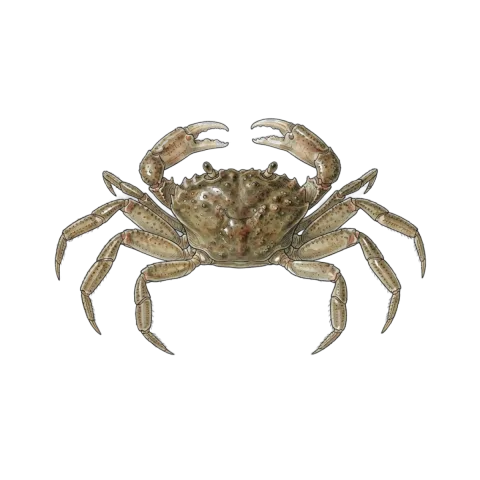
01
Crab
- Surfcasting
- Bottom Fishing
Hard upper shell protects the crab and anchors its vital organs.
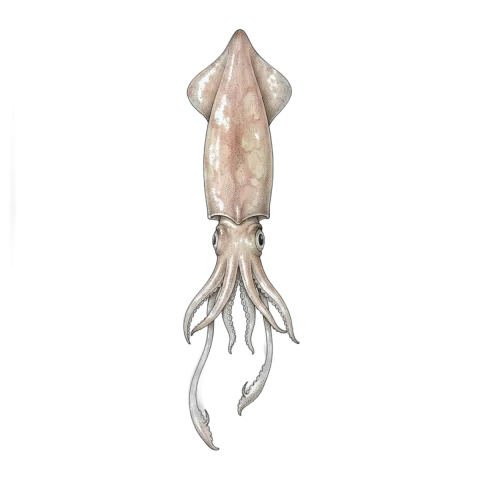
02
Squid
- Surfcasting
- Bottom Fishing
Elongated muscular body holds internal organs and secretes scent in the water.
Diet and behavior of Australian bull ray
-
Diet
Carnivore -
Hunts
Morning · Afternoon
Prey and predators of Australian bull ray
Prey is what Australian bull ray eats. Predators are the animals that eat it.
That is how it feeds, and how it is hunted.
Prey
What it eats
Other prey
Where Australian bull ray lives
Tied to reefs and rocky structure in shallow coastal water.
1–85 m

Where this species lives
Australian bull ray photos for identification
Compare these photos with the catalog plate to identify the species.
Where to fish for Australian bull ray
Mapped fishing spots where Australian bull ray is recorded — open a pin for access and methods.
