How to catch Black bream
Acanthopagrus butcheri (Munro, 1949)
About Black bream fishing
The black bream is a deep-bodied member of the porgy family Sparidae, featuring a compressed shape, a gently arched back, and a blunt head with a terminal mouth. Its upper body varies from a rich golden brown to bronze and greenish grey, shading to a paler belly with dusky to greenish black fins. This species inhabits the brackish waters of coastal rivers, estuaries, and sheltered lakes, and it penetrates into freshwater reaches during its annual breeding season. As an opportunistic bottom feeder, it consumes a wide range of crustaceans, molluscs, worms, and small forage fish. It is widely regarded as a premier recreational angling target across its range due to its hard-fighting nature and exceptional table qualities.
-
Difficulty
Medium
-
Average size
24 cm TL
-
Market value
Very high
-
Habitat
Freshwater, Brackish, Saltwater
-
Season
Spring, Autumn, Winter
-
Also known as
Blue nose bream, Bream, Gippsland bream, Golden bream, Silver bream, Southern black bream

Forked Caudal
Forked caudal fin distinguishes it from rounded-tail species.
Terminal Mouth
Terminal mouth position aids in species identification.
Convex Forehead
Clearly convex forehead profile is typical for adults.
Black bream fishing facts
Characteristics
-
Typical size
24 cm TL (max 60 cm TL ) -
Typical weight
0.5 kg (max 4 kg ) -
Preferred temperature
14.7–20.6 °C -
Depth
1–50 m -
Longevity
29 years -
Body shape
Fusiform / Normal -
Commercial?
-
Vulnerability score
41.4
Best hours
-
Peak
Dawn
First light
-
Active
Morning
After sunrise
-
Low
Midday
High sun
-
Low
Afternoon
Late day
-
Peak
Dusk
Last light
-
Active
Night
After dark
When to fish for Black bream
How to catch Black bream
Tips for catching Black bream
Anglers targeting this wary estuarine species find the best results by presenting natural baits or light lures near submerged structure such as fallen timber, rock ledges, and pylons. Light tackle is essential, as these fish possess keen eyesight and can be extremely cautious in clear, shallow waters. Bottom fishing with running sinker rigs using fresh local prawns, sandworms, or small crabs yields consistent results, especially around tidal movements. Alternatively, casting small soft plastics or surface lures during dawn and dusk periods offers an engaging challenge when fish move into the shallows to forage over weed beds.
Other names for Black bream
Local and alternate names anglers use for Black bream.
-
Southern yellowfin bream
-
Southern black bream
-
Southern bream
-
Golden bream
-
Silver bream
-
Gippsland bream
-
Bream
-
Blue nose bream
-
Black bream
Best equipment to catch Black bream
Compare fishing methods for Black bream — sized kit for each technique.
Note: Typical fish is 0.5 kg Our algorithm will suggest the best equipment for you based on this weight.
Bottom Fishing
Presenting bait or rigs on or near the lake or sea floor.
90% Effectiveness

Rod
Spinning rod
A spinning rod is a fishing rod built to carry a spinning reel under the blank. You cast lures and light baits with it from shore or a boat.
Sized for a typical fish
light · 2.1 m
- Reel seat
- Spinning
- Form factor
- Multi-piece
- Action
- Fast
- Grip
- EVA

Reel
Spinning reel
A spinning reel hangs under the fishing rod and is the default reel for casting lures and light baits. Line peels off an open spool with a bail.
Sized for a typical fish
1000 · 3 kg drag · 185 g
- Spool
- Fixed
- Mount
- Under
- Drag
- Front
- Retrieve
- Manual

Line
Monofilament line
Monofilament fishing line is the everyday main line: easy to knot, cheap to replace, and stretchy enough to forgive a hard strike.
Sized for a typical fish
2.5 kg · 0.16 mm
- Visibility
- Medium
- Abrasion
- Medium
- Stretch
- High
- Sink rate
- Slow

Leader
Fluorocarbon leader
A fluorocarbon leader is the clear, fast-sinking join between a visible main line and the lure or hook.
Sized for a typical fish
4 kg · 0.2 mm · 80 cm
- Visibility
- Very low
- Abrasion
- High
- Stretch
- Low
- Sink rate
- Fast

Hook
Circle hook
A circle hook turns in the mouth and usually finds the corner of the jaw. You do not strike hard — you come tight. It includes freshwater.
Sized for a typical fish
4
- Points
- 1
- Offset
- No
- Barbed
- Yes
- Gap
- Standard
Float Fishing
Suspending bait beneath a float at a controlled depth.
80% Effectiveness

Rod
Float rod
A float rod is the all-round fishing rod for a float in rivers and still water, a step down in length from match.
Sized for a typical fish
light · 3.6 m
- Reel seat
- Spinning
- Form factor
- Multi-piece
- Action
- Moderate
- Grip
- Cork
Reel
Spinning reel
A spinning reel hangs under the fishing rod and is the default reel for casting lures and light baits. Line peels off an open spool with a bail.
Sized for a typical fish
1000 · 3 kg drag · 185 g
- Spool
- Fixed
- Mount
- Under
- Drag
- Front
- Retrieve
- Manual
Line
Monofilament line
Monofilament fishing line is the everyday main line: easy to knot, cheap to replace, and stretchy enough to forgive a hard strike.
Sized for a typical fish
2.5 kg · 0.16 mm
- Visibility
- Medium
- Abrasion
- Medium
- Stretch
- High
- Sink rate
- Slow

Hook
J-hook
A J-hook is the classic J-bend fishing hook for bait. You set it with a strike. Sizes are tokens such as 12 or 1/0.
Sized for a typical fish
8
- Points
- 1
- Offset
- No
- Barbed
- Yes
- Gap
- Standard

Float
Waggler
A waggler is a bottom-only attachment float for stillwaters and slow rivers. You shot it down and watch the antenna.
Sized for a typical fish
4 g
- Attachment
- Fixed
- Habitats
- Freshwater
- Methods
- Float Fishing
Spinning
Casting and retrieving lures with a spinning rod and reel.
50% Effectiveness
Rod
Spinning rod
A spinning rod is a fishing rod built to carry a spinning reel under the blank. You cast lures and light baits with it from shore or a boat.
Sized for a typical fish
light · 2.1 m
- Reel seat
- Spinning
- Form factor
- Multi-piece
- Action
- Fast
- Grip
- EVA
Reel
Spinning reel
A spinning reel hangs under the fishing rod and is the default reel for casting lures and light baits. Line peels off an open spool with a bail.
Sized for a typical fish
1000 · 3 kg drag · 185 g
- Spool
- Fixed
- Mount
- Under
- Drag
- Front
- Retrieve
- Manual

Line
Braided line
Braided fishing line is the thin, no-stretch main for long casts, jigging, and feeling every tick on the retrieve.
Sized for a typical fish
6 kg · 0.1 mm
- Visibility
- High
- Abrasion
- Low
- Stretch
- None
- Sink rate
- Floats
Leader
Fluorocarbon leader
A fluorocarbon leader is the clear, fast-sinking join between a visible main line and the lure or hook.
Sized for a typical fish
7 kg · 0.3 mm · 90 cm
- Visibility
- Very low
- Abrasion
- High
- Stretch
- Low
- Sink rate
- Fast
Best lures and baits for Black bream
Ranked lures and natural baits from every method, best first.
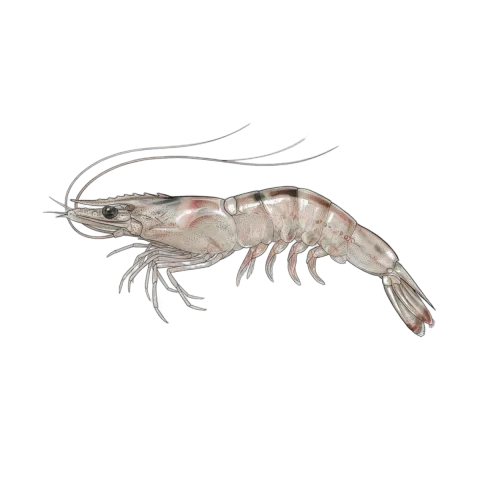
01
Prawn
- Bottom Fishing
- Float Fishing
Powerful fan-shaped tail propels the prawn backward when escaping predatory fish.
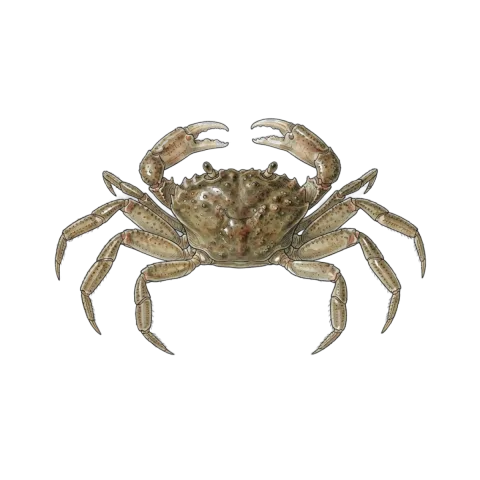
02
Crab
- Bottom Fishing
Hard upper shell protects the crab and anchors its vital organs.
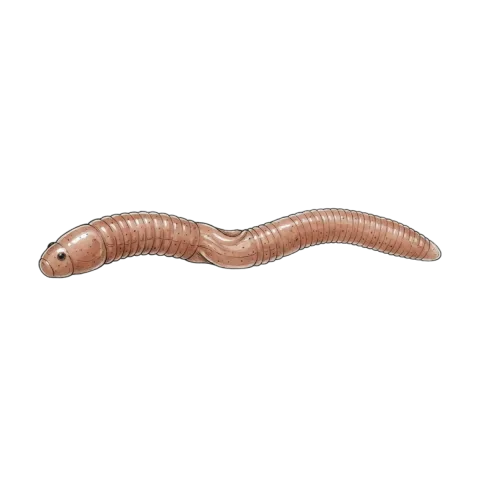
03
Worm
- Bottom Fishing
Rounded anterior end containing the mouth used for anchoring the bait on the hook.
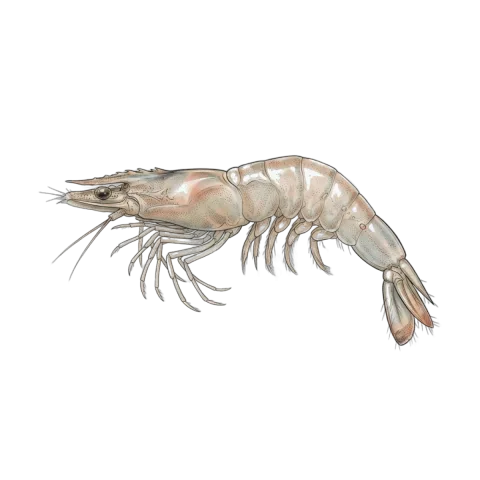
04
Shrimp
- Float Fishing
Translucent segmented carapace protects the body.
05
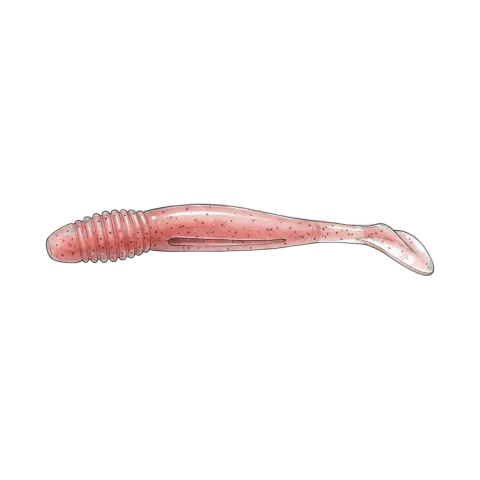
Soft worm
- Spinning
A long soft worm for Texas, wacky, and ned-style spinning.
07
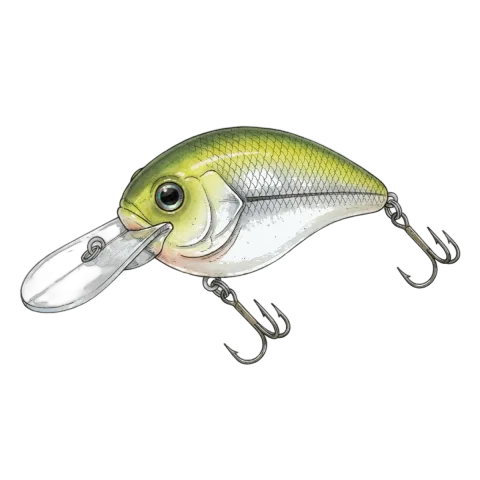
Crankbait
- Spinning
A diving hard bait that covers water and bumps cover.
How Black bream migrates — Anadromous
Grows at sea and swims into rivers to spawn. Target the run as fish leave the ocean and push upstream.
1 Eggs
Fresh water
Laid in fresh water, usually well up the river.
2 Juveniles
→ Sea
Grow in the river, then head downstream to the sea.
3 Adults
Sea
Feed and grow at sea.
4 Spawners
→ Fresh water
Run back up the river to spawn.
Some populations never go to sea and complete the cycle in rivers and lakes.
Hover or tap a number to read each stage.
Diet and behavior of Black bream
-
Diet
Carnivore -
Feeds by
Hunts animals -
Hunts
Dawn · Dusk -
Feeds over
Soft bottom · Hard bottom · Intertidal · Seagrass
Where Black bream lives
Lives on or just above the bottom. Work jigs, bait, and lures along the seabed.
1–50 m

River mouth
Where this species lives
Black bream photos for identification
Compare these photos with the catalog plate to identify the species.