How to catch Dusky shark
Carcharhinus obscurus (Lesueur, 1818)
About Dusky shark fishing
The dusky shark belongs to the requiset shark family Carcharhinidae and is recognised by its streamlined fusiform body, short rounded snout, and long sickle-shaped pectoral fins. It reaches a maximum length of four hundred and twenty centimetres and a maximum weight of over three hundred kilograms, featuring a blue-grey or lead-grey back and a white underside. This oceanic and coastal species inhabits warm-temperate and tropical waters down to four hundred metres, often undertaking extensive seasonal migrations toward the poles in summer. As an apex generalist predator, it feeds on a diverse diet of bony fishes, smaller sharks, rays, and cephalopods. Its slow growth rate, late maturity, and low reproductive output make populations extremely vulnerable, and it is classified globally as endangered.
-
Difficulty
Medium
-
Average size
250 cm TL
-
Market value
Medium
-
Habitat
Brackish, Saltwater
-
Season
Summer, Autumn
-
Also known as
Bay-shark, Black whaler, Black whaler shark, Bronze shark whaler, Bronze whaler, Brown common gray shark

Heterocercal caudal
Large heterocercal caudal fin with an elongated upper lobe typical of requiem sharks.
Curved pectoral fins
Moderate-sized, curved pectoral fins help distinguish this species from similar sharks.
Dusky shark fishing facts
Characteristics
-
Typical size
250 cm TL (max 420 cm TL ) -
Typical weight
25.5 kg (max 346.5 kg ) -
Preferred temperature
8.7–18.6 °C -
Depth
0–400 m -
Longevity
40 years -
Body shape
Fusiform / Normal -
Commercial?
-
Vulnerability score
87.7
Best hours
-
Active
Dawn
First light
-
Active
Morning
After sunrise
-
Low
Midday
High sun
-
Low
Afternoon
Late day
-
Peak
Dusk
Last light
-
Peak
Night
After dark
When to fish for Dusky shark
How to catch Dusky shark
Tips for catching Dusky shark
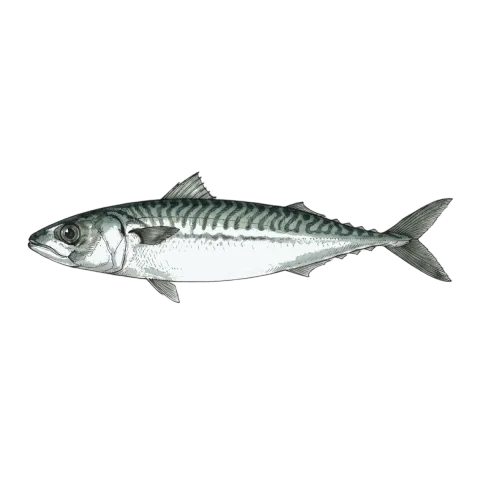
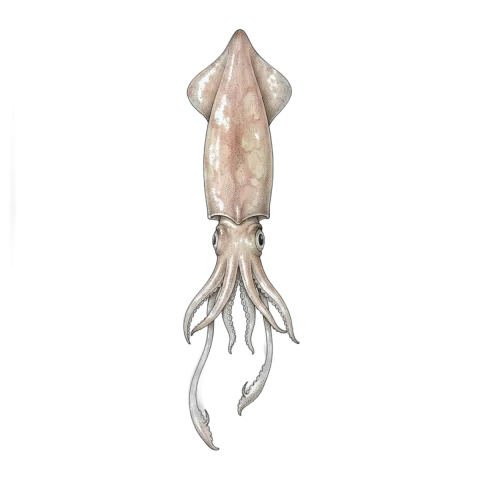
Target this large coastal predator by anchoring over deep drop offs or drifting across outer continental shelves where temperature breaks occur. Heavy conventional gear equipped with wire traces and strong circle hooks is essential when presenting large oily baits like whole mackerel or squid. Deploy continuous scent trails using heavy fish chum to draw cruising specimens up from deep water toward your presentation. Fishing during early morning hours or throughout falling tides yields the most consistent action.
Other names for Dusky shark
Local and alternate names anglers use for Dusky shark.
-
Brown shark
-
Common whaler
-
Brown common gray shark
-
Brown dusky shark
-
Bronze whaler
-
Bronze shark whaler
-
Black whaler shark
-
Black whaler
-
Common whaler shark
-
Dusky ground shark
-
Dusky shark
-
Slender whaler shark
-
Shovelnose
-
Shark
-
Requin obscur
-
Dusky whaler
-
River whaler
-
Whaler shark
Best equipment to catch Dusky shark
Compare fishing methods for Dusky shark — sized kit for each technique.
Note: Typical fish is 25.5 kg Our algorithm will suggest the best equipment for you based on this weight.
Bottom Fishing
Presenting bait or rigs on or near the lake or sea floor.
90% Effectiveness

Rod
Spinning rod
A spinning rod is a fishing rod built to carry a spinning reel under the blank. You cast lures and light baits with it from shore or a boat.
Sized for a typical fish
extra-heavy · 2.18 m
- Reel seat
- Spinning
- Form factor
- Multi-piece
- Action
- Fast
- Grip
- EVA

Reel
Spinning reel
A spinning reel hangs under the fishing rod and is the default reel for casting lures and light baits. Line peels off an open spool with a bail.
Sized for a typical fish
30000 · 30 kg drag · 1107 g
- Spool
- Fixed
- Mount
- Under
- Drag
- Front
- Retrieve
- Manual

Line
Monofilament line
Monofilament fishing line is the everyday main line: easy to knot, cheap to replace, and stretchy enough to forgive a hard strike.
Sized for a typical fish
91 kg · 1.4 mm
- Visibility
- Medium
- Abrasion
- Medium
- Stretch
- High
- Sink rate
- Slow

Leader
Fluorocarbon leader
A fluorocarbon leader is the clear, fast-sinking join between a visible main line and the lure or hook.
Sized for a typical fish
136.1 kg · 1.885 mm · 180 cm
- Visibility
- Very low
- Abrasion
- High
- Stretch
- Low
- Sink rate
- Fast

Hook
Circle hook
A circle hook turns in the mouth and usually finds the corner of the jaw. You do not strike hard — you come tight. It includes freshwater.
Sized for a typical fish
6/0
- Points
- 1
- Offset
- No
- Barbed
- Yes
- Gap
- Standard
Drift Fishing
Presenting bait or lures from a boat moving with wind or current, not under trolling speed.
85% Effectiveness
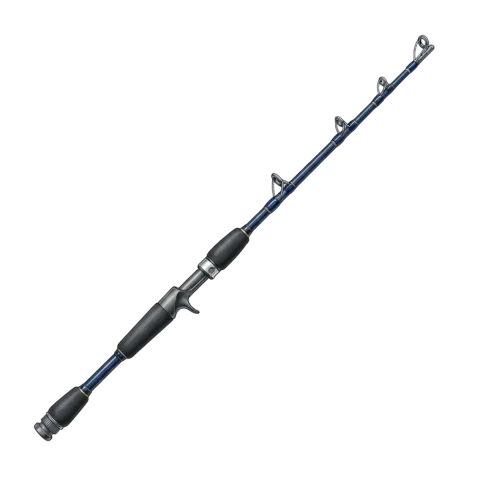
Rod
Boat rod
A boat rod is the short, stout fishing rod for work under the hull: bottom fishing, trolling, drift, and live bait in fresh or salt.
Sized for a typical fish
heavy · 2.29 m
- Reel seat
- Casting
- Form factor
- One-piece
- Action
- Moderate-fast
- Grip
- EVA
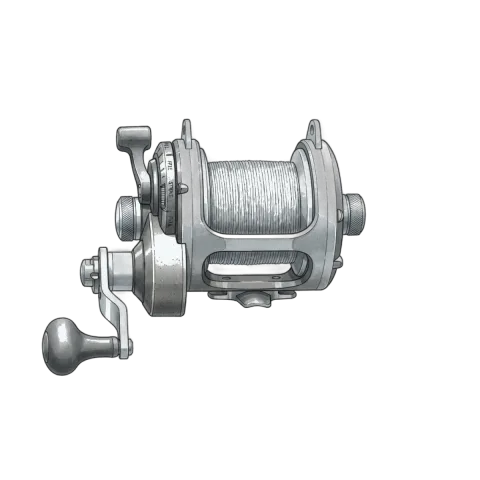
Reel
Conventional reel
A conventional reel is the lever-drag boat fishing reel for trolling and bottom fishing.
Sized for a typical fish
50 · 25 kg drag
- Spool
- Revolving
- Mount
- Over
- Drag
- Lever
- Retrieve
- Manual

Line
Braided line
Braided fishing line is the thin, no-stretch main for long casts, jigging, and feeling every tick on the retrieve.
Sized for a typical fish
90 kg · 0.76 mm
- Visibility
- High
- Abrasion
- Low
- Stretch
- None
- Sink rate
- Floats
Hook
Circle hook
A circle hook turns in the mouth and usually finds the corner of the jaw. You do not strike hard — you come tight. It includes freshwater.
Sized for a typical fish
6/0
- Points
- 1
- Offset
- No
- Barbed
- Yes
- Gap
- Standard
Surfcasting
Long-range bait or lure casting from an open beach or surf.
75% Effectiveness
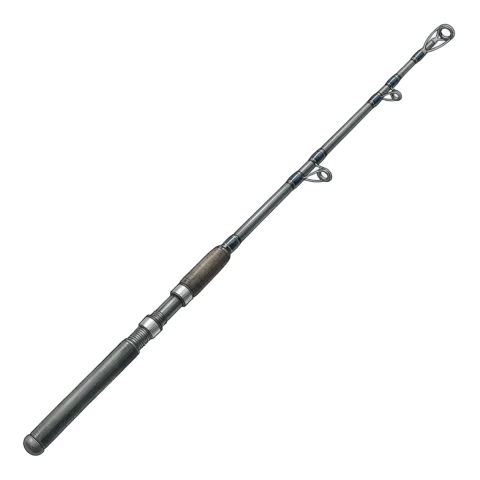
Rod
Surfcasting rod
A surfcasting rod is the long beach fishing rod for punching bait past the breakers. Length and a moderate-fast action load for distance.
Sized for a typical fish
heavy · 4.5 m
- Reel seat
- Spinning
- Form factor
- Multi-piece
- Action
- Moderate-fast
- Grip
- EVA
Reel
Spinning reel
A spinning reel hangs under the fishing rod and is the default reel for casting lures and light baits. Line peels off an open spool with a bail.
Sized for a typical fish
20000 · 30 kg drag · 997 g
- Spool
- Fixed
- Mount
- Under
- Drag
- Front
- Retrieve
- Manual
Line
Braided line
Braided fishing line is the thin, no-stretch main for long casts, jigging, and feeling every tick on the retrieve.
Sized for a typical fish
90 kg · 0.76 mm
- Visibility
- High
- Abrasion
- Low
- Stretch
- None
- Sink rate
- Floats
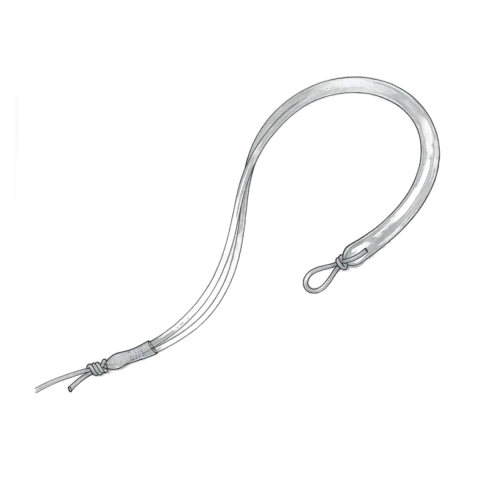
Leader
Shock leader
A shock leader is a thick mono or tapered section that takes the cast. Carp shock is heavy (around 0.65 to 0.75 mm), not thin fluorocarbon.
Sized for a typical fish
36 kg · 0.75 mm · 1200 cm
- Visibility
- Medium
- Abrasion
- High
- Stretch
- High
- Sink rate
- Slow
Best lures and baits for Dusky shark
Ranked lures and natural baits from every method, best first.
01
Mackerel
- Bottom Fishing
- Surfcasting
Distinctive wavy dorsal stripes provide high contrast and flash underwater.
02
Squid
- Bottom Fishing
Elongated muscular body holds internal organs and secretes scent in the water.
03
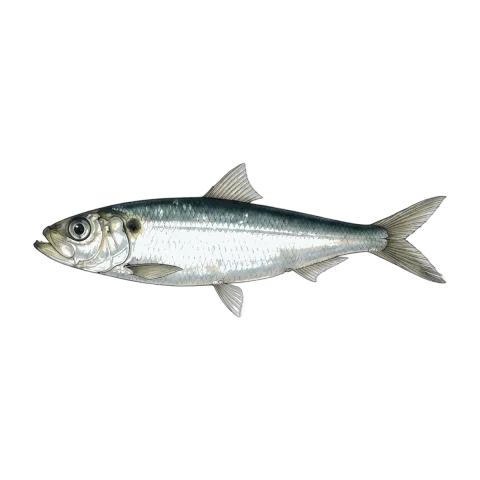
Sardine
- Drift Fishing
Elongated silvery baitfish body releases strong scent trails.
How Dusky shark migrates — Oceanodromous
Migrates within the sea between spawning, nursery and feeding grounds, and never enters fresh water. Follow its seasonal shifts along the coast and offshore.
1 Young
Breeding grounds
Born live, not hatched from eggs.
2 Juveniles
Nursery grounds
Grow up in sheltered nursery waters.
3 Adults
Feeding grounds
Range widely over the feeding grounds.
4 Mature adults
→ Breeding grounds
Return to the breeding grounds to give birth.
It stays in the sea and never runs up into fresh water.
Hover or tap a number to read each stage.
Diet and behavior of Dusky shark
-
Diet
Top predator -
Feeds by
Hunts animals -
Hunts
Dusk · Night -
Main prey
Baitfish
Prey and predators of Dusky shark
Prey is what Dusky shark eats. Predators are the animals that eat it.
That is how it feeds, and how it is hunted.
Prey
What it eats
Baitfish
Predators
What hunts it
Fish
Where Dusky shark lives
Tied to reefs and rocky structure in shallow coastal water.
0–400 m · usually 200–400 m

Estuary
Where this species lives
Dusky shark photos for identification
Compare these photos with the catalog plate to identify the species.
Where to fish for Dusky shark
Mapped fishing spots where Dusky shark is recorded — open a pin for access and methods.
