How to catch Koaro
Galaxias brevipinnis Günther, 1866
About Koaro fishing
The koaro is a native freshwater and amphidromous fish belonging to the family Galaxiidae, featuring an elongated, cylindrical, tube-like body covered in variable golden blotches and bands. Adults typically inhabit clear, fast-flowing, and deeply shaded streams as well as alpine lakes, staying near the bottom around rocks and logs. This generalized carnivore feeds on aquatic and terrestrial invertebrates, including insect larvae and amphipods. Young fish often migrate to marine environments before returning upstream, using specialized broad fins to climb vertical wet surfaces. Though not a major target for commercial sport fishing, it is occasionally encountered by anglers exploring upland headwaters.
-
Difficulty
Medium
-
Average size
15 cm SL
-
Habitat
Freshwater, Brackish, Saltwater
-
Season
Spring, Autumn, Winter
-
Also known as
Broad-finned galaxias, Climbing galaxias, Cox's mountain galaxias, Cox's mountain trout, Lake trout, Lowland galaxias

Dorsal Vermiculations
Distinctive chain-like dark markings along the back identify this species.
Truncate Tail
Broad, slightly rounded caudal fin distinguishes it from deeply forked species.
Posterior Dorsal Fin
Dorsal fin placed far back on the body near the tail.
Koaro fishing facts
Characteristics
-
Typical size
15 cm SL (max 28 cm SL ) -
Typical weight
0.2 kg (max 0.2 kg ) -
Body shape
Elongated -
Vulnerability score
40.3
Best hours
-
Active
Dawn
First light
-
Low
Morning
After sunrise
-
Low
Midday
High sun
-
Low
Afternoon
Late day
-
Peak
Dusk
Last light
-
Peak
Night
After dark
When to fish for Koaro
How to catch Koaro
Tips for catching Koaro
Anglers targeting headwater streams and lakes can find success by presenting small artificial flies, nymphs, or natural baits near deep pools and rocky cover where these fish shelter from currents. Float fishing with terrestrial insects or small worms during warmer months yields good results, particularly around dusk and into the evening when the fish become more active. Light spinning tackle equipped with tiny micro-spoons or spinners can also entice strikes in clear runs. Because these fish inhabit steep, fast-flowing upland waters often inaccessible to introduced trout, precision casting and stealth are essential to avoid spooking them in shallow margins.
Other names for Koaro
Local and alternate names anglers use for Koaro.
-
Pieman jollytail
-
Short-fin galaxias
-
Mountain trout
-
Pieman galaxias
-
Mersey jollytail
-
Lake trout
-
Climbing galaxias
-
Koaro
-
Cox's mountain trout
-
Cox's mountain galaxias
-
St. Claire trout
-
Lowland galaxias
-
Whitebait
-
Broad-finned galaxias
Best equipment to catch Koaro
Compare fishing methods for Koaro — sized kit for each technique.
Note: Typical fish is 0.2 kg Our algorithm will suggest the best equipment for you based on this weight.
Float Fishing
Suspending bait beneath a float at a controlled depth.
60% Effectiveness
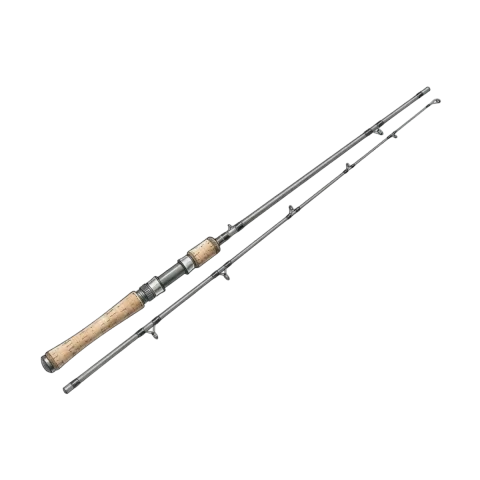
Rod
Float rod
A float rod is the all-round fishing rod for a float in rivers and still water, a step down in length from match.
Sized for a typical fish
light · 3.6 m
- Reel seat
- Spinning
- Form factor
- Multi-piece
- Action
- Moderate
- Grip
- Cork

Reel
Spinning reel
A spinning reel hangs under the fishing rod and is the default reel for casting lures and light baits. Line peels off an open spool with a bail.
Sized for a typical fish
1000 · 3 kg drag · 185 g
- Spool
- Fixed
- Mount
- Under
- Drag
- Front
- Retrieve
- Manual

Line
Monofilament line
Monofilament fishing line is the everyday main line: easy to knot, cheap to replace, and stretchy enough to forgive a hard strike.
Sized for a typical fish
1.3 kg · 0.125 mm
- Visibility
- Medium
- Abrasion
- Medium
- Stretch
- High
- Sink rate
- Slow
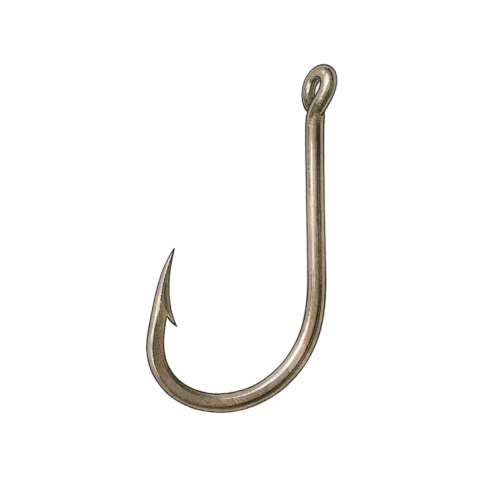
Hook
J-hook
A J-hook is the classic J-bend fishing hook for bait. You set it with a strike. Sizes are tokens such as 12 or 1/0.
Sized for a typical fish
12
- Points
- 1
- Offset
- No
- Barbed
- Yes
- Gap
- Standard
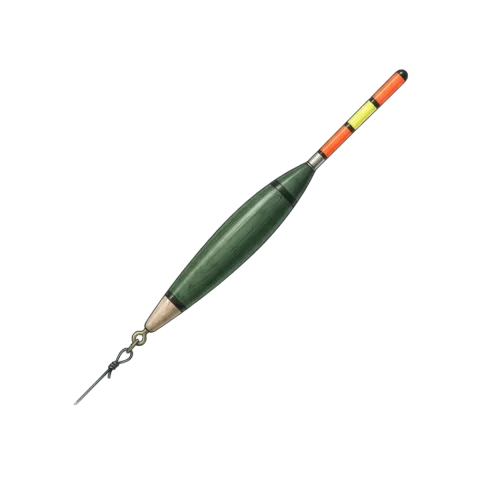
Float
Waggler
A waggler is a bottom-only attachment float for stillwaters and slow rivers. You shot it down and watch the antenna.
Sized for a typical fish
4 g
- Attachment
- Fixed
- Habitats
- Freshwater
- Methods
- Float Fishing
Spinning
Casting and retrieving lures with a spinning rod and reel.
40% Effectiveness

Rod
Spinning rod
A spinning rod is a fishing rod built to carry a spinning reel under the blank. You cast lures and light baits with it from shore or a boat.
Sized for a typical fish
ultralight · 1.8 m
- Reel seat
- Spinning
- Form factor
- Multi-piece
- Action
- Fast
- Grip
- EVA
Reel
Spinning reel
A spinning reel hangs under the fishing rod and is the default reel for casting lures and light baits. Line peels off an open spool with a bail.
Sized for a typical fish
1000 · 3 kg drag · 185 g
- Spool
- Fixed
- Mount
- Under
- Drag
- Front
- Retrieve
- Manual

Line
Braided line
Braided fishing line is the thin, no-stretch main for long casts, jigging, and feeling every tick on the retrieve.
Sized for a typical fish
6 kg · 0.1 mm
- Visibility
- High
- Abrasion
- Low
- Stretch
- None
- Sink rate
- Floats

Leader
Fluorocarbon leader
A fluorocarbon leader is the clear, fast-sinking join between a visible main line and the lure or hook.
Sized for a typical fish
7 kg · 0.3 mm · 90 cm
- Visibility
- Very low
- Abrasion
- High
- Stretch
- Low
- Sink rate
- Fast
Best lures and baits for Koaro
Ranked lures and natural baits from every method, best first.
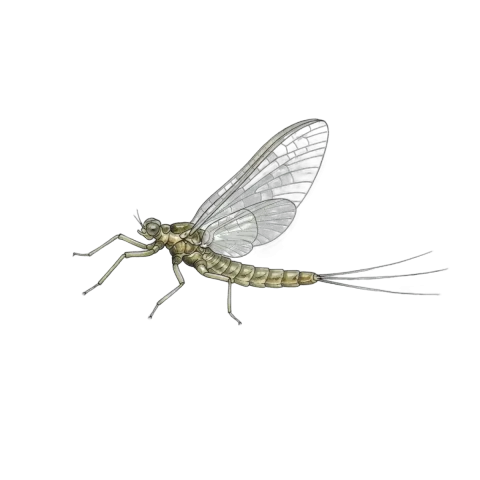
01
Insects
- Float Fishing
Translucent upright wings create surface disturbance that attracts rising freshwater fish.
02
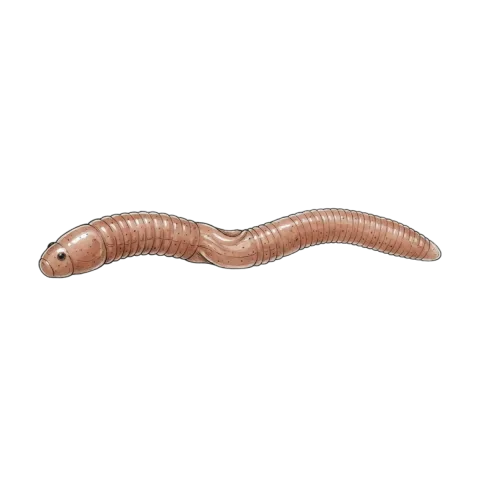
Worm
- Float Fishing
Rounded anterior end containing the mouth used for anchoring the bait on the hook.
03
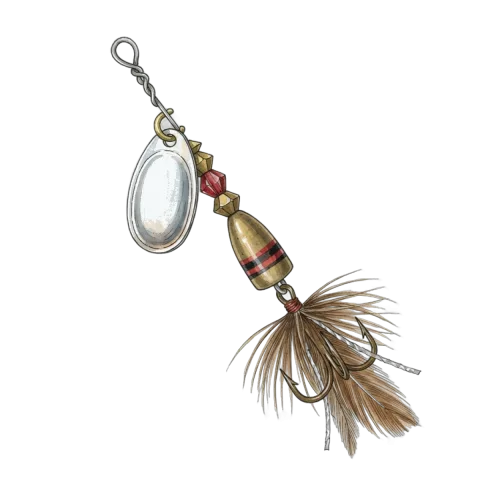
Inline spinner
- Spinning
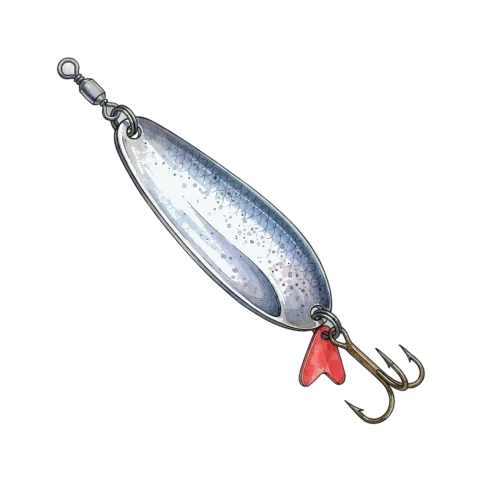
An inline spinner with a blade that flashes on a straight retrieve.
How Koaro migrates — Amphidromous
Moves between fresh and salt water during its life, but not specifically to spawn. Fish the estuary and the lower river.
1 Eggs
Sea
Spawned at sea or along the coast.
2 Larvae
→ Estuary
Drift inshore with the currents.
3 Juveniles
Fresh water
Move into estuaries, lagoons and fresh water to feed and grow.
4 Adults
→ Sea
Return to the sea to mature and spawn.
The crossing is for feeding and growth, not to spawn.
Hover or tap a number to read each stage.
Diet and behavior of Koaro
-
Diet
Carnivore -
Feeds by
Hunts animals -
Hunts
Dusk · Night -
Main prey
Baitfish -
Used as bait
Yes
Prey and predators of Koaro
Prey is what Koaro eats. Predators are the animals that eat it.
That is how it feeds, and how it is hunted.
Prey
What it eats
Where Koaro lives
Lives near the bottom but swims in the water just above it. Cover the lower column, not only the mud.

River mouth
Where this species lives
Koaro photos for identification
Compare these photos with the catalog plate to identify the species.