How to catch Oscar
Astronotus ocellatus (Agassiz, 1831)
About Oscar fishing
The oscar is a robust freshwater cichlid native to South American river basins, characterised by a deep body, large mouth with thick lips, and a distinctive dark coloration marked by an orange-fringed eyespot on the caudal peduncle. Growing to substantial proportions for its family, it typically inhabits slow-moving shallow waters, marginal lagoons, and flooded areas where it shelters among submerged branches and dense vegetation. As an opportunistic omnivore, it feeds on small fish, macroinvertebrates, and organic matter using a powerful suction mechanism. The species is highly regarded by anglers for its determined fighting spirit and complex territorial behaviour.
-
Difficulty
Medium
-
Average size
24 cm TL
-
Habitat
Freshwater
-
Season
Spring, Summer, Autumn, Winter
-
Also known as
Marble cichlid, Red oscar, Velvet cichlid

Caudal shape
More or less truncate tail fin shape characteristic of the oscar.
Terminal mouth
Large terminal mouth with thick lips helps identify the species.
Caudal ocellus
Black rounded blotch with orange margin at caudal fin base.
Oscar fishing facts
Characteristics
-
Typical size
24 cm TL (max 45.7 cm TL ) -
Typical weight
0.4 kg (max 1.6 kg ) -
Longevity
10 years -
Body shape
Short And / Or Deep -
Vulnerability score
36
Best hours
-
Active
Dawn
First light
-
Peak
Morning
After sunrise
-
Low
Midday
High sun
-
Active
Afternoon
Late day
-
Peak
Dusk
Last light
-
Low
Night
After dark
When to fish for Oscar
How to catch Oscar
Tips for catching Oscar
Anglers targeting oscars achieve the best results by presenting natural baits or small lures tight to heavy cover, such as fallen timber, submerged branches, and undercut banks in slow-moving waters. Float fishing with live worms or pieces of shrimp near the structure is highly effective, while light spinning gear outfitted with small soft plastics or minnow imitations will tempt aggressive strikes when worked with twitching retrieves. Because these fish are robust fighters that defend territories fiercely, medium-light tackle equipped with a strong drag is essential to steer them away from snags.
Other names for Oscar
Local and alternate names anglers use for Oscar.
-
Red oscar
-
Velvet cichlid
-
Oscar
-
Marble cichlid
Best equipment to catch Oscar
Compare fishing methods for Oscar — sized kit for each technique.
Note: Typical fish is 0.4 kg Our algorithm will suggest the best equipment for you based on this weight.
Float Fishing
Suspending bait beneath a float at a controlled depth.
80% Effectiveness

Rod
Float rod
A float rod is the all-round fishing rod for a float in rivers and still water, a step down in length from match.
Sized for a typical fish
light · 3.6 m
- Reel seat
- Spinning
- Form factor
- Multi-piece
- Action
- Moderate
- Grip
- Cork

Reel
Spinning reel
A spinning reel hangs under the fishing rod and is the default reel for casting lures and light baits. Line peels off an open spool with a bail.
Sized for a typical fish
1000 · 3 kg drag · 185 g
- Spool
- Fixed
- Mount
- Under
- Drag
- Front
- Retrieve
- Manual

Line
Monofilament line
Monofilament fishing line is the everyday main line: easy to knot, cheap to replace, and stretchy enough to forgive a hard strike.
Sized for a typical fish
1.3 kg · 0.125 mm
- Visibility
- Medium
- Abrasion
- Medium
- Stretch
- High
- Sink rate
- Slow

Hook
J-hook
A J-hook is the classic J-bend fishing hook for bait. You set it with a strike. Sizes are tokens such as 12 or 1/0.
Sized for a typical fish
8
- Points
- 1
- Offset
- No
- Barbed
- Yes
- Gap
- Standard

Float
Waggler
A waggler is a bottom-only attachment float for stillwaters and slow rivers. You shot it down and watch the antenna.
Sized for a typical fish
4 g
- Attachment
- Fixed
- Habitats
- Freshwater
- Methods
- Float Fishing
Spinning
Casting and retrieving lures with a spinning rod and reel.
70% Effectiveness

Rod
Spinning rod
A spinning rod is a fishing rod built to carry a spinning reel under the blank. You cast lures and light baits with it from shore or a boat.
Sized for a typical fish
ultralight · 1.8 m
- Reel seat
- Spinning
- Form factor
- Multi-piece
- Action
- Fast
- Grip
- EVA
Reel
Spinning reel
A spinning reel hangs under the fishing rod and is the default reel for casting lures and light baits. Line peels off an open spool with a bail.
Sized for a typical fish
1000 · 3 kg drag · 185 g
- Spool
- Fixed
- Mount
- Under
- Drag
- Front
- Retrieve
- Manual

Line
Braided line
Braided fishing line is the thin, no-stretch main for long casts, jigging, and feeling every tick on the retrieve.
Sized for a typical fish
6 kg · 0.1 mm
- Visibility
- High
- Abrasion
- Low
- Stretch
- None
- Sink rate
- Floats

Leader
Fluorocarbon leader
A fluorocarbon leader is the clear, fast-sinking join between a visible main line and the lure or hook.
Sized for a typical fish
7 kg · 0.3 mm · 90 cm
- Visibility
- Very low
- Abrasion
- High
- Stretch
- Low
- Sink rate
- Fast
Bottom Fishing
Presenting bait or rigs on or near the lake or sea floor.
60% Effectiveness
Rod
Spinning rod
A spinning rod is a fishing rod built to carry a spinning reel under the blank. You cast lures and light baits with it from shore or a boat.
Sized for a typical fish
ultralight · 1.8 m
- Reel seat
- Spinning
- Form factor
- Multi-piece
- Action
- Fast
- Grip
- EVA
Reel
Spinning reel
A spinning reel hangs under the fishing rod and is the default reel for casting lures and light baits. Line peels off an open spool with a bail.
Sized for a typical fish
1000 · 3 kg drag · 185 g
- Spool
- Fixed
- Mount
- Under
- Drag
- Front
- Retrieve
- Manual
Line
Monofilament line
Monofilament fishing line is the everyday main line: easy to knot, cheap to replace, and stretchy enough to forgive a hard strike.
Sized for a typical fish
1.3 kg · 0.125 mm
- Visibility
- Medium
- Abrasion
- Medium
- Stretch
- High
- Sink rate
- Slow
Leader
Fluorocarbon leader
A fluorocarbon leader is the clear, fast-sinking join between a visible main line and the lure or hook.
Sized for a typical fish
4 kg · 0.2 mm · 80 cm
- Visibility
- Very low
- Abrasion
- High
- Stretch
- Low
- Sink rate
- Fast

Hook
Circle hook
A circle hook turns in the mouth and usually finds the corner of the jaw. You do not strike hard — you come tight. It includes freshwater.
Sized for a typical fish
4
- Points
- 1
- Offset
- No
- Barbed
- Yes
- Gap
- Standard
Best lures and baits for Oscar
Ranked lures and natural baits from every method, best first.
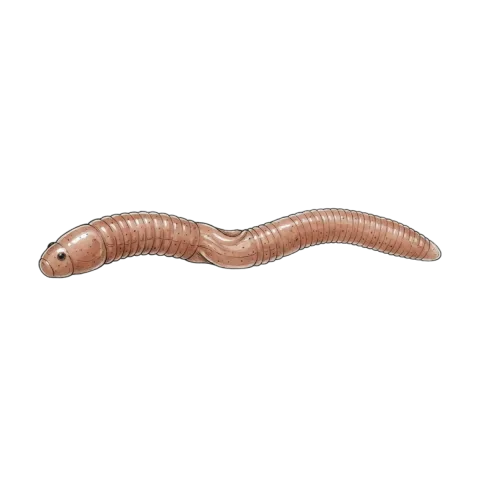
01
Worm
- Float Fishing
Rounded anterior end containing the mouth used for anchoring the bait on the hook.
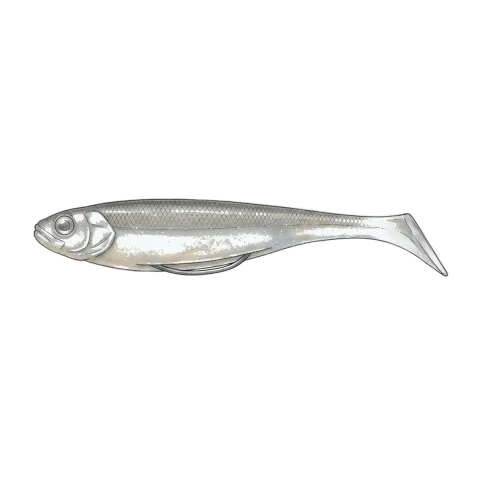
02
Soft jerkbait
- Spinning
A soft baitfish you twitch and kill like a jerkbait.
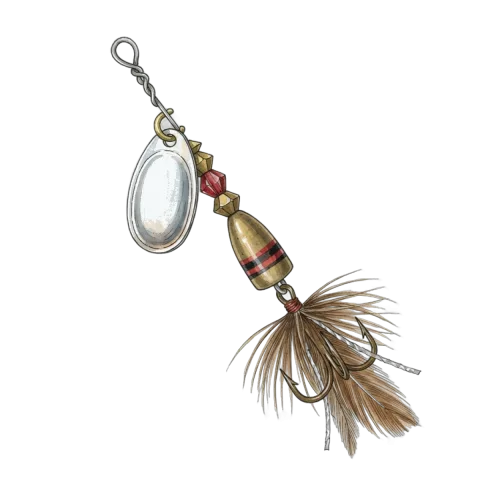
03
Inline spinner
- Spinning
An inline spinner with a blade that flashes on a straight retrieve.
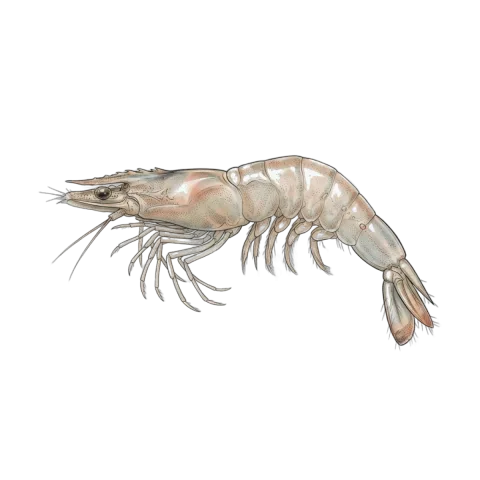
04
Shrimp
- Bottom Fishing
Translucent segmented carapace protects the body.
Where Oscar spends the year — Non-migratory
Stays in the same waters year-round. Look for it on the same grounds rather than timing a run.
1 Eggs
Same water all year
Laid on the home grounds.
2 Juveniles
Same water all year
Grow up close by.
3 Adults
Same water all year
Keep to a small home range.
4 Spawners
Same water all year
Spawn on the same grounds, with only short moves.
Hover or tap a number to read each stage.
Diet and behavior of Oscar
-
Diet
Carnivore -
Feeds by
Mixed feeder -
Hunts
Morning · Dusk
Prey and predators of Oscar
Prey is what Oscar eats. Predators are the animals that eat it.
That is how it feeds, and how it is hunted.
Prey
What it eats
Other prey
Where Oscar lives
Lives near the bottom but swims in the water just above it. Cover the lower column, not only the mud.

Where this species lives
Oscar photos for identification
Compare these photos with the catalog plate to identify the species.