How to catch European flounder
Platichthys flesus (Linnaeus, 1758)
About European flounder fishing
The European flounder is a notable flatfish belonging to the Pleuronectidae family, characterised by an oval body that is typically right-eyed, though individuals can occasionally be left-eyed. Measuring up to sixty centimetres in maximum length, this species displays a dull brown or olive upper surface adorned with darker blotches and reddish spots, providing exceptional camouflage against sandy and muddy seabeds, while the underside remains pearly-white. It inhabits coastal marine zones, brackish estuaries, and frequently penetrates far upstream into freshwater rivers during its feeding phases. As a bottom-dwelling predator, it feeds primarily on benthic invertebrates including polychaete worms, molluscs, and small crustaceans, burying itself in the sediment during daylight hours and becoming more active after dark. Adults migrate to deeper offshore waters during winter to spawn before returning to shallow coastal and riverine feeding grounds in spring.
-
Difficulty
Medium
-
Average size
50 cm TL
-
Market value
Very high
-
Habitat
Freshwater, Brackish, Saltwater
-
Season
Spring, Summer, Autumn
-
Also known as
Baltic flounder, Butt, Flounder, Fluke, Mediterranean flounder, Mud flounder

Caudal shape
More or less truncate tail fin typical of flatfish identification.
Multiple spots
More than one spot scattered across the body and fins.
Flatfish body
Asymmetrical flatfish body plan with both eyes on one side.
European flounder fishing facts
Characteristics
-
Typical size
50 cm TL (max 60 cm TL ) -
Typical weight
0.4 kg (max 2.9 kg ) -
Preferred temperature
7.2–14.2 °C -
Depth
1–100 m -
Longevity
15 years -
Body shape
Short And / Or Deep -
Commercial?
-
Vulnerability score
48.7
Best hours
-
Active
Dawn
First light
-
Low
Morning
After sunrise
-
Low
Midday
High sun
-
Low
Afternoon
Late day
-
Peak
Dusk
Last light
-
Peak
Night
After dark
When to fish for European flounder
How to catch European flounder
Tips for catching European flounder
Targeting this resilient flatfish successfully involves presenting natural baits directly on the sandy or muddy seabed where these fish forage for benthic organisms. Since the species feeds predominantly on marine worms and small molluscs, ledgering tactics utilising standard bottom fishing rigs baited with lugworms, ragworms, or strips of fish work exceptionally well. Anglers frequently achieve the best results in shallow coastal waters, tidal estuaries, and surf beaches during the incoming tide, especially under low-light conditions or at night when the fish move closer inshore to feed actively. Surfcasting gear equipped with fine-tipped quiver rods helps detect the subtle bites of this bottom feeder, while keeping the tackle relatively light ensures maximum sensitivity. Autumn months often yield productive sport as fish congregate near estuary mouths before moving offshore for the winter spawning period.
Other names for European flounder
Local and alternate names anglers use for European flounder.
-
Mud flounder
-
Fluke
-
Mediterranean flounder
-
Flounder
-
Butt
-
European flounder
-
River flounder
-
White fluke
-
Baltic flounder
Best equipment to catch European flounder
Compare fishing methods for European flounder — sized kit for each technique.
Note: Typical fish is 0.4 kg Our algorithm will suggest the best equipment for you based on this weight.
Bottom Fishing
Presenting bait or rigs on or near the lake or sea floor.
90% Effectiveness

Rod
Spinning rod
A spinning rod is a fishing rod built to carry a spinning reel under the blank. You cast lures and light baits with it from shore or a boat.
Sized for a typical fish
light · 2.1 m
- Reel seat
- Spinning
- Form factor
- Multi-piece
- Action
- Fast
- Grip
- EVA

Reel
Spinning reel
A spinning reel hangs under the fishing rod and is the default reel for casting lures and light baits. Line peels off an open spool with a bail.
Sized for a typical fish
1000 · 3 kg drag · 185 g
- Spool
- Fixed
- Mount
- Under
- Drag
- Front
- Retrieve
- Manual

Line
Monofilament line
Monofilament fishing line is the everyday main line: easy to knot, cheap to replace, and stretchy enough to forgive a hard strike.
Sized for a typical fish
2.5 kg · 0.16 mm
- Visibility
- Medium
- Abrasion
- Medium
- Stretch
- High
- Sink rate
- Slow

Leader
Fluorocarbon leader
A fluorocarbon leader is the clear, fast-sinking join between a visible main line and the lure or hook.
Sized for a typical fish
4 kg · 0.2 mm · 80 cm
- Visibility
- Very low
- Abrasion
- High
- Stretch
- Low
- Sink rate
- Fast

Hook
Circle hook
A circle hook turns in the mouth and usually finds the corner of the jaw. You do not strike hard — you come tight. It includes freshwater.
Sized for a typical fish
4
- Points
- 1
- Offset
- No
- Barbed
- Yes
- Gap
- Standard
Surfcasting
Long-range bait or lure casting from an open beach or surf.
85% Effectiveness
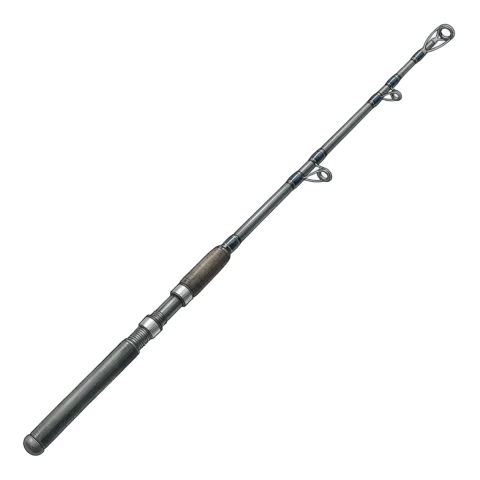
Rod
Surfcasting rod
A surfcasting rod is the long beach fishing rod for punching bait past the breakers. Length and a moderate-fast action load for distance.
Sized for a typical fish
medium-heavy · 3.6 m
- Reel seat
- Spinning
- Form factor
- Multi-piece
- Action
- Moderate-fast
- Grip
- EVA
Reel
Spinning reel
A spinning reel hangs under the fishing rod and is the default reel for casting lures and light baits. Line peels off an open spool with a bail.
Sized for a typical fish
1000 · 3 kg drag · 185 g
- Spool
- Fixed
- Mount
- Under
- Drag
- Front
- Retrieve
- Manual

Line
Braided line
Braided fishing line is the thin, no-stretch main for long casts, jigging, and feeling every tick on the retrieve.
Sized for a typical fish
6 kg · 0.1 mm
- Visibility
- High
- Abrasion
- Low
- Stretch
- None
- Sink rate
- Floats
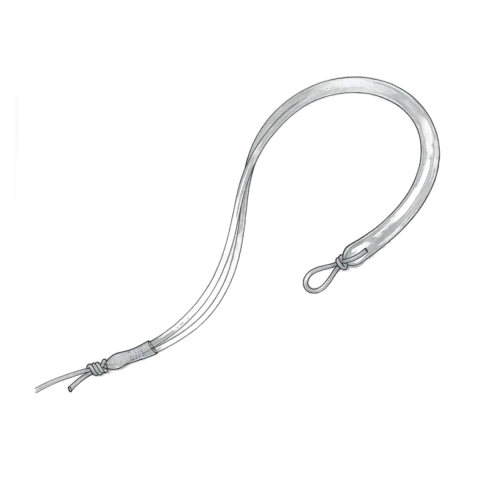
Leader
Shock leader
A shock leader is a thick mono or tapered section that takes the cast. Carp shock is heavy (around 0.65 to 0.75 mm), not thin fluorocarbon.
Sized for a typical fish
22.5 kg · 0.65 mm · 900 cm
- Visibility
- Medium
- Abrasion
- High
- Stretch
- High
- Sink rate
- Slow
Best lures and baits for European flounder
Ranked lures and natural baits from every method, best first.
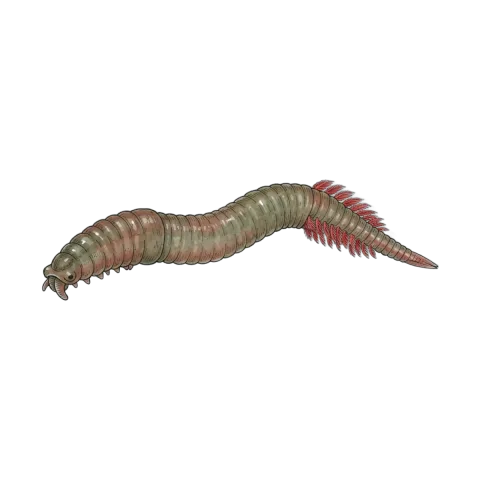
01
Lugworm
- Bottom Fishing
- Surfcasting
Fleshy, segmented body provides substantial scent and natural appeal for bottom fish.
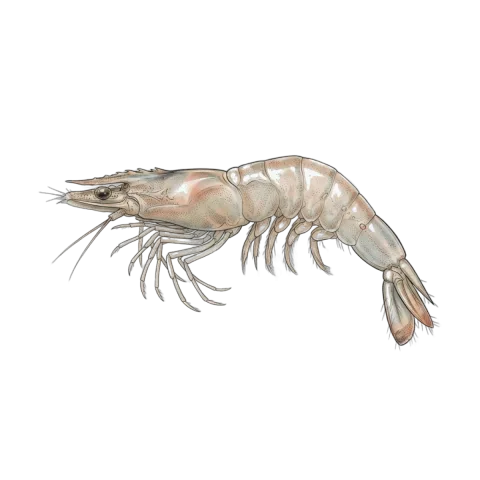
02
Shrimp
- Bottom Fishing
Translucent segmented carapace protects the body.
03
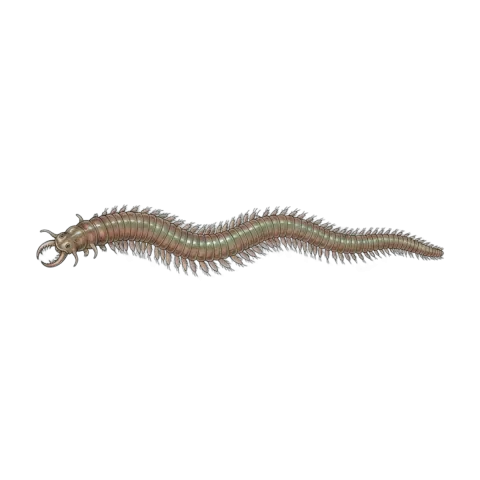
Sandworm
- Surfcasting
Distinct head region features prominent jaws used for live baiting presentations.
How European flounder migrates — Catadromous
Grows in fresh or brackish water and migrates to the sea to spawn. Estuaries and lower rivers fire when adults drop downstream.
1 Eggs
Sea
Spawned out at sea.
2 Larvae
→ Estuary
Drift with the currents towards the coast.
3 Juveniles
→ Fresh water
Enter estuaries, and many move on into fresh water.
4 Adults
Fresh water
Feed and grow in rivers, lakes and estuaries, often for years.
5 Spawners
→ Sea
Head downstream and out to sea to spawn.
Many only reach estuaries and the lower river; eels travel far inland.
Hover or tap a number to read each stage.
Diet and behavior of European flounder
-
Diet
Carnivore -
Feeds by
Hunts animals -
Hunts
Dusk · Night -
Feeds over
Soft bottom · Intertidal -
Main prey
Baitfish · Bottom prey
Prey and predators of European flounder
Prey is what European flounder eats. Predators are the animals that eat it.
That is how it feeds, and how it is hunted.
Prey
What it eats
Predators
What hunts it
Where European flounder lives
Lives on or just above the bottom. Work jigs, bait, and lures along the seabed.
1–100 m

River mouth
Where this species lives
European flounder photos for identification
Compare these photos with the catalog plate to identify the species.
Where to fish for European flounder
Mapped fishing spots where European flounder is recorded — open a pin for access and methods.


