How to catch Round sardinella
Sardinella aurita Valenciennes, 1847
About Round sardinella fishing
The round sardinella is a slender pelagic schooling fish belonging to the family Dorosomatidae, recognised by its elongated subcylindrical body, a distinct golden midlateral line, and a dark spot on the edge of the gill cover. Growing up to forty-one centimetres in total length, this marine species inhabits coastal and neritic waters down to three hundred and fifty metres, undertaking seasonal migrations tied to water temperatures and upwellings. It feeds primarily on zooplankton, including copepods and larval crustaceans, often rising toward the surface during the night before dispersing into deeper offshore layers during warmer months. While holding immense commercial importance across its range in the eastern Atlantic and Mediterranean, it also serves as a vital forage species for larger predatory fish.
-
Difficulty
Medium
-
Average size
25 cm SL
-
Market value
Medium
-
Habitat
Brackish, Saltwater
-
Season
Spring, Summer, Autumn
-
Also known as
Bang, Black sprat, False sardine, Fry-dry, Gilt sardine, Golden Sardine

Caudal shape
Deeply forked caudal fin helps distinguish this pelagic schooling fish.
Mouth position
Terminal mouth typical of small pelagic filter-feeding clupeid species.
Horizontal stripe
A faint golden midlateral line running along the silvery flank.
Round sardinella fishing facts
Characteristics
-
Typical size
25 cm SL (max 41 cm TL ) -
Typical weight
0.2 kg (max 0.4 kg ) -
Preferred temperature
13.3–26.3 °C -
Depth
0–350 m -
Longevity
7 years -
Body shape
Fusiform / Normal -
Commercial?
-
Vulnerability score
29
Best hours
-
Peak
Dawn
First light
-
Active
Morning
After sunrise
-
Low
Midday
High sun
-
Low
Afternoon
Late day
-
Peak
Dusk
Last light
-
Active
Night
After dark
When to fish for Round sardinella
How to catch Round sardinella
Tips for catching Round sardinella
Anglers targeting small pelagic species typically look for surface activity during the warmer summer and autumn months when schools migrate closer to coastal areas. Because these fish feed selectively on micro-organisms and small zooplankton, standard angling relies on fine tackle, light lines, and small presentation techniques during low-light periods such as dawn or dusk when schools rise near the surface. Casting small sabiki rigs or ultra-light spinning lures around harbours, piers, and rocky points where coastal currents push plankton can yield results. Alternatively, deploying small natural baits under a light float near structure during calm weather offers a reliable method for securing live baits for larger predators.
Other names for Round sardinella
Local and alternate names anglers use for Round sardinella.
-
Fry-dry
-
Gilt sardine
-
False sardine
-
Round sardinella
-
Golden Sardine
-
Spanish sardine
-
Black sprat
-
Sardinella
-
Sardine
-
Round sardinelle
-
Round sardines
-
Herring
-
Pilchard
-
Striped sardinella
-
Bang
Best equipment to catch Round sardinella
Compare fishing methods for Round sardinella — sized kit for each technique.
Note: Typical fish is 0.2 kg Our algorithm will suggest the best equipment for you based on this weight.
Spinning
Casting and retrieving lures with a spinning rod and reel.
80% Effectiveness

Rod
Spinning rod
A spinning rod is a fishing rod built to carry a spinning reel under the blank. You cast lures and light baits with it from shore or a boat.
Sized for a typical fish
ultralight · 1.8 m
- Reel seat
- Spinning
- Form factor
- Multi-piece
- Action
- Fast
- Grip
- EVA

Reel
Spinning reel
A spinning reel hangs under the fishing rod and is the default reel for casting lures and light baits. Line peels off an open spool with a bail.
Sized for a typical fish
1000 · 3 kg drag · 185 g
- Spool
- Fixed
- Mount
- Under
- Drag
- Front
- Retrieve
- Manual

Line
Braided line
Braided fishing line is the thin, no-stretch main for long casts, jigging, and feeling every tick on the retrieve.
Sized for a typical fish
6 kg · 0.1 mm
- Visibility
- High
- Abrasion
- Low
- Stretch
- None
- Sink rate
- Floats

Leader
Fluorocarbon leader
A fluorocarbon leader is the clear, fast-sinking join between a visible main line and the lure or hook.
Sized for a typical fish
7 kg · 0.3 mm · 90 cm
- Visibility
- Very low
- Abrasion
- High
- Stretch
- Low
- Sink rate
- Fast
Float Fishing
Suspending bait beneath a float at a controlled depth.
70% Effectiveness
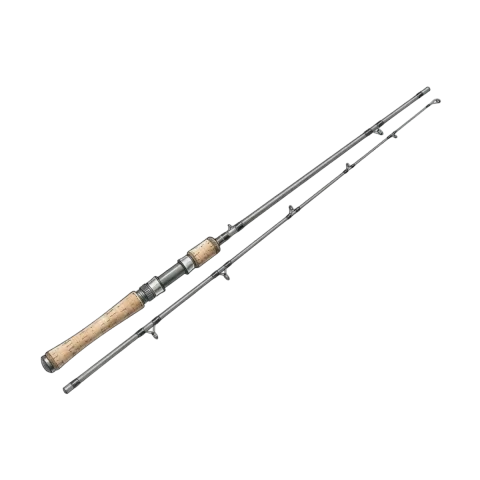
Rod
Float rod
A float rod is the all-round fishing rod for a float in rivers and still water, a step down in length from match.
Sized for a typical fish
light · 3.6 m
- Reel seat
- Spinning
- Form factor
- Multi-piece
- Action
- Moderate
- Grip
- Cork
Reel
Spinning reel
A spinning reel hangs under the fishing rod and is the default reel for casting lures and light baits. Line peels off an open spool with a bail.
Sized for a typical fish
1000 · 3 kg drag · 185 g
- Spool
- Fixed
- Mount
- Under
- Drag
- Front
- Retrieve
- Manual

Line
Monofilament line
Monofilament fishing line is the everyday main line: easy to knot, cheap to replace, and stretchy enough to forgive a hard strike.
Sized for a typical fish
1.3 kg · 0.125 mm
- Visibility
- Medium
- Abrasion
- Medium
- Stretch
- High
- Sink rate
- Slow
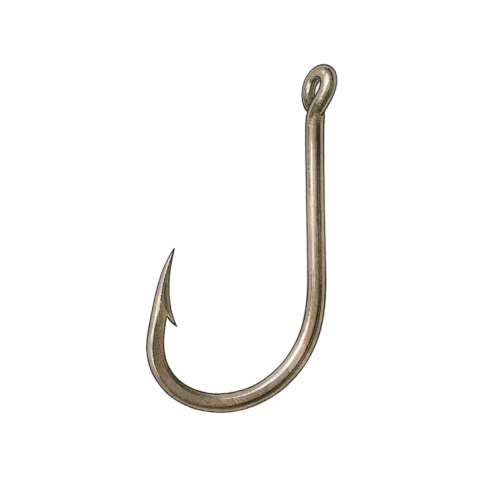
Hook
J-hook
A J-hook is the classic J-bend fishing hook for bait. You set it with a strike. Sizes are tokens such as 12 or 1/0.
Sized for a typical fish
12
- Points
- 1
- Offset
- No
- Barbed
- Yes
- Gap
- Standard
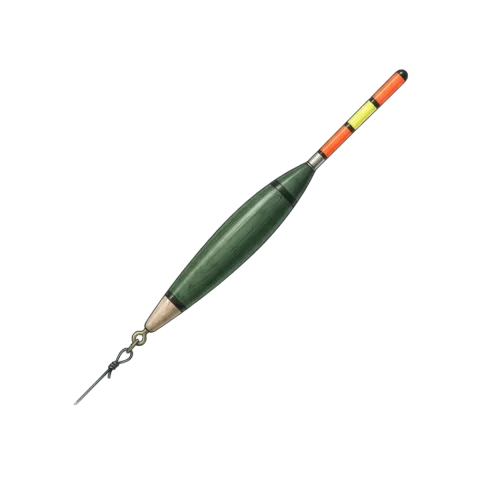
Float
Waggler
A waggler is a bottom-only attachment float for stillwaters and slow rivers. You shot it down and watch the antenna.
Sized for a typical fish
4 g
- Attachment
- Fixed
- Habitats
- Freshwater
- Methods
- Float Fishing
Best lures and baits for Round sardinella
Ranked lures and natural baits from every method, best first.
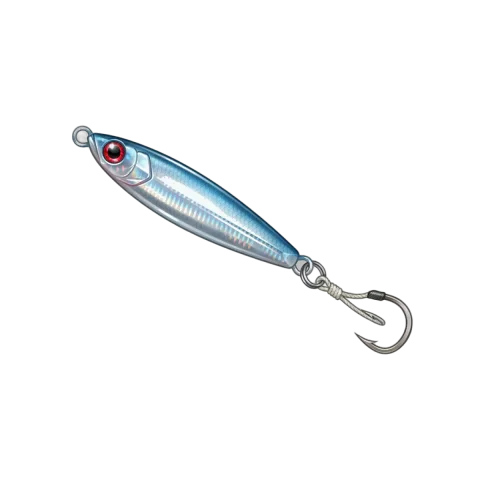
01
Metal jig
- Spinning
A long metal lure for speed-jigging the deep column.
How Round sardinella migrates — Oceanodromous
Migrates within the sea between spawning, nursery and feeding grounds, and never enters fresh water. Follow its seasonal shifts along the coast and offshore.
1 Eggs
Spawning grounds
Laid on the spawning grounds.
2 Larvae
→ Nursery grounds
Drift with the currents to the nursery grounds.
3 Juveniles
Nursery grounds
Grow up in sheltered nursery waters.
4 Adults
Feeding grounds
Range widely over the feeding grounds.
5 Spawners
→ Spawning grounds
Return to the spawning grounds each season.
It stays in the sea and never runs up into fresh water.
Hover or tap a number to read each stage.
Diet and behavior of Round sardinella
-
Diet
Carnivore -
Feeds by
Picks plankton -
Hunts
Dawn · Dusk -
Feeds over
Coral reefs -
Main prey
Detritus · Baitfish · Plankton -
Used as bait
Yes
Prey and predators of Round sardinella
Prey is what Round sardinella eats. Predators are the animals that eat it.
That is how it feeds, and how it is hunted.
Prey
What it eats
Predators
What hunts it
Where Round sardinella lives
Pelagic over the continental shelf — coastal open water, not the deep ocean.
0–350 m

Estuary
Where this species lives
Round sardinella photos for identification
Compare these photos with the catalog plate to identify the species.
Where to fish for Round sardinella
Mapped fishing spots where Round sardinella is recorded — open a pin for access and methods.

