How to catch Smooth hammerhead
Sphyrna zygaena (Linnaeus, 1758)
About Smooth hammerhead fishing
The smooth hammerhead belongs to the family Sphyrnidae and is easily recognised by its wide, flattened cephalofoil that lacks a central indentation along the front margin. This large pelagic predator features an elongated, streamlined body coloured olive-grey above and white below, growing up to five metres in length. It inhabits coastal and semi-oceanic waters across temperate and tropical zones, frequently cruising near the surface down to moderate depths over continental shelves. As an active hunter, it feeds primarily on bony fishes, cephalopods, rays and smaller sharks, often undertaking seasonal northward migrations during the warmer months when individuals congregate in large schools. Regarded as potentially dangerous due to its size and powerful build, it is occasionally targeted by sport anglers for its immense strength and endurance.
-
Difficulty
Medium
-
Average size
335 cm TL
-
Market value
Low
-
Habitat
Brackish, Saltwater
-
Season
Summer, Autumn
-
Also known as
Common hammerhead, Common hammerhead shark, Common smooth hammerhead shark, Hammerhead, Hammerhead shark, Round headed hammerhead

Heterocercal caudal
Elongated upper lobe of the caudal fin identifies shark species.
Subterminal mouth
Ventral subterminal mouth position is characteristic of this shark.
Unnotched hammerhead
Broad head lacks a center notch, distinguishing smooth hammerhead sharks.
Smooth hammerhead fishing facts
Characteristics
-
Typical size
335 cm TL (max 500 cm TL ) -
Typical weight
30 kg (max 400 kg ) -
Preferred temperature
11.8–28.9 °C -
Depth
0–200 m -
Longevity
21 years -
Body shape
Elongated -
Commercial?
-
Vulnerability score
68.1
Best hours
-
Peak
Dawn
First light
-
Active
Morning
After sunrise
-
Low
Midday
High sun
-
Low
Afternoon
Late day
-
Peak
Dusk
Last light
-
Active
Night
After dark
When to fish for Smooth hammerhead
How to catch Smooth hammerhead
Tips for catching Smooth hammerhead
Targeting this temperate-water shark requires heavy-duty surfcasting or bottom fishing gear deployed from deep-water marks, prominent headlands, or from a boat anchored over coastal drops. Rigging heavy wire traces with fresh oily baits like mackerel or squid is essential to withstand their powerful jaws and abrasive skin. Concentrate your efforts during the peak summer months when these pelagic predators migrate closer inshore following cooling or temperate water masses. Early morning and late evening hours offer the most productive windows for encountering active hunters patrolling near the seabed or mid-water layers.
Other names for Smooth hammerhead
Local and alternate names anglers use for Smooth hammerhead.
-
Hammerhead shark
-
Hammerhead
-
Common smooth hammerhead shark
-
Common hammerhead shark
-
Common hammerhead
-
Round headed hammerhead
-
Round-headed hammer head shark
-
Smooth hammerhead
-
Round-headed hammerhead
-
Shark
-
Smooth hammerhead shark
-
Round-headed hammerhead shark
-
Smooth hammer-headed shark
Best equipment to catch Smooth hammerhead
Compare fishing methods for Smooth hammerhead — sized kit for each technique.
Note: Typical fish is 30 kg Our algorithm will suggest the best equipment for you based on this weight.
Bottom Fishing
Presenting bait or rigs on or near the lake or sea floor.
85% Effectiveness

Rod
Spinning rod
A spinning rod is a fishing rod built to carry a spinning reel under the blank. You cast lures and light baits with it from shore or a boat.
Sized for a typical fish
extra-heavy · 2.18 m
- Reel seat
- Spinning
- Form factor
- Multi-piece
- Action
- Fast
- Grip
- EVA

Reel
Spinning reel
A spinning reel hangs under the fishing rod and is the default reel for casting lures and light baits. Line peels off an open spool with a bail.
Sized for a typical fish
30000 · 30 kg drag · 1107 g
- Spool
- Fixed
- Mount
- Under
- Drag
- Front
- Retrieve
- Manual

Line
Monofilament line
Monofilament fishing line is the everyday main line: easy to knot, cheap to replace, and stretchy enough to forgive a hard strike.
Sized for a typical fish
91 kg · 1.4 mm
- Visibility
- Medium
- Abrasion
- Medium
- Stretch
- High
- Sink rate
- Slow

Leader
Fluorocarbon leader
A fluorocarbon leader is the clear, fast-sinking join between a visible main line and the lure or hook.
Sized for a typical fish
136.1 kg · 1.885 mm · 180 cm
- Visibility
- Very low
- Abrasion
- High
- Stretch
- Low
- Sink rate
- Fast

Hook
Circle hook
A circle hook turns in the mouth and usually finds the corner of the jaw. You do not strike hard — you come tight. It includes freshwater.
Sized for a typical fish
6/0
- Points
- 1
- Offset
- No
- Barbed
- Yes
- Gap
- Standard
Drift Fishing
Presenting bait or lures from a boat moving with wind or current, not under trolling speed.
80% Effectiveness
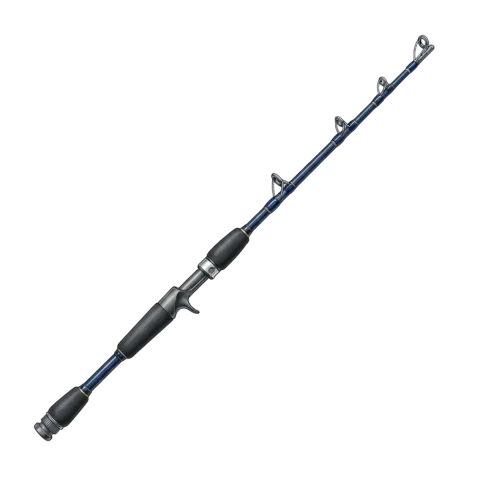
Rod
Boat rod
A boat rod is the short, stout fishing rod for work under the hull: bottom fishing, trolling, drift, and live bait in fresh or salt.
Sized for a typical fish
heavy · 2.29 m
- Reel seat
- Casting
- Form factor
- One-piece
- Action
- Moderate-fast
- Grip
- EVA
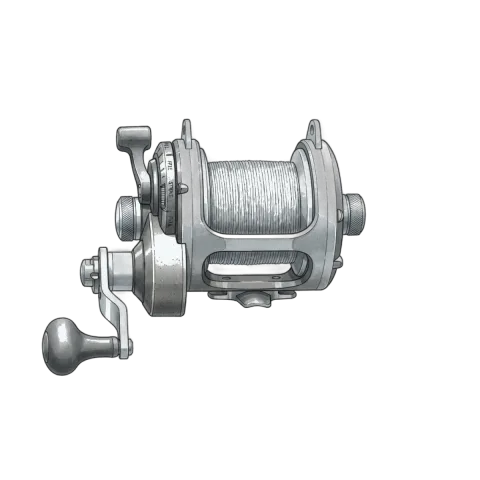
Reel
Conventional reel
A conventional reel is the lever-drag boat fishing reel for trolling and bottom fishing.
Sized for a typical fish
50 · 25 kg drag
- Spool
- Revolving
- Mount
- Over
- Drag
- Lever
- Retrieve
- Manual

Line
Braided line
Braided fishing line is the thin, no-stretch main for long casts, jigging, and feeling every tick on the retrieve.
Sized for a typical fish
90 kg · 0.76 mm
- Visibility
- High
- Abrasion
- Low
- Stretch
- None
- Sink rate
- Floats
Hook
Circle hook
A circle hook turns in the mouth and usually finds the corner of the jaw. You do not strike hard — you come tight. It includes freshwater.
Sized for a typical fish
6/0
- Points
- 1
- Offset
- No
- Barbed
- Yes
- Gap
- Standard
Surfcasting
Long-range bait or lure casting from an open beach or surf.
75% Effectiveness
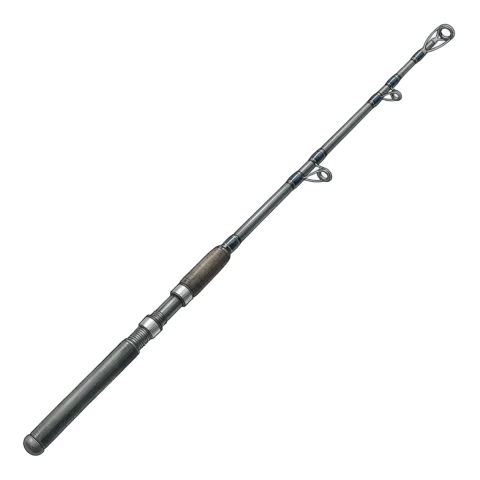
Rod
Surfcasting rod
A surfcasting rod is the long beach fishing rod for punching bait past the breakers. Length and a moderate-fast action load for distance.
Sized for a typical fish
heavy · 4.5 m
- Reel seat
- Spinning
- Form factor
- Multi-piece
- Action
- Moderate-fast
- Grip
- EVA
Reel
Spinning reel
A spinning reel hangs under the fishing rod and is the default reel for casting lures and light baits. Line peels off an open spool with a bail.
Sized for a typical fish
20000 · 30 kg drag · 997 g
- Spool
- Fixed
- Mount
- Under
- Drag
- Front
- Retrieve
- Manual
Line
Braided line
Braided fishing line is the thin, no-stretch main for long casts, jigging, and feeling every tick on the retrieve.
Sized for a typical fish
90 kg · 0.76 mm
- Visibility
- High
- Abrasion
- Low
- Stretch
- None
- Sink rate
- Floats
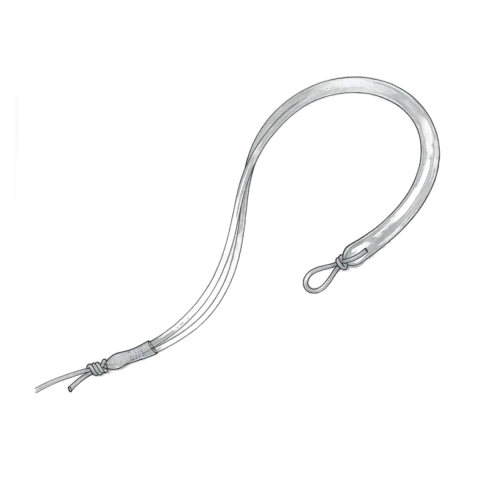
Leader
Shock leader
A shock leader is a thick mono or tapered section that takes the cast. Carp shock is heavy (around 0.65 to 0.75 mm), not thin fluorocarbon.
Sized for a typical fish
36 kg · 0.75 mm · 1200 cm
- Visibility
- Medium
- Abrasion
- High
- Stretch
- High
- Sink rate
- Slow
Best lures and baits for Smooth hammerhead
Ranked lures and natural baits from every method, best first.
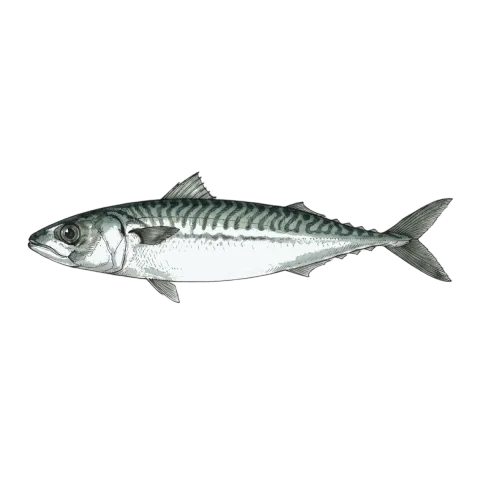
01
Mackerel
- Bottom Fishing
- Drift Fishing
- Surfcasting
Distinctive wavy dorsal stripes provide high contrast and flash underwater.
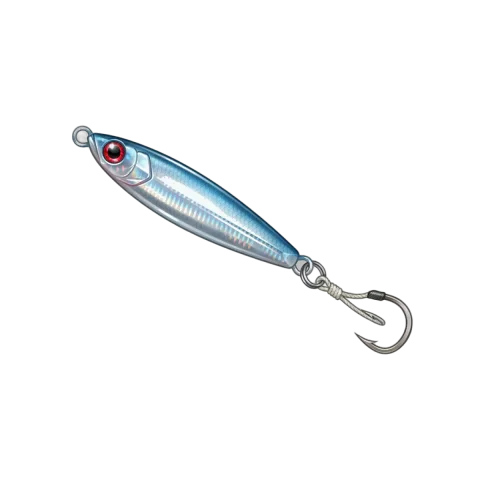
02
Metal jig
- Bottom Fishing
- Drift Fishing
A long metal lure for speed-jigging the deep column.
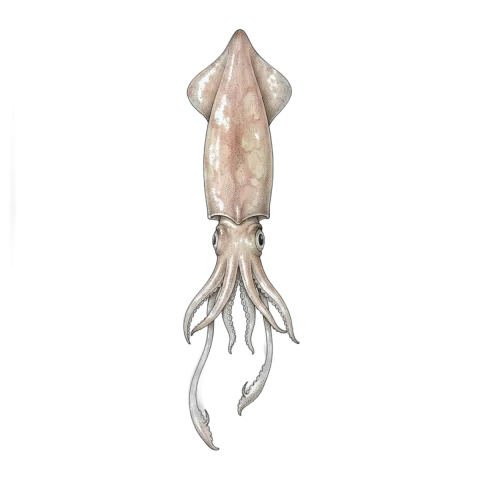
03
Squid
- Bottom Fishing
- Drift Fishing
Elongated muscular body holds internal organs and secretes scent in the water.
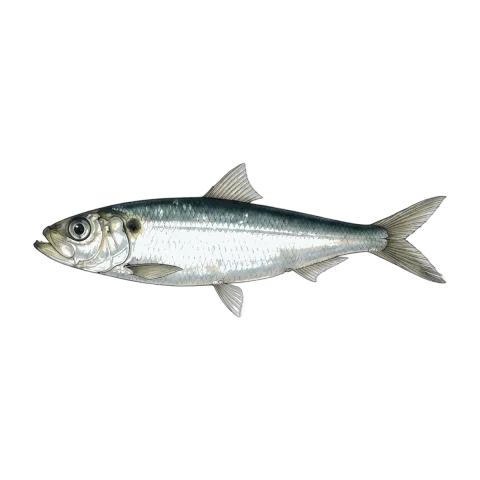
04
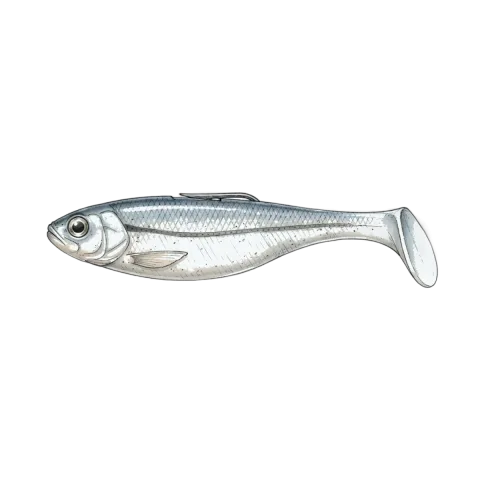
Sardine
- Bottom Fishing
- Surfcasting
Elongated silvery baitfish body releases strong scent trails.
How Smooth hammerhead migrates — Oceanodromous
Migrates within the sea between spawning, nursery and feeding grounds, and never enters fresh water. Follow its seasonal shifts along the coast and offshore.
1 Young
Breeding grounds
Born live, not hatched from eggs.
2 Juveniles
Nursery grounds
Grow up in sheltered nursery waters.
3 Adults
Feeding grounds
Range widely over the feeding grounds.
4 Mature adults
→ Breeding grounds
Return to the breeding grounds to give birth.
It stays in the sea and never runs up into fresh water.
Hover or tap a number to read each stage.
Diet and behavior of Smooth hammerhead
-
Diet
Top predator -
Feeds by
Hunts animals -
Hunts
Dawn · Dusk -
Main prey
Baitfish
Prey and predators of Smooth hammerhead
Prey is what Smooth hammerhead eats. Predators are the animals that eat it.
That is how it feeds, and how it is hunted.
Prey
What it eats
Predators
What hunts it
Fish
Where Smooth hammerhead lives
Pelagic in the open ocean beyond the shelf break.
0–200 m · usually 0–20 m

Estuary
Where this species lives
Smooth hammerhead photos for identification
Compare these photos with the catalog plate to identify the species.
Where to fish for Smooth hammerhead
Mapped fishing spots where Smooth hammerhead is recorded — open a pin for access and methods.


