How to catch Southern garfish
Hyporhamphus melanochir (Valenciennes, 1847)
About Southern garfish fishing
The southern garfish belongs to the halfbeak family Hemiramphidae and is easily recognised by its elongated body shape, silvery flanks, and distinctively extended lower jaw. Growing up to 52 centimetres in standard length, this pelagic neritic species inhabits shallow coastal waters, sheltered bays, estuaries, and marine inlets down to depths of 20 metres. It typically forms large schools, remaining near the bottom over seagrass beds during daylight hours before moving closer to the surface at night. Grazing primarily on seagrasses, algae, and small benthic organisms, it serves as an important link in the marine food web and is a highly popular target for light-tackle recreational anglers across southern Australian temperate waters.
-
Difficulty
Medium
-
Average size
35 cm
-
Habitat
Brackish, Saltwater
-
Season
Spring, Summer, Autumn, Winter
-
Also known as
Dusky garfish, Dusky sea garfish, Gardie, Garfish, Halfbeak, Pencils

Extended lower jaw
Relatively shorter upper and lower jaw distinguishes this garfish species.
Caudal fin shape
Deeply forked caudal fin with a longer lower lobe.
Southern garfish fishing facts
Characteristics
-
Typical size
35 cm (max 52 cm SL ) -
Typical weight
0.2 kg (max 0.6 kg ) -
Preferred temperature
14.3–22.3 °C -
Depth
0–20 m -
Longevity
10 years -
Body shape
Elongated -
Vulnerability score
28.1
Best hours
-
Peak
Dawn
First light
-
Peak
Morning
After sunrise
-
Low
Midday
High sun
-
Active
Afternoon
Late day
-
Active
Dusk
Last light
-
Active
Night
After dark
When to fish for Southern garfish
How to catch Southern garfish
Tips for catching Southern garfish
Successful angling for southern garfish relies heavily on establishing a consistent berley trail using fine-ground particles mixed with tuna oil to hold schooling fish near your position. Because these fish possess tiny mouths and delicate feeding habits, deploy light tackle featuring sensitive float rigs paired with small long-shank hooks baited with tiny pieces of prawn, marine worms, or bread. Keep presentations suspended right near the surface or just above submerged seagrass beds where fish actively forage. Dawn and morning periods offer exceptional sport when fish rise in the water column, while incoming tides consistently trigger increased feeding activity around piers, breakwalls, and shallow estuarine flats.
Other names for Southern garfish
Local and alternate names anglers use for Southern garfish.
-
Western sea garfish
-
South Australian garfish
-
Southern sea garfish
-
Southern garfish
-
Pencils
-
Sea garfish
-
Halfbeak
-
Garfish
-
Gardie
-
Dusky sea garfish
-
Dusky garfish
Best equipment to catch Southern garfish
Compare fishing methods for Southern garfish — sized kit for each technique.
Note: Typical fish is 0.2 kg Our algorithm will suggest the best equipment for you based on this weight.
Float Fishing
Suspending bait beneath a float at a controlled depth.
90% Effectiveness
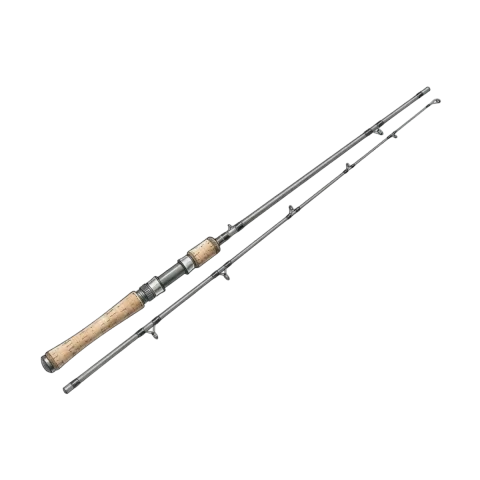
Rod
Float rod
A float rod is the all-round fishing rod for a float in rivers and still water, a step down in length from match.
Sized for a typical fish
light · 3.6 m
- Reel seat
- Spinning
- Form factor
- Multi-piece
- Action
- Moderate
- Grip
- Cork

Reel
Spinning reel
A spinning reel hangs under the fishing rod and is the default reel for casting lures and light baits. Line peels off an open spool with a bail.
Sized for a typical fish
1000 · 3 kg drag · 185 g
- Spool
- Fixed
- Mount
- Under
- Drag
- Front
- Retrieve
- Manual

Line
Monofilament line
Monofilament fishing line is the everyday main line: easy to knot, cheap to replace, and stretchy enough to forgive a hard strike.
Sized for a typical fish
1.3 kg · 0.125 mm
- Visibility
- Medium
- Abrasion
- Medium
- Stretch
- High
- Sink rate
- Slow
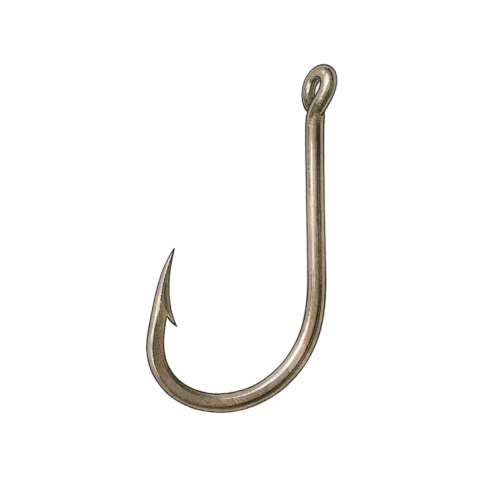
Hook
J-hook
A J-hook is the classic J-bend fishing hook for bait. You set it with a strike. Sizes are tokens such as 12 or 1/0.
Sized for a typical fish
12
- Points
- 1
- Offset
- No
- Barbed
- Yes
- Gap
- Standard
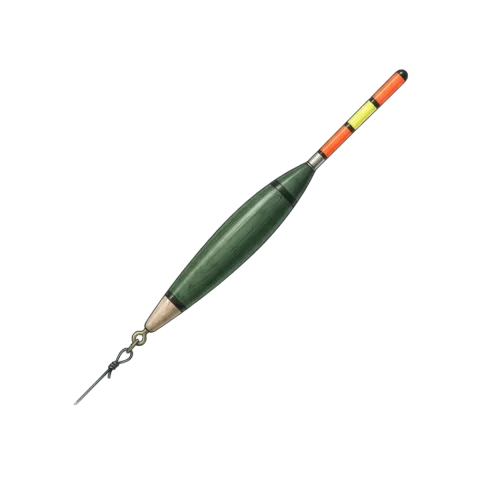
Float
Waggler
A waggler is a bottom-only attachment float for stillwaters and slow rivers. You shot it down and watch the antenna.
Sized for a typical fish
4 g
- Attachment
- Fixed
- Habitats
- Freshwater
- Methods
- Float Fishing
Spinning
Casting and retrieving lures with a spinning rod and reel.
40% Effectiveness

Rod
Spinning rod
A spinning rod is a fishing rod built to carry a spinning reel under the blank. You cast lures and light baits with it from shore or a boat.
Sized for a typical fish
ultralight · 1.8 m
- Reel seat
- Spinning
- Form factor
- Multi-piece
- Action
- Fast
- Grip
- EVA
Reel
Spinning reel
A spinning reel hangs under the fishing rod and is the default reel for casting lures and light baits. Line peels off an open spool with a bail.
Sized for a typical fish
1000 · 3 kg drag · 185 g
- Spool
- Fixed
- Mount
- Under
- Drag
- Front
- Retrieve
- Manual

Line
Braided line
Braided fishing line is the thin, no-stretch main for long casts, jigging, and feeling every tick on the retrieve.
Sized for a typical fish
6 kg · 0.1 mm
- Visibility
- High
- Abrasion
- Low
- Stretch
- None
- Sink rate
- Floats

Leader
Fluorocarbon leader
A fluorocarbon leader is the clear, fast-sinking join between a visible main line and the lure or hook.
Sized for a typical fish
7 kg · 0.3 mm · 90 cm
- Visibility
- Very low
- Abrasion
- High
- Stretch
- Low
- Sink rate
- Fast
Fly Fishing
Presenting artificial flies with a fly rod and weighted line.
30% Effectiveness
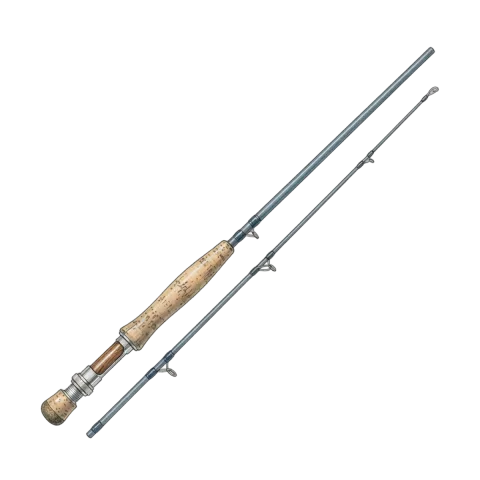
Rod
Fly rod
A fly rod is a fishing rod sized by line weight, with a fly reel seat. The fly line, not a heavy lure, loads the blank.
Sized for a typical fish
2.44 m · 3wt
- Reel seat
- Fly
- Form factor
- Multi-piece
- Action
- Moderate-fast
- Grip
- Cork
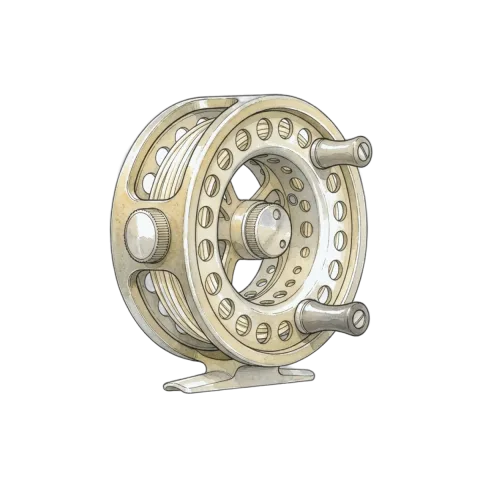
Reel
Fly reel
A fly reel is a large-arbor drum that stores backing and fly line. Drag is a disc; the reel does not cast the fly.
Sized for a typical fish
2 kg drag · 3wt
- Spool
- Drum
- Mount
- Under
- Drag
- Disc
- Retrieve
- Manual
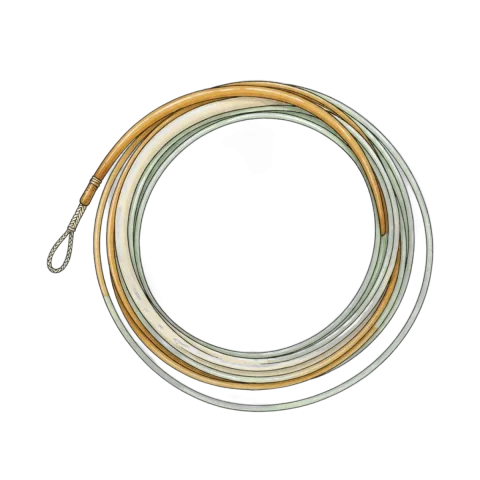
Line
Fly line
Fly line is the weighted shooting line that carries a near-weightless fly. Match it by weight class to the fly rod, not by kilo rating.
Sized for a typical fish
3wt
- Visibility
- Medium
- Abrasion
- Medium
- Stretch
- Low
- Sink rate
- Slow
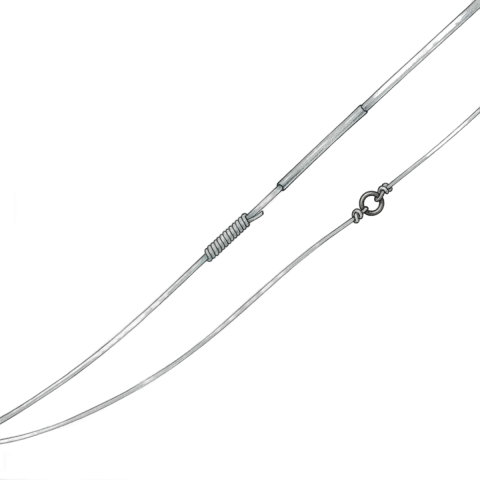
Leader
Tippet
Tippet is the fine, replaceable end of a fly leader, sized in X so you can match the fly and the fish.
Sized for a typical fish
1.6 kg · 0.13 mm · 75 cm · 6X
- Visibility
- Medium
- Abrasion
- Medium
- Stretch
- Medium
- Sink rate
- Slow
Best lures and baits for Southern garfish
Ranked lures and natural baits from every method, best first.
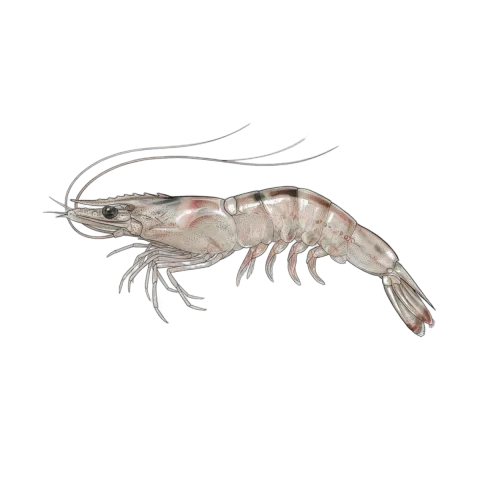
01
Prawn
- Float Fishing
Powerful fan-shaped tail propels the prawn backward when escaping predatory fish.
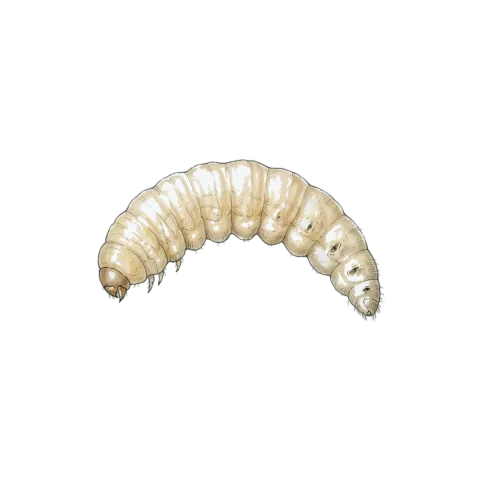
02
Maggot
- Float Fishing
Segmented white body provides enticing natural movement and scent.
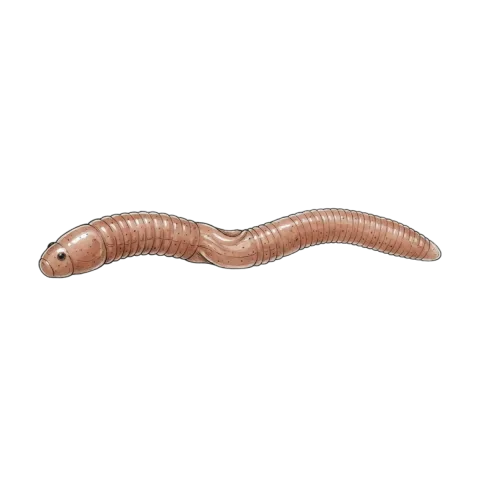
03
Worm
- Float Fishing
Rounded anterior end containing the mouth used for anchoring the bait on the hook.
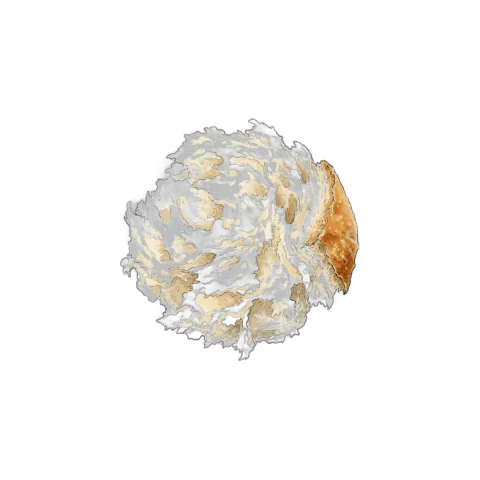
04
Bread
- Float Fishing
Soft inner bread compressed onto the hook for surface feeding.
06
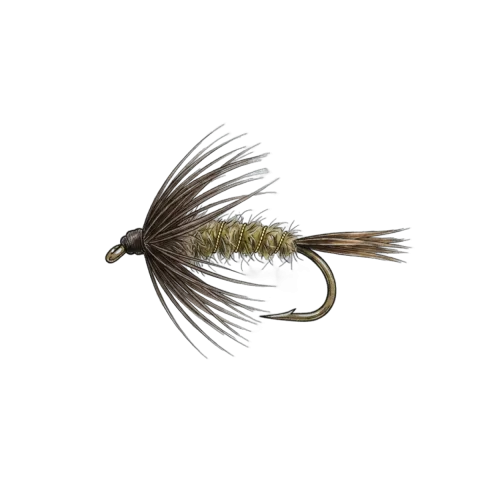
Wet fly
- Fly Fishing
A soft-hackle fly swung or drifted just under the film.
How Southern garfish migrates — Inshore–offshore
Shifts between shallow inshore water and deeper offshore grounds with the season.
1 Warm months
Inshore
Stay close inshore through the warm months.
2 Cold months
Offshore
Move offshore into deeper water as it cools.
Hover or tap a number to read each stage.
Diet and behavior of Southern garfish
-
Diet
Omnivore -
Feeds by
Grazes plants -
Hunts
Dawn · Morning -
Feeds over
Intertidal · Seagrass -
Used as bait
Yes
Prey and predators of Southern garfish
Prey is what Southern garfish eats. Predators are the animals that eat it.
That is how it feeds, and how it is hunted.
Prey
What it eats
Other prey
Predators
What hunts it
Fish
Where Southern garfish lives
Pelagic over the continental shelf — coastal open water, not the deep ocean.
0–20 m

Estuary
Where this species lives
Southern garfish photos for identification
Compare these photos with the catalog plate to identify the species.
Where to fish for Southern garfish
Mapped fishing spots where Southern garfish is recorded — open a pin for access and methods.
