How to catch White croaker
Genyonemus lineatus (Ayres, 1855)
About White croaker fishing
The white croaker is a small coastal marine fish belonging to the drum and croaker family Sciaenidae. It features an elongated, slightly compressed body with an oblong, blunt head and a subterminal mouth positioned beneath snout level. Its coloration is brownish to yellowish bronze on the back, fading to a silvery sheen on the flanks and belly, complemented by plain yellowish to white fins. Growing up to forty-one centimetres in total length, this benthopelagic species inhabits shallow sandy bottoms, surf zones, and coastal bays down to moderate depths. It feeds on a diverse range of benthic invertebrates including worms, small crustaceans, molluscs, and small fishes. Schooling in loose groups near the seabed, it spawns during multiple batches throughout parts of the year and is frequently encountered by shore and pier anglers.
-
Difficulty
Medium
-
Average size
20 cm
-
Market value
Low
-
Habitat
Saltwater
-
Season
Spring, Summer, Autumn, Winter
-
Also known as
Croaker, King croaker, Kingfish, King-fish, Roncador, Tomcod

Truncate caudal shape
More or less truncate tail fin shape characteristic of white croaker.
Dorsal attributes
Dorsal fins extending over most of the back length.
Thoracic pelvic fin
Thoracic pelvic-fin position located beneath the pectoral region.
White croaker fishing facts
Characteristics
-
Typical size
20 cm (max 41 cm TL ) -
Typical weight
0.2 kg (max 1 kg ) -
Preferred temperature
7.7–18.1 °C -
Depth
0–183 m -
Longevity
15 years -
Body shape
Fusiform / Normal -
Commercial?
-
Vulnerability score
22.9
Best hours
-
Low
Dawn
First light
-
Peak
Morning
After sunrise
-
Low
Midday
High sun
-
Peak
Afternoon
Late day
-
Active
Dusk
Last light
-
Low
Night
After dark
When to fish for White croaker
How to catch White croaker
Tips for catching White croaker
Targeting white croaker requires presenting baits directly on or very close to sandy or muddy sea floors where these fish form loose schools. Because they possess small subterminal mouths and readily strip soft offerings, use tough animal baits like strips of squid or durable marine worms threaded securely onto small hooks. Simple running ledger rigs or paternoster setups fished from open beaches, piers, or jetties yield steady results with minimal effort. They feed actively throughout the daylight hours and into dusk across all seasons, making them accessible year-round without requiring specialised tackle or complex presentations.
Other names for White croaker
Local and alternate names anglers use for White croaker.
-
White croaker
-
Tomcod
-
Roncador
-
King-fish
-
Kingfish
-
King croaker
-
Croaker
Best equipment to catch White croaker
Compare fishing methods for White croaker — sized kit for each technique.
Note: Typical fish is 0.2 kg Our algorithm will suggest the best equipment for you based on this weight.
Bottom Fishing
Presenting bait or rigs on or near the lake or sea floor.
90% Effectiveness

Rod
Spinning rod
A spinning rod is a fishing rod built to carry a spinning reel under the blank. You cast lures and light baits with it from shore or a boat.
Sized for a typical fish
ultralight · 1.8 m
- Reel seat
- Spinning
- Form factor
- Multi-piece
- Action
- Fast
- Grip
- EVA

Reel
Spinning reel
A spinning reel hangs under the fishing rod and is the default reel for casting lures and light baits. Line peels off an open spool with a bail.
Sized for a typical fish
1000 · 3 kg drag · 185 g
- Spool
- Fixed
- Mount
- Under
- Drag
- Front
- Retrieve
- Manual

Line
Monofilament line
Monofilament fishing line is the everyday main line: easy to knot, cheap to replace, and stretchy enough to forgive a hard strike.
Sized for a typical fish
1.3 kg · 0.125 mm
- Visibility
- Medium
- Abrasion
- Medium
- Stretch
- High
- Sink rate
- Slow

Leader
Fluorocarbon leader
A fluorocarbon leader is the clear, fast-sinking join between a visible main line and the lure or hook.
Sized for a typical fish
4 kg · 0.2 mm · 80 cm
- Visibility
- Very low
- Abrasion
- High
- Stretch
- Low
- Sink rate
- Fast

Hook
Circle hook
A circle hook turns in the mouth and usually finds the corner of the jaw. You do not strike hard — you come tight. It includes freshwater.
Sized for a typical fish
4
- Points
- 1
- Offset
- No
- Barbed
- Yes
- Gap
- Standard
Surfcasting
Long-range bait or lure casting from an open beach or surf.
80% Effectiveness
Rod
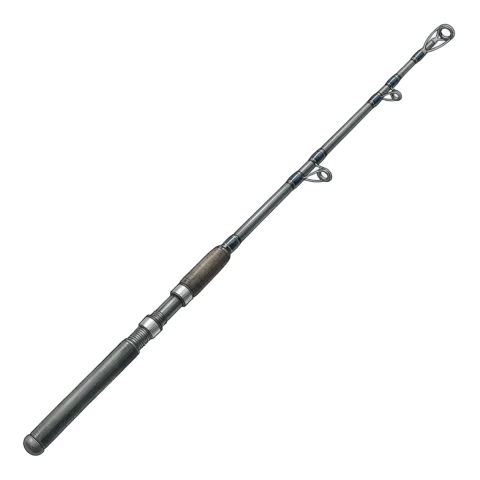
Surfcasting rod
A surfcasting rod is the long beach fishing rod for punching bait past the breakers. Length and a moderate-fast action load for distance.
Sized for a typical fish
medium-heavy · 3.6 m
- Reel seat
- Spinning
- Form factor
- Multi-piece
- Action
- Moderate-fast
- Grip
- EVA
Reel
Spinning reel
A spinning reel hangs under the fishing rod and is the default reel for casting lures and light baits. Line peels off an open spool with a bail.
Sized for a typical fish
1000 · 3 kg drag · 185 g
- Spool
- Fixed
- Mount
- Under
- Drag
- Front
- Retrieve
- Manual

Line
Braided line
Braided fishing line is the thin, no-stretch main for long casts, jigging, and feeling every tick on the retrieve.
Sized for a typical fish
6 kg · 0.1 mm
- Visibility
- High
- Abrasion
- Low
- Stretch
- None
- Sink rate
- Floats
Leader
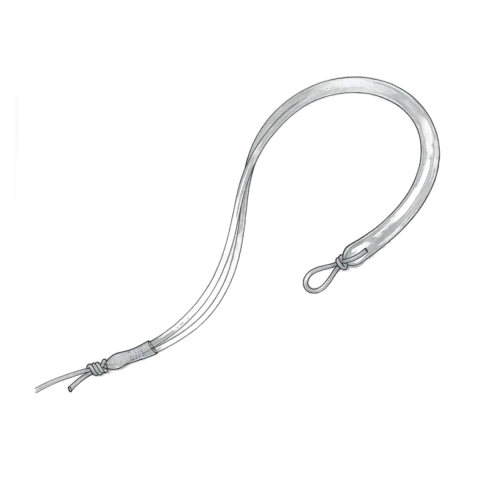
Shock leader
A shock leader is a thick mono or tapered section that takes the cast. Carp shock is heavy (around 0.65 to 0.75 mm), not thin fluorocarbon.
Sized for a typical fish
22.5 kg · 0.65 mm · 900 cm
- Visibility
- Medium
- Abrasion
- High
- Stretch
- High
- Sink rate
- Slow
Fly Fishing
Presenting artificial flies with a fly rod and weighted line.
50% Effectiveness
Rod
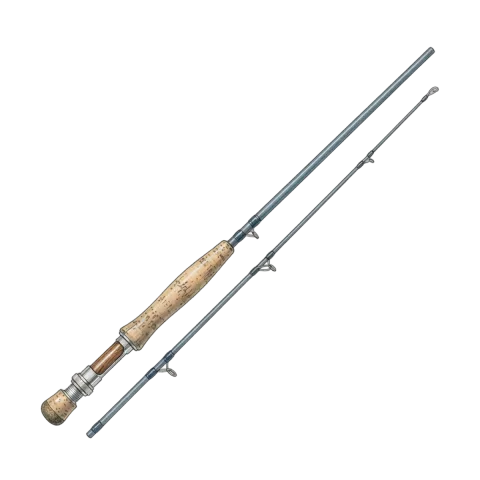
Fly rod
A fly rod is a fishing rod sized by line weight, with a fly reel seat. The fly line, not a heavy lure, loads the blank.
Sized for a typical fish
2.44 m · 3wt
- Reel seat
- Fly
- Form factor
- Multi-piece
- Action
- Moderate-fast
- Grip
- Cork
Reel
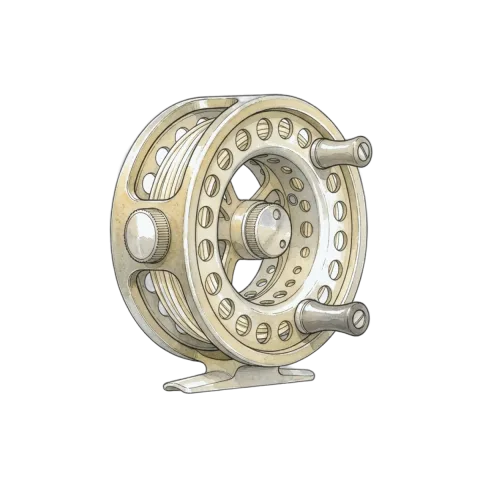
Fly reel
A fly reel is a large-arbor drum that stores backing and fly line. Drag is a disc; the reel does not cast the fly.
Sized for a typical fish
2 kg drag · 3wt
- Spool
- Drum
- Mount
- Under
- Drag
- Disc
- Retrieve
- Manual
Line
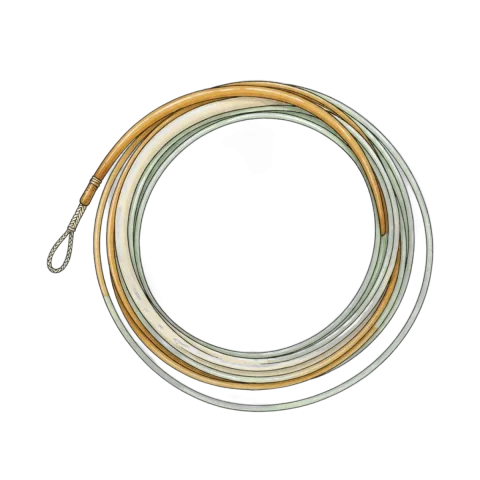
Fly line
Fly line is the weighted shooting line that carries a near-weightless fly. Match it by weight class to the fly rod, not by kilo rating.
Sized for a typical fish
3wt
- Visibility
- Medium
- Abrasion
- Medium
- Stretch
- Low
- Sink rate
- Slow
Leader
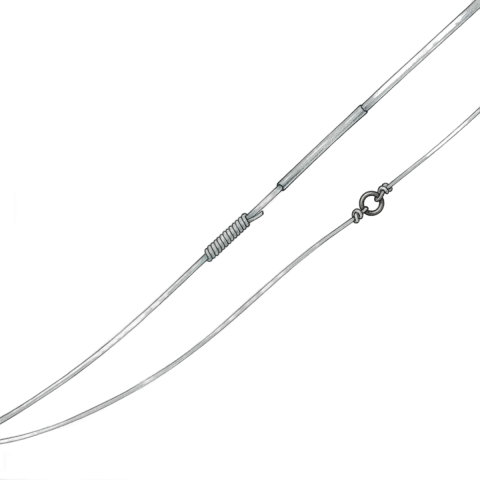
Tippet
Tippet is the fine, replaceable end of a fly leader, sized in X so you can match the fly and the fish.
Sized for a typical fish
1.6 kg · 0.13 mm · 75 cm · 6X
- Visibility
- Medium
- Abrasion
- Medium
- Stretch
- Medium
- Sink rate
- Slow
Best lures and baits for White croaker
Ranked lures and natural baits from every method, best first.
01
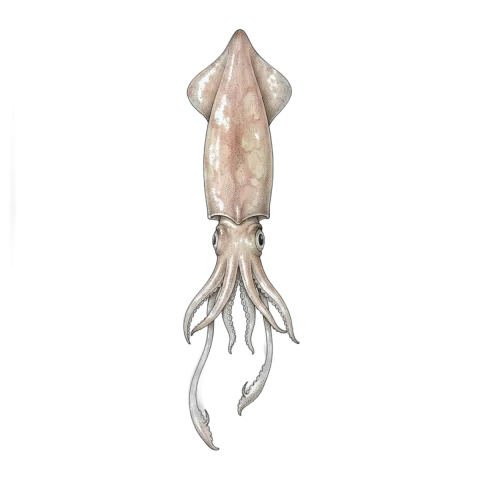
Squid
- Bottom Fishing
- Surfcasting
Elongated muscular body holds internal organs and secretes scent in the water.
02
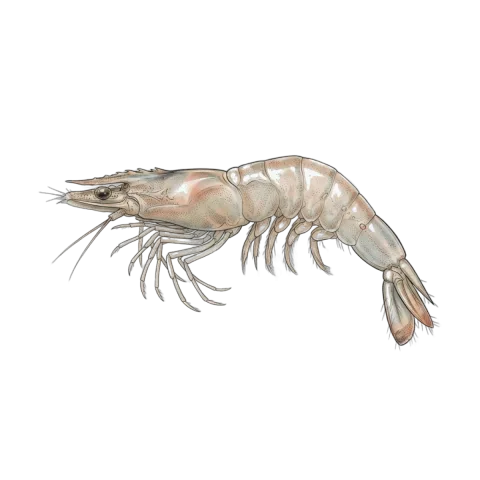
Shrimp
- Bottom Fishing
- Surfcasting
Translucent segmented carapace protects the body.
03
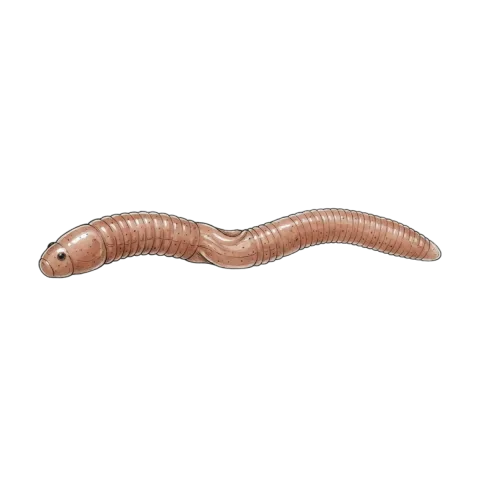
Worm
- Bottom Fishing
Rounded anterior end containing the mouth used for anchoring the bait on the hook.
05
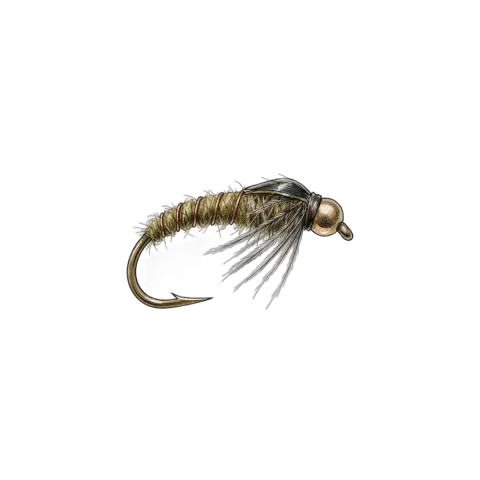
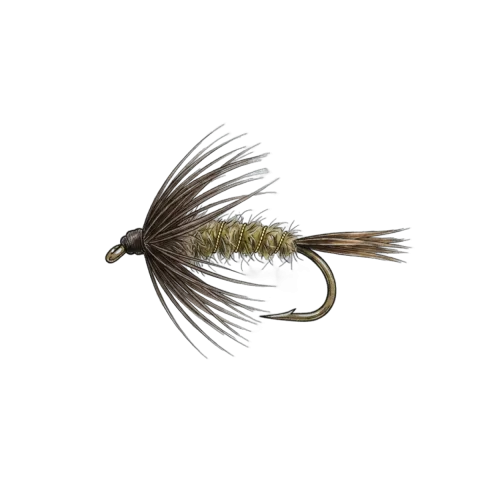
Wet fly
- Fly Fishing
A soft-hackle fly swung or drifted just under the film.
Diet and behavior of White croaker
-
Diet
Carnivore -
Feeds by
Hunts animals -
Hunts
Morning · Afternoon -
Main prey
Baitfish
Prey and predators of White croaker
Prey is what White croaker eats. Predators are the animals that eat it.
That is how it feeds, and how it is hunted.
Prey
What it eats
Baitfish
Predators
What hunts it
Where White croaker lives
Lives near the bottom but swims in the water just above it. Cover the lower column, not only the mud.
0–183 m

Where this species lives