How to catch Yellowtail horse mackerel
Trachurus novaezelandiae Richardson, 1843
About Yellowtail horse mackerel fishing
The yellowtail horse mackerel is a pelagic schooling species belonging to the family Carangidae, characterized by a moderately compressed, oval body with a bright olive green back transitioning to a golden green flanks and silvery white belly. It features distinct vertical grey bars and a small black opercular spot, growing up to fifty centimetres in standard length. Adults inhabit coastal waters, estuaries, and offshore rocky reefs down to five hundred metres, showing a strong preference for waters warmer than thirteen degrees Celsius, while juveniles inhabit shallow soft substrates. As active pelagic predators, they feed primarily on small crustaceans and fish, forming massive aggregations that support important commercial and recreational fisheries.
-
Difficulty
Medium
-
Average size
35 cm TL
-
Market value
Medium
-
Habitat
Brackish, Saltwater
-
Season
Spring, Summer, Autumn, Winter
-
Also known as
Bung, Chow, Cowanyoung, Horse mackerel, Jack mackerel, Mcculloch's yellowtail

Opercular Spot
Dark spot on opercle edge is characteristic of this jack species.
Scutellated Lateral Line
Strongly arched lateral line with bony scutes running to tail.
Yellowtail Fin
Bright yellowish caudal fin matches common name yellowtail mackerel.
Yellowtail horse mackerel fishing facts
Characteristics
-
Typical size
35 cm TL (max 50 cm SL ) -
Typical weight
0.4 kg (max 2.1 kg ) -
Preferred temperature
13.1–21.2 °C -
Depth
22–500 m -
Longevity
25 years -
Body shape
Fusiform / Normal -
Commercial?
-
Vulnerability score
36.9
Best hours
-
Peak
Dawn
First light
-
Active
Morning
After sunrise
-
Low
Midday
High sun
-
Active
Afternoon
Late day
-
Peak
Dusk
Last light
-
Low
Night
After dark
When to fish for Yellowtail horse mackerel
How to catch Yellowtail horse mackerel
Tips for catching Yellowtail horse mackerel
Anglers target this energetic schooling carangid primarily around coastal rocky reefs, structure lines, and estuary mouths using light spinning and fine tackle. Locate active schools near the midwater or close to the sea floor using electronic sounders or by watching for surface bird activity. Fine presentations such as small metal jigs, micro soft plastics, and sabiki rigs fished with an active vertical lift and drop yield consistent results. Early morning and late afternoon hours during falling or rising tides offer peak feeding windows, and smaller natural baits like strips of squid or shrimp fished under a controlled float work exceptionally well.
Other names for Yellowtail horse mackerel
Local and alternate names anglers use for Yellowtail horse mackerel.
-
Yellowtail mackerel
-
Yellowtail horse mackerel
-
Yellowtail chow
-
Chow
-
Yellowtail
-
Scad
-
Southern yellowtail scad
-
Jack mackerel
-
Mcculloch's yellowtail
-
Horse mackerel
-
Cowanyoung
-
Yellowtail scad
-
Yakka
-
Bung
Best equipment to catch Yellowtail horse mackerel
Compare fishing methods for Yellowtail horse mackerel — sized kit for each technique.
Note: Typical fish is 0.4 kg Our algorithm will suggest the best equipment for you based on this weight.
Spinning
Casting and retrieving lures with a spinning rod and reel.
90% Effectiveness

Rod
Spinning rod
A spinning rod is a fishing rod built to carry a spinning reel under the blank. You cast lures and light baits with it from shore or a boat.
Sized for a typical fish
ultralight · 1.8 m
- Reel seat
- Spinning
- Form factor
- Multi-piece
- Action
- Fast
- Grip
- EVA

Reel
Spinning reel
A spinning reel hangs under the fishing rod and is the default reel for casting lures and light baits. Line peels off an open spool with a bail.
Sized for a typical fish
1000 · 3 kg drag · 185 g
- Spool
- Fixed
- Mount
- Under
- Drag
- Front
- Retrieve
- Manual

Line
Braided line
Braided fishing line is the thin, no-stretch main for long casts, jigging, and feeling every tick on the retrieve.
Sized for a typical fish
6 kg · 0.1 mm
- Visibility
- High
- Abrasion
- Low
- Stretch
- None
- Sink rate
- Floats

Leader
Fluorocarbon leader
A fluorocarbon leader is the clear, fast-sinking join between a visible main line and the lure or hook.
Sized for a typical fish
7 kg · 0.3 mm · 90 cm
- Visibility
- Very low
- Abrasion
- High
- Stretch
- Low
- Sink rate
- Fast
Float Fishing
Suspending bait beneath a float at a controlled depth.
85% Effectiveness
Rod
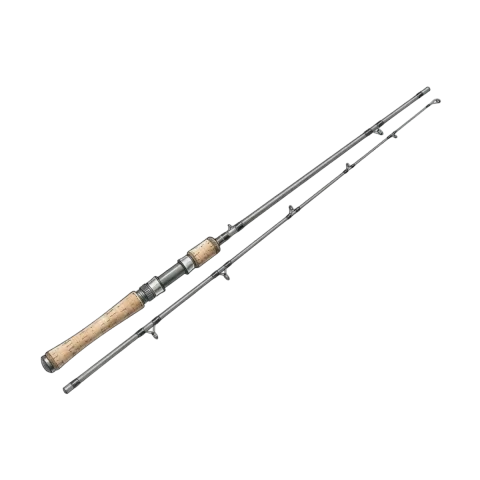
Float rod
A float rod is the all-round fishing rod for a float in rivers and still water, a step down in length from match.
Sized for a typical fish
light · 3.6 m
- Reel seat
- Spinning
- Form factor
- Multi-piece
- Action
- Moderate
- Grip
- Cork
Reel
Spinning reel
A spinning reel hangs under the fishing rod and is the default reel for casting lures and light baits. Line peels off an open spool with a bail.
Sized for a typical fish
1000 · 3 kg drag · 185 g
- Spool
- Fixed
- Mount
- Under
- Drag
- Front
- Retrieve
- Manual

Line
Monofilament line
Monofilament fishing line is the everyday main line: easy to knot, cheap to replace, and stretchy enough to forgive a hard strike.
Sized for a typical fish
1.3 kg · 0.125 mm
- Visibility
- Medium
- Abrasion
- Medium
- Stretch
- High
- Sink rate
- Slow
Hook
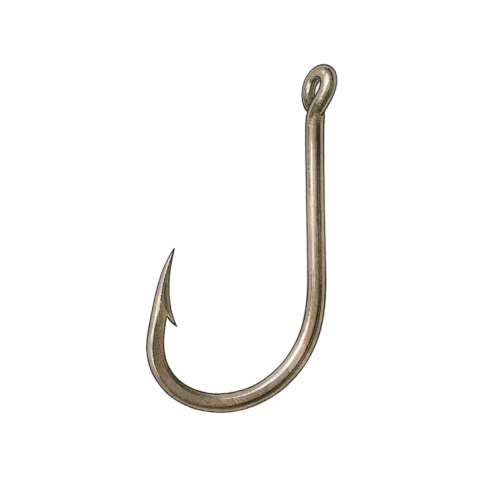
J-hook
A J-hook is the classic J-bend fishing hook for bait. You set it with a strike. Sizes are tokens such as 12 or 1/0.
Sized for a typical fish
8
- Points
- 1
- Offset
- No
- Barbed
- Yes
- Gap
- Standard
Float
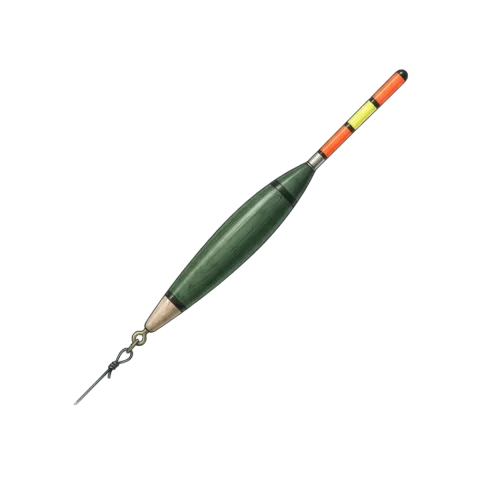
Waggler
A waggler is a bottom-only attachment float for stillwaters and slow rivers. You shot it down and watch the antenna.
Sized for a typical fish
4 g
- Attachment
- Fixed
- Habitats
- Freshwater
- Methods
- Float Fishing
Jigging
Working vertical lures with an active up-and-down motion.
80% Effectiveness
Rod
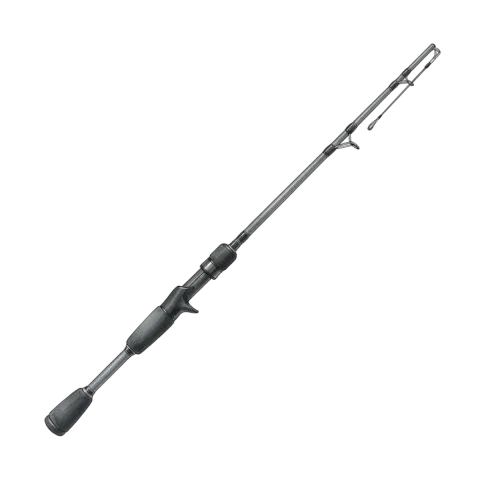
Jigging rod
A jigging rod is the short, powerful fishing rod for working a metal jig up through the column, including freshwater jigging.
Sized for a typical fish
heavy · 1.52 m
- Reel seat
- Casting
- Form factor
- One-piece
- Action
- Fast
- Grip
- EVA
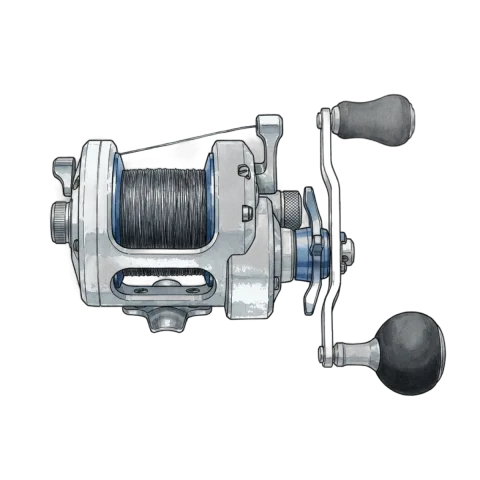
Reel
Jigging reel
A jigging reel is a compact, high-speed conventional for working metal jigs. A short retrieve picks up slack fast.
Sized for a typical fish
10 · 10 kg drag
- Spool
- Revolving
- Mount
- Over
- Drag
- Star
- Retrieve
- Manual
Line
Braided line
Braided fishing line is the thin, no-stretch main for long casts, jigging, and feeling every tick on the retrieve.
Sized for a typical fish
6 kg · 0.1 mm
- Visibility
- High
- Abrasion
- Low
- Stretch
- None
- Sink rate
- Floats
Leader
Fluorocarbon leader
A fluorocarbon leader is the clear, fast-sinking join between a visible main line and the lure or hook.
Sized for a typical fish
7 kg · 0.3 mm · 90 cm
- Visibility
- Very low
- Abrasion
- High
- Stretch
- Low
- Sink rate
- Fast
Bottom Fishing
Presenting bait or rigs on or near the lake or sea floor.
70% Effectiveness
Rod
Spinning rod
A spinning rod is a fishing rod built to carry a spinning reel under the blank. You cast lures and light baits with it from shore or a boat.
Sized for a typical fish
ultralight · 1.8 m
- Reel seat
- Spinning
- Form factor
- Multi-piece
- Action
- Fast
- Grip
- EVA
Reel
Spinning reel
A spinning reel hangs under the fishing rod and is the default reel for casting lures and light baits. Line peels off an open spool with a bail.
Sized for a typical fish
1000 · 3 kg drag · 185 g
- Spool
- Fixed
- Mount
- Under
- Drag
- Front
- Retrieve
- Manual
Line
Monofilament line
Monofilament fishing line is the everyday main line: easy to knot, cheap to replace, and stretchy enough to forgive a hard strike.
Sized for a typical fish
1.3 kg · 0.125 mm
- Visibility
- Medium
- Abrasion
- Medium
- Stretch
- High
- Sink rate
- Slow
Leader
Fluorocarbon leader
A fluorocarbon leader is the clear, fast-sinking join between a visible main line and the lure or hook.
Sized for a typical fish
4 kg · 0.2 mm · 80 cm
- Visibility
- Very low
- Abrasion
- High
- Stretch
- Low
- Sink rate
- Fast

Hook
Circle hook
A circle hook turns in the mouth and usually finds the corner of the jaw. You do not strike hard — you come tight. It includes freshwater.
Sized for a typical fish
4
- Points
- 1
- Offset
- No
- Barbed
- Yes
- Gap
- Standard
Best lures and baits for Yellowtail horse mackerel
Ranked lures and natural baits from every method, best first.
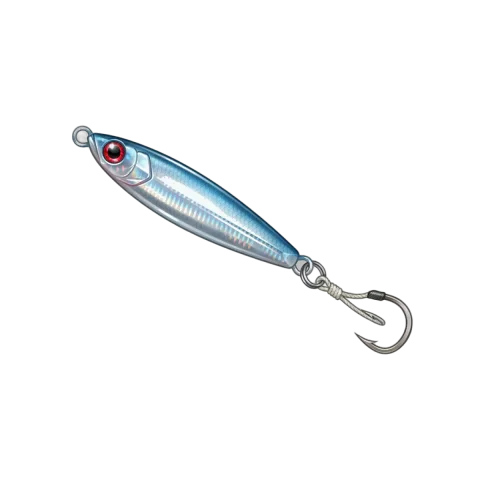
01
Metal jig
- Spinning
- Jigging
A long metal lure for speed-jigging the deep column.
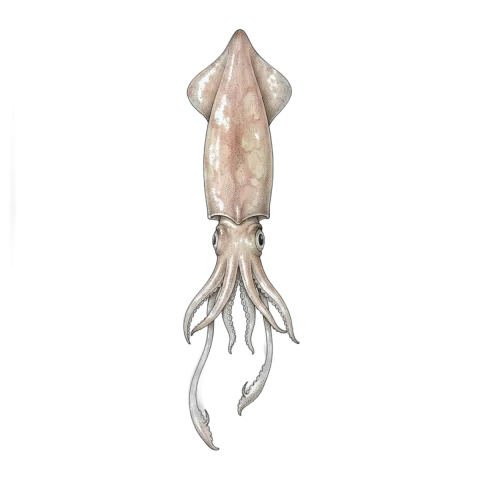
02
Squid
- Float Fishing
- Bottom Fishing
Elongated muscular body holds internal organs and secretes scent in the water.
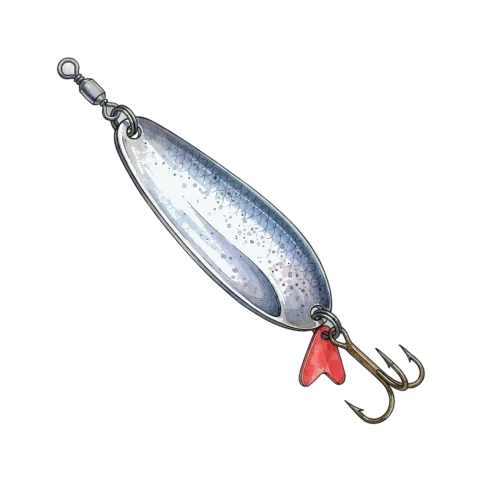
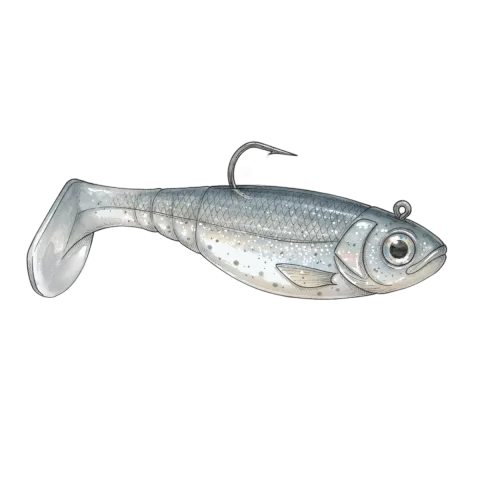
05
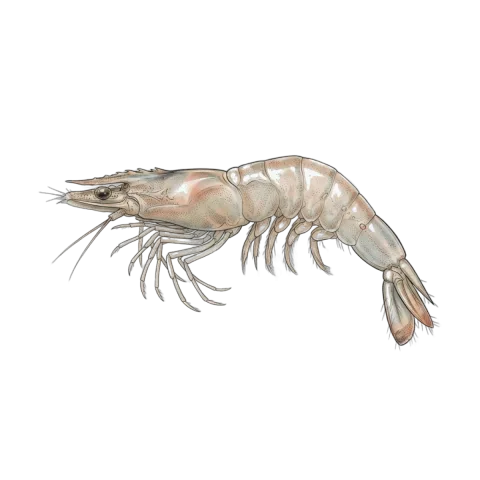
Shrimp
- Float Fishing
Translucent segmented carapace protects the body.
06
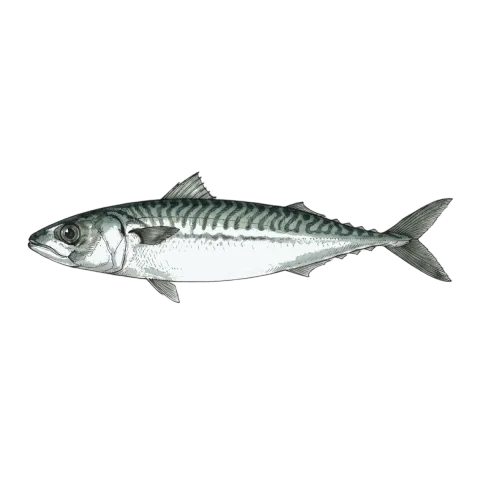
Mackerel
- Bottom Fishing
Distinctive wavy dorsal stripes provide high contrast and flash underwater.
How Yellowtail horse mackerel migrates — Inshore–offshore
Shifts between shallow inshore water and deeper offshore grounds with the season.
1 Warm months
Inshore
Stay close inshore through the warm months.
2 Cold months
Offshore
Move offshore into deeper water as it cools.
Hover or tap a number to read each stage.
Diet and behavior of Yellowtail horse mackerel
-
Diet
Carnivore -
Feeds by
Hunts animals -
Hunts
Dawn · Dusk -
Feeds over
Soft bottom · Hard bottom -
Used as bait
Yes
Prey and predators of Yellowtail horse mackerel
Prey is what Yellowtail horse mackerel eats. Predators are the animals that eat it.
That is how it feeds, and how it is hunted.
Prey
What it eats
Other prey
Predators
What hunts it
Fish
Where Yellowtail horse mackerel lives
Pelagic in the open ocean beyond the shelf break.
22–500 m

Estuary
Where this species lives
Yellowtail horse mackerel photos for identification
Compare these photos with the catalog plate to identify the species.
Where to fish for Yellowtail horse mackerel
Mapped fishing spots where Yellowtail horse mackerel is recorded — open a pin for access and methods.
